What is Nasa’s Artemis III mission? And what comes next?
Developing story first seen 3 hours ago
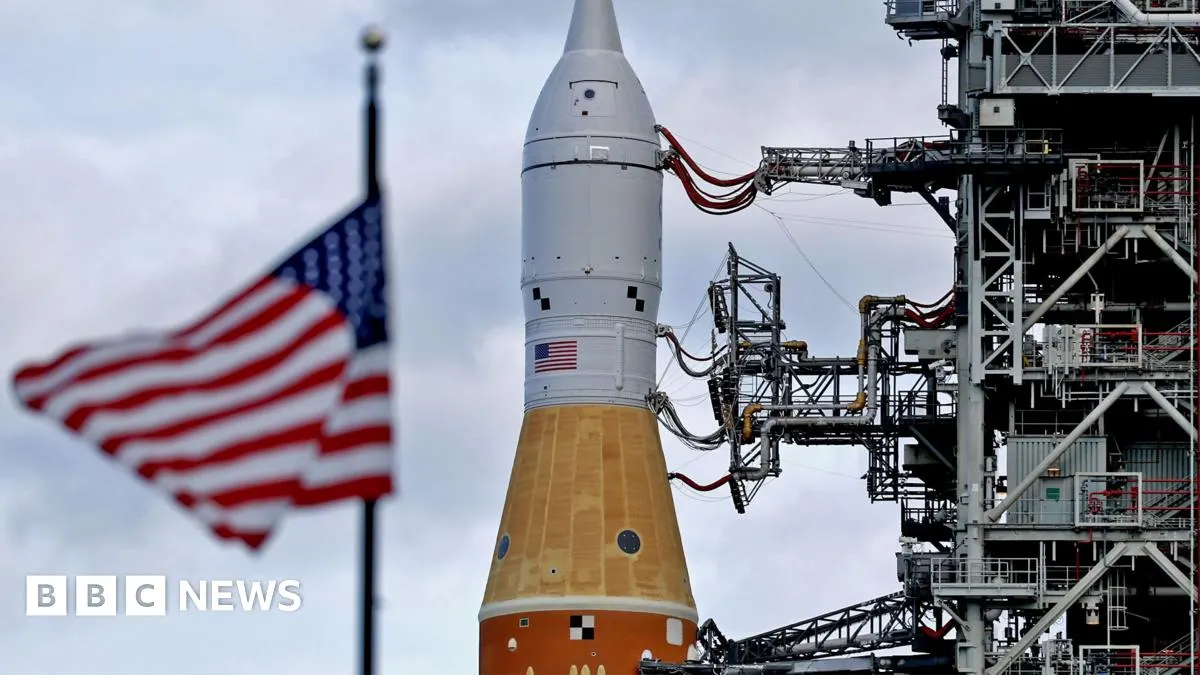
Nasa has revealed the four astronauts chosen for Artemis III, a mission now planned as a docking rehearsal in low Earth orbit rather than a lunar landing. The change reflects delays to the SpaceX lander and the unproven refuelling technology it needs; the rehearsal is intended to prepare crews for a planned Moon landing on Artemis IV.
Artemis III is scheduled for summer 2027 and is expected to last 14 days, with a possible extension to 17. Its crew will test dockings with prototype landers from Blue Origin and SpaceX, among a complex sequence involving three rocket launches, three spacecraft and two dockings. Randy Bresnik will command, Luca Parmitano will pilot, and Andre Douglas and Frank Rubio will be mission specialists; Artemis IV is targeted for 2028.
- Sources
- 2
- Outlets
- 2
- Left · Centre · Right
- 0 · 1 · 0
In short
- Artemis III will rehearse lander dockings in Earth orbit.
- Nasa has named four astronauts for the 2027 mission.
- Artemis IV is planned to take astronauts to the Moon in 2028.
How this story developed
- 39 minutes ago Nasa’s Artemis III mission, planned for summer 2027, will not land astronauts on the Moon.
- 1 hour ago Nasa has revealed the four astronauts chosen for Artemis III, a mission now planned as a docking rehearsal in low Earth orbit rather than a lunar landing.
Full account
Artemis III is now planned as a crewed test flight in low Earth orbit, rather than the lunar landing originally intended. Four astronauts — NASA’s Randy Bresnik, Frank Rubio and Andre Douglas, and European Space Agency astronaut Luca Parmitano — are expected to launch aboard NASA’s Orion spacecraft in 2027. The mission is meant to practise the rendezvous and docking operations needed for future trips to the Moon.
The plan calls for three launches from Florida over a short period. Blue Origin’s New Glenn would first send a test version of its Blue Moon lander into orbit. NASA would then launch Orion on its Space Launch System rocket. After checking their spacecraft, the crew would dock with Blue Moon, enter it and spend about two days testing its systems, including its software and life-support functions. They would return to Orion before the next demonstration.
SpaceX would then launch a Starship test vehicle, called the Ship in one report, to meet Orion. The crew would test the connection and separation between the two spacecraft, but would not enter the vehicle. They would carry out further checks and experiments in Orion before returning to Earth. The reports describe a mission lasting about two weeks, with one giving a possible extension to 17 days. Its planned return would also test an upgraded Orion heat shield during atmospheric re-entry.
The revised flight is intended to prepare for Artemis IV, which is currently planned to take astronauts to the lunar surface in 2028 — the first crewed Moon landing since Apollo 17 in 1972. The reports link the change in Artemis III’s role to delays in preparing the lunar landers and the systems they depend on. The timetable remains uncertain: one report calls summer 2027 the best-case launch window, while the other describes it as the planned date and notes schedule pressure.
Where outlets differ
From the full account, which is AI-written from the sources:
The first report gives a step-by-step mission timeline, describes the crew’s planned checks aboard both landers, and says Orion may remain in orbit for up to 17 days. The second focuses more on the sequence of three heavy-lift launches and technical checks, including Orion’s crew survival suits; it gives the crew about five additional days in orbit after the Starship rendezvous.
The first says the Starship test vehicle is not yet fitted out as a lander and lacks life-support systems, and attributes the mission redesign to the Starship lander and its refuelling needs not being ready. The second calls the spacecraft a test version and highlights a docking system at its forward end, as well as delays and uncertainty around launch readiness.
The first frames Artemis IV as scheduled for 2028 and explains that Artemis III was changed from a landing mission. The second also says 2028 is the target, but stresses that the exact Artemis III launch date is unclear and cites a report that the mission was running about three months behind schedule.
Steelman: both sides, in good faith
The strongest fair case each way — we don't pick a winner.
The case for
A docking rehearsal in low Earth orbit is a sensible way to manage delays while still advancing the skills and procedures needed for a later lunar landing. Testing the spacecraft and prototype landers before sending astronauts to the Moon could reduce mission risks and make the eventual landing better prepared.
The case against
Changing Artemis III from a lunar landing to an orbital rehearsal is a significant retreat from the mission’s original purpose, and further delays could weaken confidence in the programme’s plans. Critics may also question whether a complex, costly rehearsal involving several launches and dockings is the best use of resources when the lander and refuelling technology remain unproven.
Explained simply
Artemis is Nasa’s programme to send astronauts back to the Moon and prepare for longer-term exploration. Its missions use the Orion spacecraft, which carries the crew, alongside rockets and lunar landers developed with commercial companies.
A lunar landing requires Orion to meet a lander in space, so crews can transfer between the two vehicles. SpaceX’s lander depends on refuelling technology that has not yet been demonstrated, and its development has taken longer than planned; Blue Origin is also building a lander for the programme.
The missions are intended to build experience with spacecraft, equipment and procedures needed for future Moon visits. The planned rehearsal is part of that preparation, with a later mission expected to attempt a landing.
Coverage · 2 sources
Art Culture Science Space Technology