Science news and discussion on TalkFuse.
What it’s like to chase solar eclipses around the world
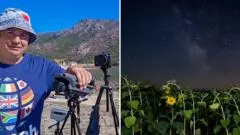
As mainland Europe prepares for its first total solar eclipse in more than 25 years on Wednesday, the BBC spoke to dedicated "eclipse chasers" who travel long distances to witness the brief phenomenon. Mark Griffiths drove from Cheshire to Galicia in northern Spain, one of the best viewing spots, while Samantha and Gregory Phillips-Brown flew from upstate New York to Iceland, describing the pursuit as an all-consuming hobby fuelled by the awe of previous sightings.
The path of totality runs from Siberia across the Arctic Ocean, over Greenland and Iceland, across the North Atlantic, and finishes over northern Spain and the Mediterranean, with the rest of Europe seeing a partial eclipse. Totality itself lasts only a couple of minutes, but enthusiasts plan meticulously, with Griffiths bringing two cameras, a telescope and a drone after a two-day drive, and the Phillips-Browns hiring a camper van and booking their trip over a year in advance to reach a remote spot in Iceland's Westfjords.
In short
- Mainland Europe's first total solar eclipse in 25+ years happens Wednesday.
- Enthusiasts travelled far — Cheshire to Spain, New York to Iceland.
- Totality lasts only minutes, but chasers plan for over a year.
Explained simply
Astronomy enthusiasts follow the moon's shadow around the globe to witness total solar eclipses, rare events in which the moon passes directly between the Earth and the sun, briefly blocking sunlight entirely for a small area of the planet. This week's eclipse is crossing parts of Europe, an area that has not seen a total eclipse in more than 25 years, drawing dedicated observers from as far afield as Britain and the United States.
These "eclipse chasers" often plan trips months in advance, travelling long distances and carrying specialist equipment to reach places along the narrow path where the total eclipse will be visible. Their motivation tends to be the unusual experience it offers: for a few minutes, day briefly turns to night, temperatures drop and animals often fall silent, before normal daylight returns.
The phenomenon matters both as a shared scientific and cultural event, giving researchers and the public alike a rare chance to observe the sun's outer atmosphere, and as a magnet for tourism in the towns and regions that happen to lie along the eclipse's path.