What public health professionals can learn from anti-vaccine storytelling
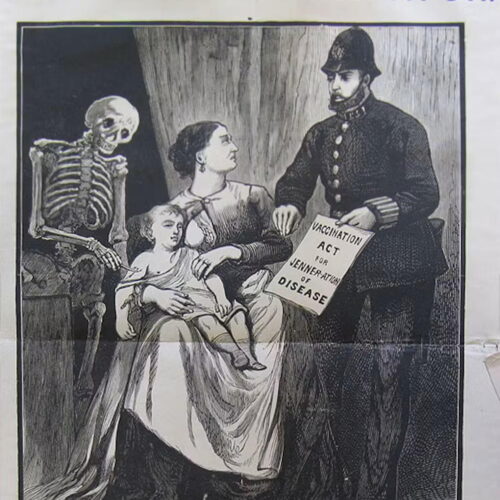
A medical humanities researcher argues that public health experts are losing the battle against vaccine hesitancy partly because they rely on facts and data, while anti-vaccine groups deploy emotionally compelling storytelling that is unconstrained by scientific accuracy. The "information deficit" approach, which assumes people distrust vaccines simply because they lack accurate knowledge, has had limited success, and vaccine-hesitant views continue to spread even among well-educated, health-literate people, suggesting the problem runs deeper than access to good information.
The article traces vaccine scepticism back to 19th-century riots against England's mandatory smallpox vaccine and the 1894 founding of the Anti-Compulsory Vaccination League of Brooklyn, showing the phenomenon is far from new, though it is now closely linked to the Make America Healthy Again movement and US Health and Human Services Secretary Robert F. Kennedy Jr. The author explains that vaccine hesitancy is a "wicked problem" driven by mistrust of the medical system, government scepticism, protective parental instincts and religious belief, and that anti-vaccine narratives are especially persuasive because they can freely dramatise stories of dismissive doctors and children harmed by vaccines, unlike pro-vaccine messaging, which must stay faithful to the more mundane realities of science.
- Anti-vaccine groups use emotional stories that facts alone can't counter.
- "Information deficit" education approach has had only limited success.
- Vaccine hesitancy is a "wicked problem" driven by mistrust, not ignorance.