World news and discussion on TalkFuse.
Trump defended ties with Putin and vowed to retain US data centres
Developed over time first seen 12 hours ago
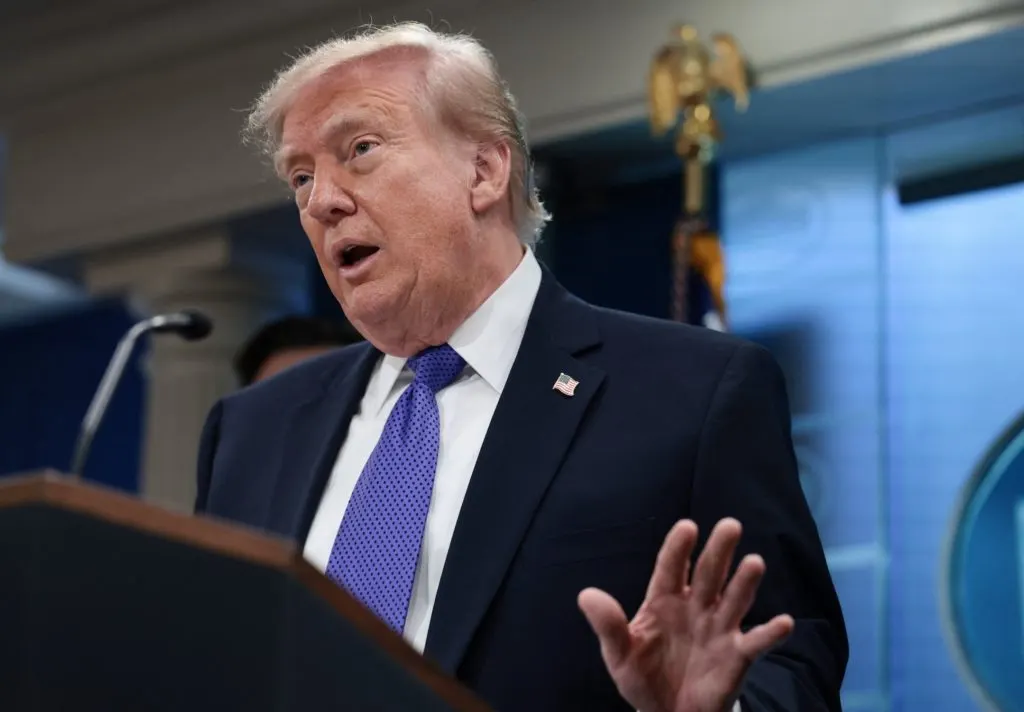
At a lengthy White House news conference, Donald Trump praised his recent Asia trip and defended his relationship with Russian President Vladimir Putin, while vowing to keep data centres in the United States. His remarks highlighted both his approach to relations with Russia during its war with Ukraine and the role of data centres in US competition with China in artificial intelligence.
Trump said he and Putin had a “fantastic relationship” but did not say whether Putin was a friend of the United States. Secretary of State Marco Rubio argued that regular engagement between the US, Russia and China was important because the three countries possess most of the world’s nuclear weapons. Trump said companies building data centres abroad would face a “tremendous tax”; the report also noted a new US policy restricting exports of AI chips and Russian bombing in Ukraine.
- Sources
- 2
- Outlets
- 2
- Left · Centre · Right
- 1 · 1 · 0
In short
- Trump defended his relationship with Putin.
- He said overseas data centre construction would face a heavy tax.
- Rubio backed regular talks among the three nuclear powers.
How this story developed
- 4 hours ago The report also noted a new US policy restricting AI chip exports and Russian bombing in Ukraine that morning, as Trump reiterated his plans to keep data centres in the United States.
- 10 hours ago Trump added that he would not say whether Putin was a friend of the United States, while Marco Rubio defended regular US, Russian and Chinese engagement on the grounds that the countries possess most of the world’s nuclear weapons.
- 11 hours ago At a White House news conference, Donald Trump praised his Asia trip, defended his ties with Xi Jinping and Vladimir Putin, and said firms building data centres abroad would face a “tremendous tax” as the US competes with China in AI.
Full account
President Donald Trump used a lengthy White House press conference after his Asia trip to praise the meetings he held with Chinese President Xi Jinping and Russian President Vladimir Putin. He described the trip in glowing terms and defended his personal relationship with Putin, saying the two had a “fantastic relationship”. Asked whether Putin was a friend of the United States, Trump did not give a direct answer.
Secretary of State Marco Rubio defended engagement among the three countries, arguing that the United States, Russia and China hold most of the world’s nuclear weapons and that regular contact between their leaders is important for global safety. The approach has drawn criticism from Democrats, who questioned the decision to include Putin while Russia is at war with Ukraine. Trump again said Putin wanted peace; Russia had bombed Ukraine that morning, according to the report.
Trump also addressed the debate over artificial intelligence infrastructure, saying his administration would not allow companies to build data centres in other countries. The account presents him as a consistent supporter of keeping such facilities in the United States, an issue that has also featured in domestic political debate.
A second report portrays the event less as a policy briefing and more as a spectacle shaped by Trump’s performance and the presence of Vice-President JD Vance and Rubio, whom it casts as possible successors competing for his favour. It describes a crowded room, sound problems and lengthy digressions, including a discussion of road repairs. It also highlights Trump’s enthusiasm about Xi greeting him at the airport and his comparison of the summit with the Yalta meeting.
Where outlets differ
From the full account, which is AI-written from the sources:
The first report concentrates on the substance of Trump’s comments about Putin, Rubio’s case for engagement and the data-centre announcement, while the second focuses on the press conference’s atmosphere and interprets the appearance of Vance and Rubio through the lens of a possible 2028 succession contest.
The first report says Trump had just returned from Shenzhen and gives the account of Russia bombing Ukraine that morning. The second foregrounds Trump’s favourable view of the summit and Xi’s airport greeting, alongside the event’s technical disruptions and Trump’s digressions.
The supplied second source ends mid-sentence, so it provides only a partial account of the press conference.
Left-leaning outlets 1
Only here: turns, white, house, press, conference
Centre outlets 1
Only here: defended, ties, putin, vowed, retain
Every side used: trump
Headline columns compared word for word; nothing in them is AI-written.
Steelman: both sides, in good faith
The strongest fair case each way — we don't pick a winner.
The case for
Supporters of Trump’s approach could argue that keeping channels open with Putin is a practical way to manage nuclear risks and preserve scope for diplomacy, even amid Russia’s war in Ukraine. They could also say that encouraging data centres to stay in the United States protects strategic infrastructure, supports jobs and strengthens the country’s position in the AI competition with China.
The case against
Critics could argue that publicly celebrating a close relationship with Putin risks weakening pressure on Russia and unsettling allies while Ukraine remains under attack; engagement, they would say, should be paired with clear demands and consequences. They could also contend that threatening companies with heavy taxes to keep data centres at home may deter investment or invite retaliation, and that industrial policy should build domestic capacity without relying on coercion.
Explained simply
Donald Trump is the president of the United States, and Vladimir Putin is the president of Russia, whose forces have been fighting in Ukraine since Russia’s full-scale invasion in 2022. Their countries have a long history of rivalry, and US policy towards Russia can affect diplomatic efforts and support for Ukraine. Marco Rubio, the US secretary of state, helps shape the government’s foreign policy.
Artificial intelligence relies on large data centres, which house the computers used to train and run AI systems. The United States and China are competing to develop the technology, while governments also use controls on advanced computer chips to limit access to them. Policies on where companies build data centres and which countries can obtain AI chips may affect investment and that competition.
Coverage · 2 sources
Bias meters
From 2 rated sources.
Asia Europe Government Politics World
Read the full article at the source →
Originally published by PBS NewsHour as “What Trump addressed during his lengthy White House news conference”.