Accelerated magma refilling helps explain Kilauea’s towering lava fountains
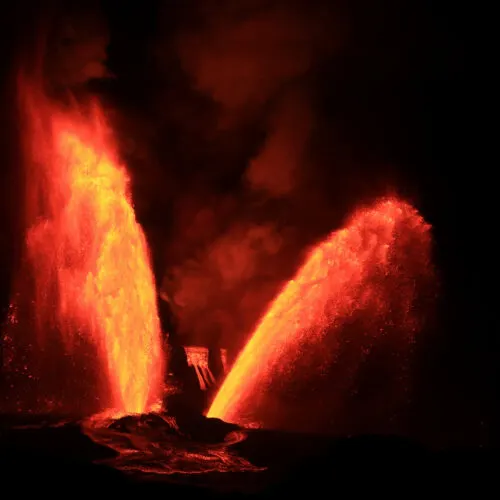
Kilauea in Hawaii has experienced a series of dramatic lava fountain eruptions since 2024, with fountains reaching heights of 160-400 metres. Scientists have been studying these eruptions intensively, with 35 monitoring stations recording seismic, gas, and visual data, which has provided unprecedented insights into what drives these spectacular but poorly understood volcanic phenomena.
The eruptions followed an accelerated refill of underground magma reservoirs that doubled from 22 cm per year in 2019 to 57 cm per year by 2023. Researchers discovered they could predict eruptions by monitoring the tilt of Kilauea's summit—when tilt reached similar levels, fountains would reappear. Whilst scientists previously debated whether carbon dioxide or steam-driven mechanisms powered the fountains, new data suggests neither theory fits perfectly, as CO2 levels remained low whilst sulphur dioxide rose during eruptions.
- Hawaii's Kilauea volcano has had over 50 dramatic lava fountain eruptions since 2024.
- Scientists discovered eruptions can be predicted by monitoring summit tilt levels.
- New data challenges existing theories about what powers lava fountains.
New here? Start with this
Kilauea is one of the world's most active volcanoes, located on the Big Island of Hawaii. Since 2024, it has produced a series of dramatic eruptions that send lava fountaining hundreds of metres into the air, with heights reaching 160 to 400 metres.
Scientists have monitored these eruptions intensively because lava fountains remain poorly understood. A network of 35 monitoring stations recorded seismic activity, volcanic gases, and visual data, providing unprecedented insight into how these spectacular eruptions occur.
Researchers discovered that the fountains coincided with accelerated refilling of underground magma reservoirs beneath the volcano, which doubled its rate between 2019 and 2023. By tracking changes in the tilt of Kilauea's summit, scientists found they could predict when new fountains would appear, though the exact mechanism powering them remains unclear.
Art Celebrity Culture Entertainment
Read the full article at the source →
Originally published by Ars Technica as “What’s been driving Hawaii’s lava fountains?”.