White House halts Microsoft green card labour applications
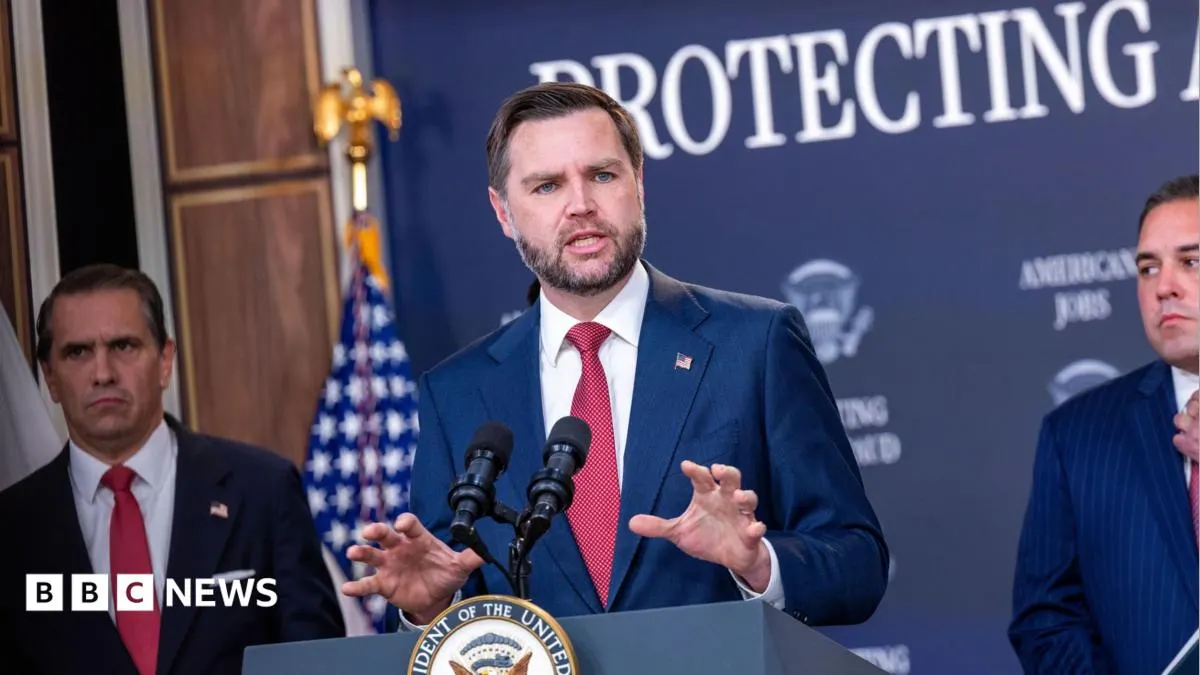
The White House has stopped processing new and pending permanent-residency labour applications from Microsoft and seven other technology companies. Vice-President JD Vance accused the firms of abusing work-visa rules and replacing US employees with foreign workers, claims that could affect companies’ ability to retain some international staff.
The restrictions apply to applications under the Permanent Labour Certification Program, which can lead to a Green Card; the separate H-1B visa programme is capped at 85,000 visas a year. Vance cited Microsoft’s 6,000 job cuts and 6,800 H-1B applications, while Microsoft said 80% of its filings last fiscal year concerned existing employees and that international hires receive equivalent pay. The company says most of its US employees are American, and its spokeswoman said it would provide the administration with more information.
- Microsoft and seven other firms face a halt to permanent-residency labour applications.
- Vance alleges the companies replace US workers; Microsoft disputes the claim.
- Microsoft says 80% of its recent H-1B filings involved existing staff.
New here? Start with this
A Green Card is a permit that allows foreign workers to live and work permanently in the United States. The White House has suspended new applications from Microsoft and seven other technology companies seeking to sponsor foreign workers for permanent residency through a government programme called Permanent Labour Certification. This is separate from the H-1B visa scheme, a temporary work programme that allows companies to hire skilled workers from abroad on a short-term basis.
The Vice-President, JD Vance, has accused the affected technology companies of misusing these programmes to replace American workers with cheaper foreign labour. He pointed to Microsoft's recent job cuts—the company made 6,000 employees redundant earlier this year whilst simultaneously filing around 6,800 applications for temporary foreign workers. Microsoft has disputed this characterisation, saying that most of its visa applications concerned existing employees and that it pays international hires the same wages as American workers.
The row touches on a longstanding debate about immigration and employment in the technology sector. Tech companies argue they need access to global talent to remain competitive, particularly for specialised roles, while critics contend that companies use visa programmes to suppress wages and displace American workers. The White House's decision signals a stricter approach to labour immigration in the sector and could affect how many international employees technology companies can retain or recruit.
Both sides, in good faith
The strongest fair case each way — we don't pick a winner.
The case for
The concern centres on whether companies are genuinely unable to find qualified Americans or are instead exploiting visa programmes to replace domestic workers at lower cost. When a company undertakes 6,000 layoffs whilst simultaneously filing 6,800 H-1B applications, this raises legitimate questions about whether the applications serve genuine skills gaps or represent a systematic approach to workforce substitution. The Labour Certification Program exists to ensure foreign hiring only occurs when domestic workers cannot fill positions, and robust enforcement is necessary to ensure that principle holds in practice.
The case against
Labour certification and visa programmes exist because specialised technical talent often cannot be sourced domestically, and companies need international mobility to compete globally. Microsoft's claim that 80% of its filings concern existing employees suggests these are often cases of retaining talent already in the country on other visas, not replacing Americans. Permanent residency applications and H-1B visas serve different purposes and involve different legal scrutiny; conflating layoffs with visa applications ignores that workforce restructuring happens independently of hiring needs for specific roles. Blocking these applications could harm innovation and economic competitiveness whilst potentially violating contractual and legal obligations to employees already in the country.
Read the full article at the source →
Originally published by BBC Technology as “White House blocks Microsoft from foreign worker hiring program”.