Sea People threat in Nolan’s Odyssey explained
Developed over time first seen 2 months ago
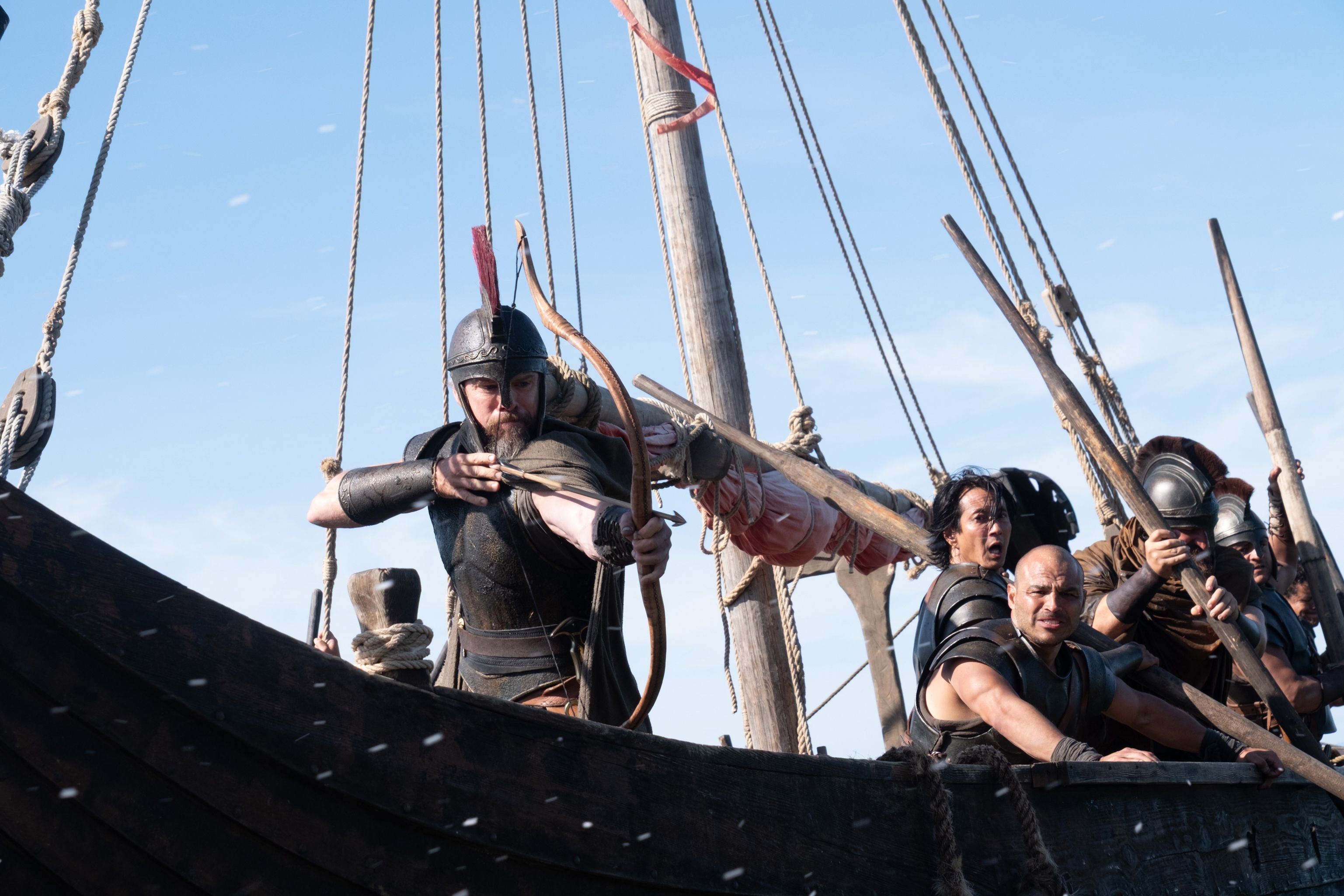
Polygon’s article explains the “Sea People” as a deliberately vague menace in Christopher Nolan’s The Odyssey, used in the film to heighten the danger facing Ithaca while Odysseus is away. Queen Penelope sees them as a threat that could exploit the island’s lack of a king, while the story later suggests Odysseus’s own seaborne assault on Troy may have helped create or reinforce that fearful reputation. The idea matters because it links the film’s mythic storytelling to a broader theme of war, instability and the unintended consequences of conquest.
The piece notes that the film never definitively identifies the Sea People, leaving room for interpretation, but connects them to a longstanding scholarly theory about The Odyssey and the so-called “Cretan Lie”. In historical terms, the Sea Peoples were a loose confederation that attacked Egypt and parts of the eastern Mediterranean around 1200 BC, near the end of the Bronze Age, with evidence appearing in Egyptian inscriptions such as those at Medinet Habu. Historians remain uncertain who most of these groups were, though the Peleset are linked to the Philistines and the Shekelesh are sometimes associated with Sicily; many scholars now think these raiders were more a symptom of wider collapse than the sole cause of it.
- The film uses the Sea People as a symbol of spreading instability.
- Odysseus may have helped create the legend through Troy’s destruction.
- Historians still debate who the real Sea Peoples were.
New here? Start with this
The Sea Peoples were groups of raiders mentioned in ancient Egyptian records from around 1200 BC, during a period of upheaval across the eastern Mediterranean. They attacked coastal areas including Egypt, but historians still do not know exactly who most of them were or where they came from.
Their name is often linked to the wider collapse of Bronze Age kingdoms, when wars, migration, shortages and political weakness affected many societies. Most historians now see the raiders as part of that turmoil rather than its only cause.
In Homer’s Odyssey, written centuries later, dangers at sea and threats to a rulerless home are central to the story. A modern retelling can therefore use an uncertain group of seaborne attackers to underline the vulnerability of Ithaca while its king is absent, and to explore how warfare can create new fears and enemies.
More coverage
Read the full article at the source →
Originally published by Polygon as “Who are the “Sea People” in Christopher Nolan’s The Odyssey?”.