Who is Natalie Harp, Trump’s right-hand woman?
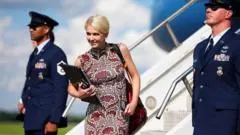
Natalie Harp, a 35-year-old aide to US President Donald Trump, has drawn fresh attention after Democratic Senator Jon Ossoff name-checked her in a viral speech criticising Trump's travel arrangements, including a jet gifted by Qatar's emir. Harp holds the formal title of executive assistant to the president but wields far greater influence than the role typically implies, controlling much of the information flow to Trump and earning nicknames such as "gatekeeper" and "human printer" for the way she filters and delivers him news.
Harp rose to prominence after crediting Trump with saving her life, having used the Right to Try Act he signed in his first term to access experimental treatment for bone cancer after failing conventional chemotherapy. She spoke about this at the 2020 Republican National Convention, later worked as a host at the conservative network OAN, and joined Trump's campaign in 2022. She is now rarely far from him, accompanying him on Air Force One and reportedly among the small group who joined him when he secretly swapped planes leaving Turkey last month.
- Natalie Harp is Trump's highly influential executive assistant.
- She rose to fame crediting Trump with saving her life.
- Senator Ossoff's viral speech renewed scrutiny of her role.
New here? Start with this
Natalie Harp is a close aide to Donald Trump, the US president. Her formal job is executive assistant, but she is reported to have an unusually large role in deciding what information reaches him.
Harp first became widely known after saying that Trump had helped save her life. She used the Right to Try Act, a law he signed during his first term, to seek experimental treatment for bone cancer after chemotherapy had not worked.
She later worked for the conservative television network OAN and joined Trump’s campaign in 2022. Her close presence matters because aides who manage a president’s information and access can shape what he sees and who gets to speak with him.
Both sides, in good faith
The strongest fair case each way — we don't pick a winner.
The case for
Supporters see Natalie Harp as an exemplar of the kind of fierce, unwavering loyalty that any leader values in a close aide. Her willingness to defend the president through impeachment, indictment and years of hostile press coverage reflects genuine conviction rather than mere careerism, and her deep familiarity with his preferences and communication style makes her an effective conduit who ensures his views are represented accurately. In this view, having a small circle of intensely trusted, long-serving staff is a strength that promotes continuity and shields a besieged leader from a hostile media environment.
The case against
Critics who take Harp's influence seriously argue that such total devotion, however sincere, risks insulating the president from dissenting views and unwelcome facts precisely when he needs them most. Jon Ossoff's pointed remarks reflect a broader concern that unelected aides prized above all for loyalty can create an echo chamber, filtering information in ways that flatter rather than inform. On this view, healthy governance requires advisers willing to challenge a leader, and excessive personal devotion, even if well-intentioned, can crowd out the candour that good decision-making depends on.