World news and discussion on TalkFuse.
Why Each Octopus Arm Has a Mind of Its Own
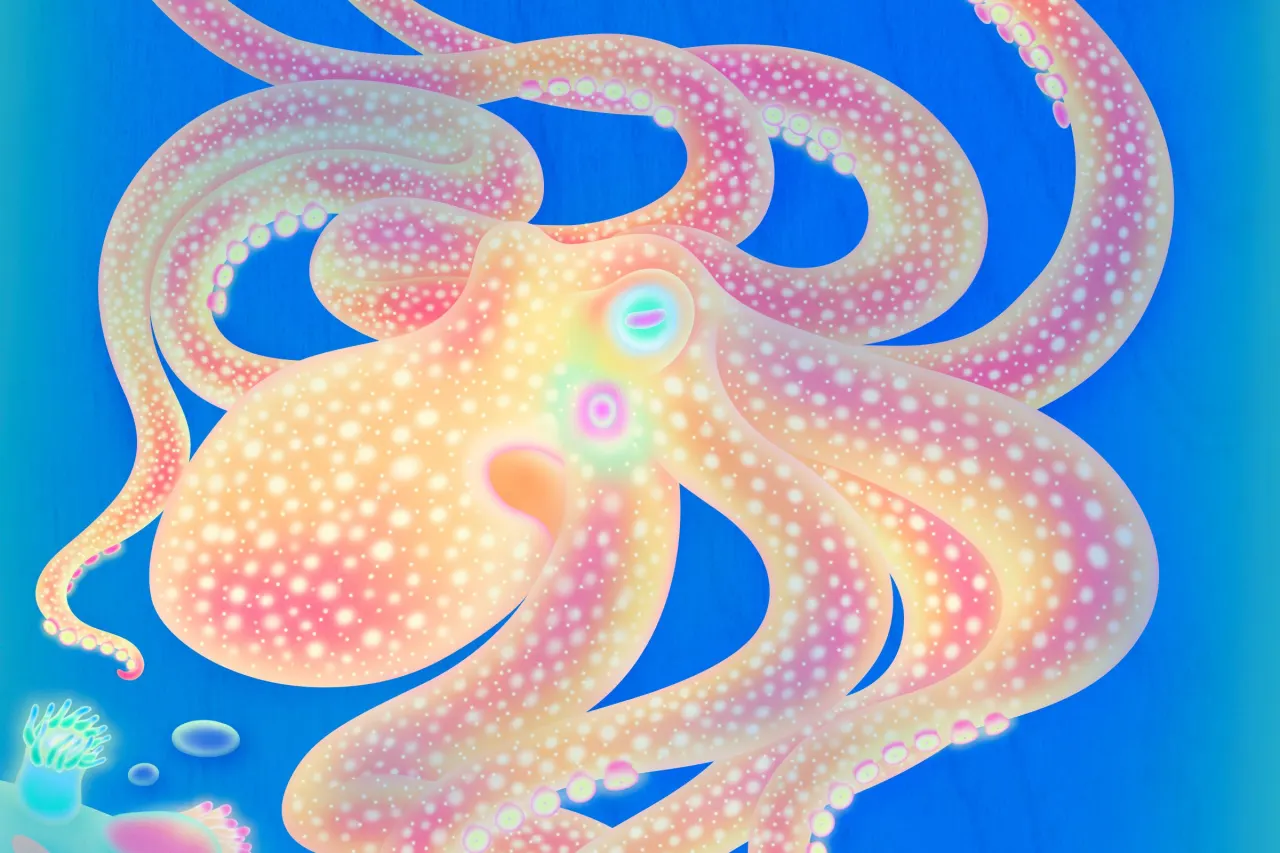
Octopuses display remarkable intelligence, but much of it does not originate in their central brain. More than two-thirds of an octopus's roughly 500 million neurons are located in its eight arms, giving rise to a form of distributed intelligence that is unique among cephalopods and largely unmatched elsewhere in the animal kingdom.
Each arm can move independently in any direction while sensing taste and touch with remarkable precision, and a nerve ring links all eight arms so they can coordinate movement without constant direction from the brain. Scientists studying this system are still probing anatomical, behavioural and philosophical questions about what it means for an animal to have, in effect, several semi-autonomous minds working together.
In short
- Two-thirds of an octopus's neurons sit in its arms, not its brain.
- Arms move, taste and feel independently, linked by a shared nerve ring.
- Researchers are still unpacking how this distributed intelligence actually works.
Explained simply
Octopuses are soft-bodied sea animals in the same group as squid and cuttlefish. Their eight arms are lined with suckers that help them explore and handle objects, and their nervous system is arranged differently from ours: many more nerve cells are in the arms than in the central brain.
Each arm can sense touch and chemical traces, which lets an octopus investigate its surroundings as it moves. Nerves linking the arms help them coordinate, while the brain also plays a part in guiding the animal’s behaviour.
This arrangement matters because it gives scientists a way to study how sensing and movement can be shared between a central brain and other parts of the body. It also raises questions about how control is organised in animals, without implying that each arm has a separate human-like mind.