Science news and discussion on TalkFuse.
Why haven’t we seen images of SpaceX Moon crash yet?
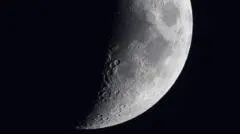
A SpaceX Falcon 9 rocket's spent upper stage was expected to strike the Moon's surface on Wednesday 5 August at roughly 5,400mph (8,700km/h), potentially creating a new crater. Such an impact would be of scientific interest, as it could offer researchers insight into the Moon's subsurface composition and geology, similar to how past rocket-stage impacts have been studied.
Despite the crash being anticipated, confirmation images could take days or even weeks to emerge, according to the BBC's science correspondent Pallab Ghosh. This delay stems from the practical challenges of imaging the lunar surface, meaning space agencies and observers must wait for orbiting spacecraft to pass over and photograph the suspected impact site before any evidence can be verified.
In short
- SpaceX rocket stage expected to crash into Moon at high speed
- Crash could create a new lunar crater
- Confirmation images may take days or weeks to arrive
Explained simply
A rocket’s upper stage is the part that continues carrying a payload after the lower stages have fallen away. Once it has finished its job, it can remain in space; in this case, the Falcon 9 stage was expected to hit the Moon.
Such impacts can make craters and expose material beneath the lunar surface, giving researchers clues about the Moon’s geology. But the Moon is not watched continuously from close range: spacecraft in orbit need to pass over the suspected site and capture images, which can take days or weeks.