World news and discussion on TalkFuse.
Moscow stays silent as Russian strikes continue despite Trump ceasefire claim
Developed over time first seen 2 months ago
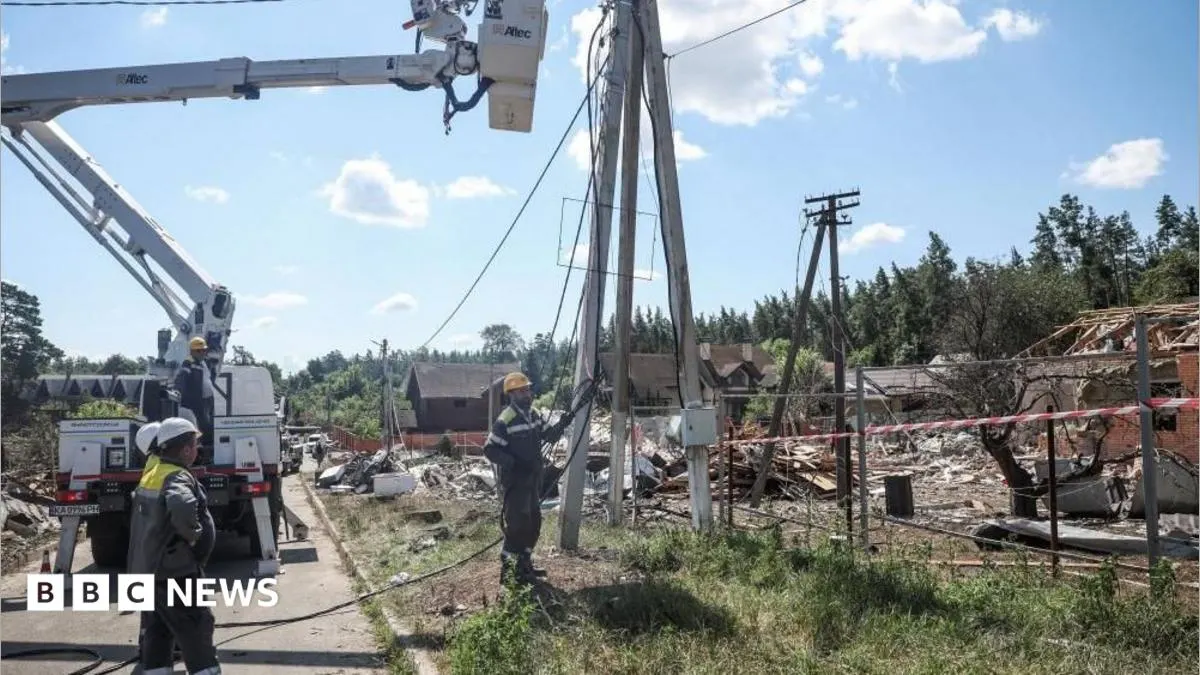
US President Donald Trump said Russia and Ukraine had agreed to stop attacks on energy infrastructure “effective immediately”, but Moscow did not confirm the arrangement and Russian strikes continued. Ukrainian President Volodymyr Zelensky said the announcement was news to him, while Kremlin spokesman Dmitry Peskov said only that contacts were continuing; the gap between the announcement and events on the ground has cast doubt on whether there is a ceasefire.
Pro-Kremlin media described the proposed deal as advantageous to Moscow because it could curb Ukraine’s drone attacks on Russian oil facilities while leaving Russia with less to lose from restrictions on strikes. Those Ukrainian attacks have damaged oil sites and contributed to fuel shortages in Russia. The Kremlin has also rejected broader pauses in fighting, with Foreign Minister Sergei Lavrov saying Ukraine did not deserve a ceasefire respite, while Zelensky has called for a 60-day truce to allow elections.
- Sources
- 3
- Outlets
- 3
- Left · Centre · Right
- 0 · 2 · 1
In short
- Trump announced an energy ceasefire, but Russia did not confirm it.
- Russian strikes on Ukrainian energy targets continued.
- Pro-Kremlin media said the deal could favour Moscow.
How this story developed
- 2 months ago The Kremlin's refusal to confirm the ceasefire, combined with its continued military strikes, demonstrated that Moscow's actual objective was to compel Ukrainian capitulation rather than to negotiate a genuine peace settlement.
- 2 months ago Fresh Russian military strikes on Ukrainian energy infrastructure were reported on Monday, with the Kremlin signalling its intention to intensify operations as winter approached.
- 2 months ago Russian military forces continued to strike Ukrainian energy infrastructure despite the announced ceasefire, contradicting claims of mutual consent and creating doubt about whether both parties had genuinely agreed to the cessation.
- 2 months ago US President Donald Trump announced that Russia and Ukraine had agreed to an immediate ceasefire on energy infrastructure strikes, but President Zelensky indicated surprise and the Kremlin declined to confirm the arrangement.
Full account
US President Donald Trump declared on Sunday that Russia and Ukraine had reached an immediate ceasefire on attacks targeting energy infrastructure. The announcement came without prior coordination, catching Ukrainian President Volodymyr Zelensky by surprise, who responded by indicating this was unexpected news to him whilst expressing willingness to participate if Moscow genuinely committed.
The Kremlin's official response has been notably cautious. Spokesman Dmitry Peskov, when questioned about the alleged agreement during his regular media briefing, avoided confirmation, stating only that discussions were ongoing and that any substantive developments would be communicated in due course. This deliberate ambiguity stands in sharp contrast to the response from pro-government media outlets within Russia.
State-aligned Russian media outlets have characterised Trump's initiative as advantageous to Moscow, framing it as a strategic gain rather than mutual restraint. Commentary suggested the arrangement overwhelmingly benefits Russia, restricting Ukrainian military capabilities whilst preserving Moscow's industrial infrastructure. One outlet noted that Ukraine's remaining refinery has already sustained repeated damage, whilst Russian facilities remain numerous and largely intact.
The purported ceasefire appears asymmetrical in practical terms. Recent months have seen Ukrainian long-range drone strikes inflict considerable damage on Russian petroleum facilities and create fuel shortages across Russian territory. Moscow's calculus suggests that restricting such operations would constrain Kyiv whilst Russia maintains broad scope for action. The Kremlin appears to view the arrangement as limiting Ukrainian freedom of action more severely than its own.
Zelensky's confidence in the ceasefire proved short-lived. Within hours of Trump's announcement, Russian forces struck Ukrainian energy installations on multiple occasions, including damage to a major refinery that triggered widespread blackouts. The Ukrainian leader subsequently indicated that infrastructure attacks had continued through successive days and that air raid alerts persisted nationwide, suggesting Russia had rejected the proposed restraint.
Putin responded to Zelensky's separate request for a 60-day ceasefire to permit elections by offering only a single day without military operations coinciding with polling. Foreign Minister Sergey Lavrov dismissed the Ukrainian president's requests, declaring he did not merit such concessions as this would allow European allies to resupply his military. The Kremlin remains fundamentally opposed to any substantial pause in hostilities, maintaining its focus on military objectives rather than negotiated settlement.
Where outlets differ
From the full account, which is AI-written from the sources:
Source 1 emphasises Moscow's strategic calculation and pro-Kremlin media framing suggesting asymmetrical advantage; Source 2 prioritises the continued military strikes and their immediate consequences including civilian casualties
Source 1 focuses on Russia's deliberate public silence and its strategic rationale; Source 2 reports on Russian officials' openly hostile statements and criticisms of Zelensky's motives
Source 1 provides broader geopolitical context including Trump-Putin fuel arrangements and Republican electoral interests; Source 2 concentrates on the immediate military situation and direct human impact
Source 1 is primarily analytical about Russian strategic interests; Source 2 is more event-driven and chronological, documenting violations in real time
Centre outlets 2
- Moscow stays silent as Russian strikes continue despite Trump ceasefire claimBBC World
- Trump claims there's an energy ceasefireThe Hill
Only here: moscow, stays, silent, russian, strikes
Right-leaning outlets 1
Only here: much, russia, putin, missiles, pound
Every side used: trump, ceasefire, energy
Headline columns compared word for word; nothing in them is AI-written.
Steelman: both sides, in good faith
The strongest fair case each way — we don't pick a winner.
The case for
Energy infrastructure ceasefires reduce civilian suffering by protecting essential services including heating, electricity, and water supplies, with humanitarian benefit independent of military calculation. Such agreements create space for diplomatic engagement and demonstrate commitment to limiting armed conflict's impact on non-combatant populations, potentially establishing precedent for broader de-escalation.
The case against
Energy infrastructure constitutes legitimate military targets supporting military operations, with Ukraine relying on such strikes as asymmetrical leverage against Russian conventional superiority. Unilateral ceasefire announcements without genuine bilateral agreement misrepresent the parties' actual positions, weaken Ukraine's negotiating foundation by implying unreciprocated concessions, and substitute symbolic gestures for substantive diplomatic frameworks.
Explained simply
Russia and Ukraine have been at war since 2022, with both sides striking the other's energy infrastructure as a core military strategy. Attacks on power stations, refineries and fuel pipelines damage military capabilities and disrupt civilian life, making energy security a central battlefront in the conflict.
Ukraine's energy sector is more vulnerable because its infrastructure is concentrated in a smaller area, making strikes particularly damaging. Russia, with facilities spread across a vast territory, can more easily absorb damage to individual plants. Energy strikes therefore have very different strategic effects on each side.
Any agreement to stop attacking energy infrastructure would mark a major shift in military strategy for both sides. Both countries have made energy strikes central to their approach, so a genuine ceasefire would require confirmed agreement from both parties.
Coverage · 3 sources
Bias meters
From 3 rated sources.
Read the full article at the source →
Originally published by BBC World as “Why Moscow is staying tight-lipped on Trump’s energy ceasefire”.