Entertainment news and discussion on TalkFuse.
NVIDIA’s $16,000 RTX PRO 6000 targets professionals rather than gamers
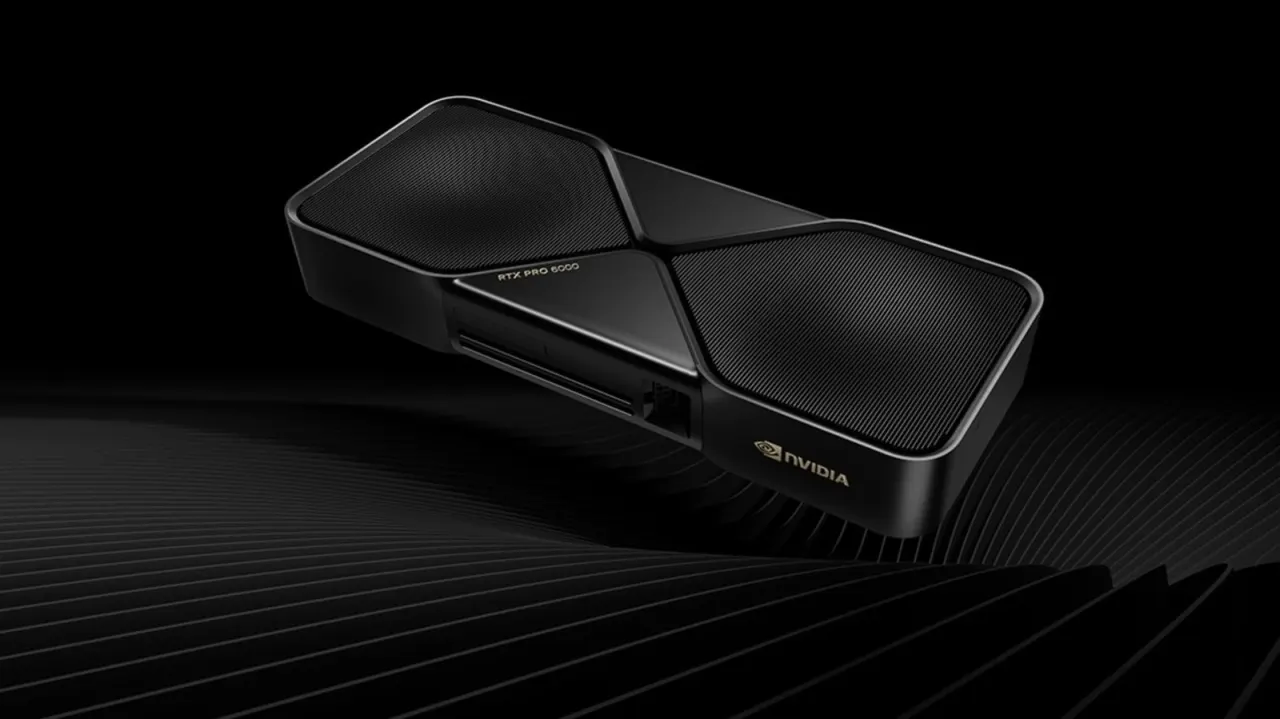
NVIDIA has released the RTX PRO 6000 Blackwell Workstation Edition, priced at $16,000, which is technically more powerful than the consumer-focused RTX 5090 but targets professionals rather than gamers. The pricing reflects NVIDIA's strategy to serve AI developers, engineers, 3D artists and other specialists whose workloads demand capabilities far beyond gaming requirements. The substantial cost increase is justified by professional-grade features and support rather than raw gaming performance.
The RTX PRO 6000 features 96GB of GDDR7 ECC memory—triple the RTX 5090's 32GB—along with 24,064 CUDA cores and 600W maximum power consumption. Whilst testing showed the RTX PRO 6000 performing 3–14 percent faster in games like Cyberpunk 2077 and Star Wars Outlaws, this improvement barely justifies the eightfold price difference. The premium reflects professional drivers, enterprise support, error-correcting memory and certification for applications designed for large-scale AI projects, visualisation work and multi-application workflows rather than gaming performance.
In short
- NVIDIA's $16,000 RTX PRO 6000 targets professionals, not gamers, despite superior specs
- 96GB memory and professional drivers suit AI and visualisation work, not gaming
- Price increased from $8,565 since launch; gaming gains of 3–14% don't justify cost
Steelman: both sides, in good faith
The strongest fair case each way — we don't pick a winner.
The case for
Professional-grade products legitimately require substantial investment in certified driver development, enterprise support infrastructure, rigorous testing protocols, and long-term compatibility commitments that consumer products do not. For customers operating mission-critical systems where downtime or data corruption could cost hundreds of thousands of pounds, the reliability guarantees, error-correcting memory, and dedicated technical support justify significant premiums. The $16,000 investment represents a small fraction of typical project budgets where such systems are deployed.
The case against
The technical specifications do not substantiate an eightfold price premium, particularly when gaming benchmarks show only 3-14 percent performance differences. NVIDIA appears to exploit market segmentation to maximise profit extraction from professionals rather than reflecting genuine value gaps. This pricing strategy creates genuine barriers for smaller studios, emerging-market developers and independent professionals who need professional capabilities but cannot access them at fair market rates.
Explained simply
NVIDIA manufactures graphics cards—specialised computer chips that handle intensive visual calculations. The company sells to two distinct markets: consumer gamers, and professionals in fields such as artificial intelligence research, engineering and design. Professional and consumer graphics cards serve these different purposes and are built differently to match each market's specific needs.
Professional graphics cards must handle demanding tasks like training artificial intelligence systems, running complex engineering simulations or processing vast design files. For this work, they require substantially more memory than gaming demands, built-in error-correction to detect and fix data mistakes, and certification for specialised professional software. Because professionals' work generates significant value, they are willing to pay considerably more for reliability, specialised features and dedicated support.
NVIDIA maintains entirely separate product lines for these markets, with professional cards typically costing many times more than consumer alternatives. This large price premium reflects specialised features, error-correction, enterprise support and reliability requirements rather than differences in raw computing power. The separation allows NVIDIA to serve two very different customer bases with distinct needs and budgets.
Read the full article at the source →
Originally published by Engadget as “Why NVIDIA’s most powerful GPU is so rarely sold to consumers”.