World news and discussion on TalkFuse.
Wild US Open doubles match devolves into player box taunts, a cold net snub, utter chaos
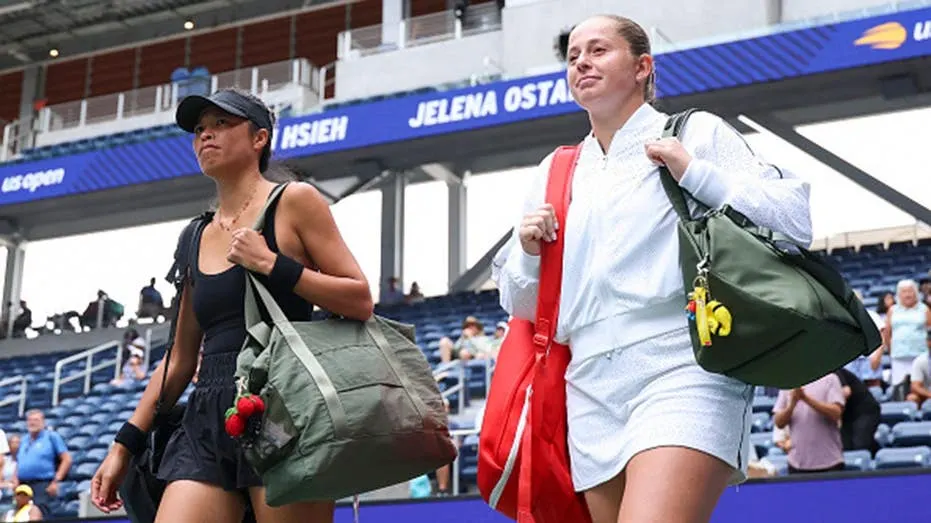
A long-running personal feud between Taiwanese doubles partners-turned-rivals Hsieh Su-wei and Chan Hao-ching boiled over during a US Open women's doubles match, with taunts, an on-court translation dispute and a pointed post-match handshake snub. Hsieh and her outspoken Latvian partner Jeļena Ostapenko beat Chan and Australia's Maya Joint 6-4, 6-4 in the Round of 16 at Flushing Meadows, but the tennis was overshadowed by the pair's off-court hostility, which drew attention to the tensions doubles rivalries can carry beyond the scoreline.
Mid-match, Ostapenko and Hsieh accused Chan's coach of sarcastically applauding their errors in Mandarin from the player's box; Hsieh translated the remarks for Ostapenko, who is not a Mandarin speaker, and demanded an official interpreter be brought to court. After sealing match point, Ostapenko celebrated by shouting towards Chan's box, and at the net Chan shook Ostapenko's hand but conspicuously ignored Hsieh. The rivalry reportedly stems from years of dispute over funding, sponsorship and coaching support within Taiwan's tennis association, which came to a head when Hsieh withdrew from the 2016 Rio Olympics after her coach was allegedly overlooked in favour of Chan and her sister, Latisha.
In short
- Hsieh/Ostapenko beat Chan/Joint 6-4, 6-4 in US Open doubles.
- Match marred by taunts, a translation row and a handshake snub.
- Feud traces back to a 2016 Rio Olympics coaching dispute.
Steelman: both sides, in good faith
The strongest fair case each way — we don't pick a winner.
The case for
Hsieh and Ostapenko could reasonably argue that sarcastic applause from an opposing player’s box was provocative and risked undermining fair play, especially if remarks in Mandarin were being used to target them. Asking for an interpreter would be a proportionate way to clarify what was said, and Ostapenko’s celebration may have reflected frustration after a tense match and a long-running dispute over support.
The case against
Chan and her supporters could reasonably see Hsieh’s translation and demand for an official interpreter as escalating an ambiguous exchange, particularly if the coach’s applause was not clearly directed at the opponents. Chan’s decision to greet Ostapenko but not Hsieh may have been a personal response to years of unresolved conflict over coaching and funding, rather than conduct that affected the match’s fairness.
Explained simply
Hsieh Su-wei and Chan Hao-ching are Taiwanese tennis players who have competed together in doubles and later became rivals. Chan’s sister, Latisha, is also a tennis player; Hsieh and Chan have both represented Taiwan in international competitions.
Their dispute has been linked to disagreements over funding, sponsorship and coaching support in Taiwan tennis. In 2016, Hsieh withdrew from the Rio Olympics after a dispute over which coach would be selected, amid reports that support had been given to Chan and her sister.
Doubles matches involve teams of two, but tensions between players and their teams can extend beyond the court. This rivalry drew attention to how disagreements over support and past partnerships can shape the atmosphere around a match.