Science news and discussion on TalkFuse.
Wildfire-hit residents remove Greenpeace mural of Burnham from scorched mountain
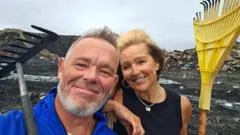
Residents of Capelulo in Conwy, north Wales, removed a Greenpeace mural depicting Prime Minister Andy Burnham that had been painted on a mountainside scorched by wildfires, saying the artwork felt like an "intrusion into grief". The July wildfires burned around 200 acres, forced the evacuation of 36 homes and prompted a major incident declaration by North Wales Fire and Rescue Service, leaving affected residents deeply upset when Greenpeace subsequently used the blackened landscape as a canvas for a climate protest.
The 1,120 sq m image showed Burnham holding an oil drum beside the words "Our house is on fire Andy", aimed at highlighting oil and gas drilling. Hairdresser Allie Evans, who had been evacuated during the fires, and Rhos-on-Sea resident Dean Ward used rakes to break up and remove the paint, though some patches proved too "baked" to fully clear. A local Senedd member accused Greenpeace of "environmental vandalism", while the group said the water-based paint was safe and had only been applied to already-burnt ground, insisting its aim was to highlight the climate crisis rather than cause offence.
In short
- Residents scrubbed away a Greenpeace mural of PM Andy Burnham from a wildfire-scarred mountain
- They called it disrespectful, an "intrusion into grief" for fire-hit locals
- Greenpeace says the water-based paint was temporary and meant to highlight climate change
Steelman: both sides, in good faith
The strongest fair case each way — we don't pick a winner.
The case for
The residents of Capelulo had endured a traumatic disaster – evacuation, property damage, and genuine loss – when Greenpeace used their burnt landscape as a canvas for political messaging. Regardless of the group's good intentions, this act instrumentalised the community's suffering, turning their grief into an activist prop rather than respecting their right to process trauma privately and collectively. The principle that activism should not exploit vulnerable communities in their moment of greatest need is fundamentally sound.
The case against
Wildfires in Wales are increasingly a direct manifestation of the climate crisis itself, making the mural's core argument inseparable from the residents' lived experience. Rather than disrespecting the community, highlighting this urgent connection in the wake of disaster demonstrates exactly why policy change matters – to prevent future communities facing similar trauma. The artwork used water-based, safe paint applied only to already-burnt ground, causing minimal additional harm, and drawing attention to climate action in the aftermath of climate-driven catastrophe serves the public interest.
Explained simply
Wildfires are fast-moving fires that can spread across countryside during hot, dry or windy conditions. In July, fires near Capelulo in north Wales burned about 200 acres, led to 36 homes being evacuated and prompted a major incident declaration by North Wales Fire and Rescue Service.
Greenpeace is an environmental campaign group that campaigns on issues including climate change and fossil fuels such as oil and gas. Its mural showed Andy Burnham, the UK prime minister, beside a message opposing further drilling; residents said painting the fire-damaged mountainside was upsetting after the evacuations and loss. The disagreement reflects wider questions about how climate campaigns should draw attention to environmental risks while respecting people affected by disasters.