Entertainment news and discussion on TalkFuse.
Willem Dafoe Says Record-Breaking U.S. Box Office Should Be ‘Spread Out a Little Bit’: ‘The Audience Comes Mainly From Three Huge Movies’
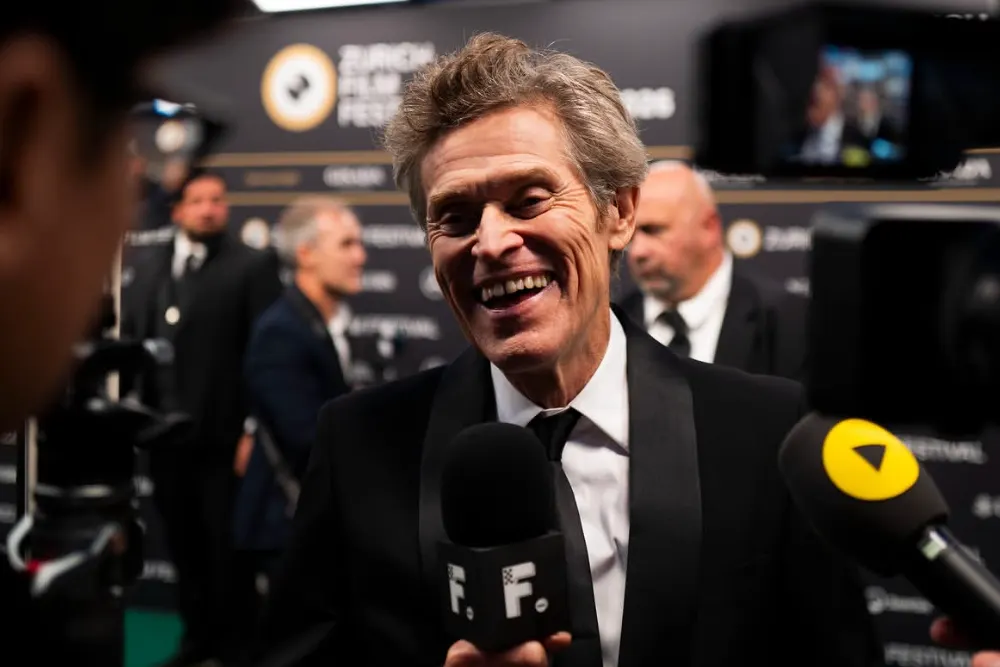
Actor Willem Dafoe has criticised the concentration of this year's record-breaking $4.76 billion U.S. summer box office, arguing that revenue is too heavily concentrated in a handful of major films. Speaking at the Zurich Film Festival whilst presenting his new film "Tenzing," Dafoe highlighted that most audiences are drawn to three or four blockbusters—primarily Christopher Nolan's "The Odyssey" and "Spider-Man: Brand New Day"—whilst smaller productions struggle to find audiences. This observation reflects broader industry concerns about the dominance of big-budget franchises in cinema.
Dafoe, who has successfully navigated both major blockbusters and independent films throughout his career, also reflected on his enduring association with the Green Goblin role from Sam Raimi's 2002 "Spider-Man." He expressed gratitude at having worked with acclaimed auteurs such as Wes Anderson and Robert Eggers, which has prevented him from being defined solely by that character. In "Tenzing," a film chronicling the first ascent of Mount Everest in 1953, Dafoe plays expedition leader Colonel John Hunt, and he described the challenges of filming at high altitude, where the entire crew relied on extensive safety protocols and experienced the genuine physical demands of the mountain environment.
In short
- Dafoe criticises box office concentration in just three or four blockbusters
- Record-breaking $4.76 billion summer driven by select franchises
- Actor discusses Green Goblin legacy and diverse career spanning indie and mainstream films
Steelman: both sides, in good faith
The strongest fair case each way — we don't pick a winner.
The case for
The concentration of box office revenue in a handful of blockbusters threatens cinema's broader ecosystem and cultural health. When a few franchise films capture the vast majority of screens and marketing resources, mid-budget and independent films lose access to distribution and audiences never discover diverse storytelling alternatives. This isn't purely organic demand—studios with massive marketing budgets can manufacture preference, while smaller films cannot compete on visibility alone. A sustainable film industry requires different tiers supporting one another; when blockbusters monopolise revenue, the entire sector narrows creatively, fewer original stories get made, and cinema becomes culturally poorer.
The case against
Box office concentration reflects genuine audience choice and market efficiency, not artificial distortion. Studios taking enormous financial risks on expensive blockbusters deserve the revenue their success generates, and those profits often fund smaller films through studio divisions and subsidiaries. The streaming revolution has fundamentally altered cinema economics—diverse films now reach audiences through digital platforms that never would have attended multiplexes. Attempting to artificially distribute box office would either force audiences toward unwanted films or prevent studios from investing in projects audiences clearly desire. Market forces ensuring revenue flows to what audiences choose is the system working correctly, not a problem requiring intervention.
Explained simply
The US summer box office is the money cinemas take from ticket sales during the summer film season. A record total can still be unevenly shared: a few popular films may account for much of the audience, while smaller films attract fewer viewers.
Big-budget films often belong to established series, such as Spider-Man, and can draw large audiences through familiar characters and wide releases. Independent films are generally made on smaller budgets and may have fewer cinemas showing them. Willem Dafoe has worked in both kinds of films, including playing the Green Goblin in Sam Raimi’s 2002 Spider-Man and taking roles in films by directors such as Wes Anderson and Robert Eggers.
The balance matters to cinemas, filmmakers and audiences: blockbuster ticket sales can support a strong overall year, while limited attention for smaller films may make them harder to produce and see. Dafoe’s latest film, Tenzing, tells the story of the 1953 Mount Everest expedition and features him as its leader, Colonel John Hunt.