World news and discussion on TalkFuse.
Woke pastor running for Kansas congressional seat once used sermon to implore locals to eat less BEEF
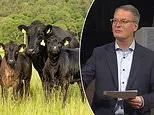
Adam Hamilton, a Democratic pastor running for a U.S. Senate seat in Kansas, has become the focus of political attack over a 2020 sermon in which he urged his congregation to eat less beef due to environmental concerns. The sermon, titled "What Would Jesus Say About Climate Change?", prompted Hamilton to encourage his followers to repent for behaviours that produce harmful emissions, with cattle accounting for roughly 7% of all human-caused greenhouse gas emissions globally. This has become a significant issue in his campaign against incumbent Republican Senator Roger Marshall, highlighting a clash between environmental concerns and agricultural interests.
Hamilton's comments about reducing beef consumption proved controversial in a state where the cattle industry dominates. Kansas, with 5.8 million cattle compared to 2.9 million people, is the third-largest beef producer in the United States. Marshall seized on Hamilton's sermon to attack him as out-of-touch with Kansas values, whilst Hamilton's campaign responded by pointing out that Marshall had himself previously acknowledged that declining cattle herds had reduced methane emissions and had voted for legislation requiring warning labels on processed meats. The race represents a rare opportunity for Democrats in Kansas, where the party has not won a Senate election since 1932, though the state's current Democratic governor won reelection in 2022.
In short
- Democratic Senate candidate attacked for 2020 sermon urging less beef consumption
- Kansas has 5.8 million cattle—outnumbering residents by two to one
- Opponent claims hypocrisy after Marshall made similar environmental comments himself
Steelman: both sides, in good faith
The strongest fair case each way — we don't pick a winner.
The case for
Climate science establishes that livestock production substantially contributes to global greenhouse gas emissions, and pastoral leadership invoking theological principles of stewardship to encourage personal reflection on consumption choices represents legitimate moral teaching. Hamilton's sermon engaged his congregation in voluntary consideration of environmental impact through the lens of faith, not policy imposition, making it a reasonable exercise of religious authority. The credibility of the underlying environmental argument is demonstrated by the fact that even his political opponent has acknowledged emissions concerns related to cattle production and supported related legislative measures.
The case against
A Senate candidate's religious appeal for locals to eat less beef in a state where cattle ranching is foundational to the economy and identity appears profoundly disconnected from constituent realities. Hamilton's framework—framing agricultural production as something requiring moral repentance—implicitly casts a major local industry as morally problematic, which disrespects the livelihoods and values of the communities he seeks to represent. Whatever the scientific basis for the underlying environmental argument, a politician aspiring to serve Kansas should demonstrate primary commitment to the economic wellbeing of its people rather than advancing external environmental ideology that, whether intentionally or not, stigmatises their fundamental industries.
Explained simply
Adam Hamilton, a pastor and Democratic candidate, is running for a U.S. Senate seat in Kansas against Republican incumbent Roger Marshall. A 2020 sermon in which Hamilton encouraged his congregation to reduce beef consumption has become a central issue in the campaign.
Hamilton's sermon focused on environmental concerns, particularly that cattle farming produces significant greenhouse gas emissions. His comments proved controversial in Kansas, which is the third-largest beef-producing state in America and has nearly twice as many cattle as people. Marshall's campaign has used the sermon to portray Hamilton as out of touch with Kansas farming interests.
Kansas rarely elects Democrats to the Senate—the party has not won a Senate election in the state since 1932. However, Democrats see an opportunity in this race, having retained the state's governorship in a recent election. The competition reflects a broader tension between environmental concerns and agricultural communities that depend on livestock farming.
Americas Climate Environment Government Politics Science World