Workers renovating major city street stumble on ancient discovery buried 20 feet below
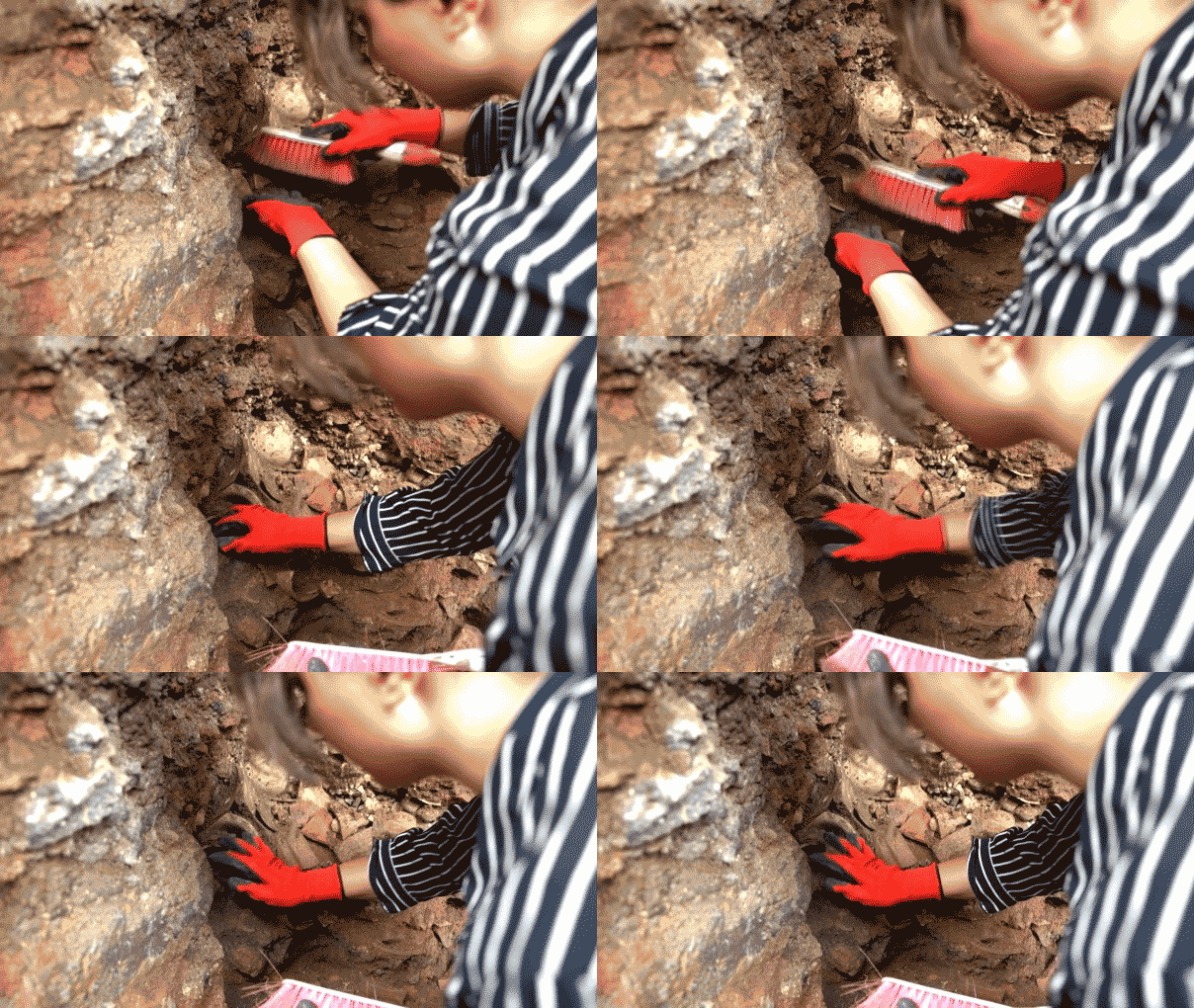
Workers renovating Rustaveli Avenue, Tbilisi's main street, unearthed a collection of pottery approximately 1,000 years old during excavations roughly 20 feet beneath the surface. The discovery, which includes intricately decorated fragments, jugs and shards, is significant because it provides further evidence of Tbilisi's rich archaeological heritage and its historical importance as a cultural and economic hub.
The artefacts are believed to date between the 10th and 11th centuries, when Tbilisi was under Arab rule and served as a crucial trading point along the Silk Road. The pottery was uncovered during a larger infrastructure project to upgrade the avenue with new pedestrian crossings and improved signage. According to David Lordkipanidze, director of the Georgian National Museum, such discoveries are not surprising given Tbilisi's history as a multicultural centre and the region's status as a crossroads for cultures and commerce spanning from its founding in the fourth century.
- Medieval pottery cache found 20 feet below Tbilisi's main street during roadwork
- Artefacts date to 10th–11th centuries when city was under Arab rule
- Further studies including 3D scanning will help determine precise age of finds