World Cup Boycott Proposed as Opposition to Controversial FIFA Private Investment Plan Grows
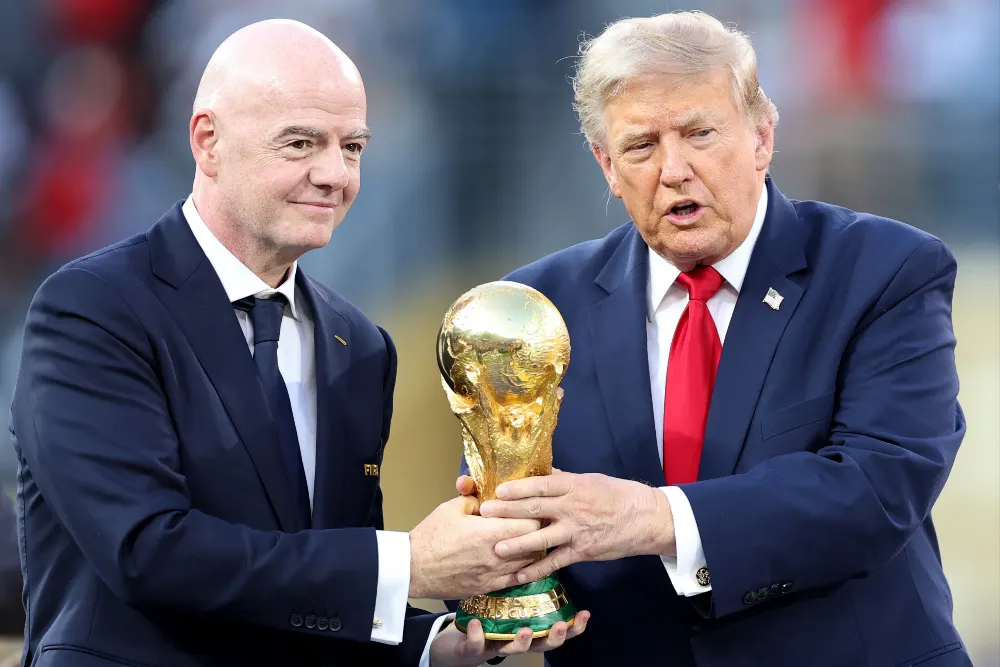
Opposition is mounting within world football to a FIFA plan to spin off its major events, chiefly the World Cup, into a separate commercial entity called FIFA Forward Enterprise, worth an estimated $20 billion, with roughly 20% of it to be sold to outside investors. Critics, including the North American, Central American and Caribbean confederation Concacaf and European governing body UEFA, argue that the tournament's governance is being sold off without proper consultation, and UEFA is fast-tracking an emergency meeting of its member associations this week to discuss options, including a possible World Cup boycott.
Among the reported potential investors is Thrive Eternal, led by Joshua Kushner, brother of Donald Trump's son-in-law Jared, a link that has fuelled scrutiny of FIFA president Gianni Infantino's ties to the Trump family. FIFA's 211 member associations must ratify the plan, with Concacaf representing 41 of them and UEFA 55; the proposal would raise annual payments to members from $2 million to $5 million, plus a one-off $20 million payment each. Infantino has defended the move as "the democratisation of football", while opponents, including UK prime minister Andy Burnham and fan group Football Supporters Europe, insist the World Cup is not FIFA's to sell.
- FIFA plans to sell a 20% stake in a new $20bn World Cup entity
- UEFA, Concacaf and UK PM Burnham oppose the plan strongly
- UEFA holds emergency talks this week; boycott is being discussed
New here? Start with this
FIFA, world football's governing body, is proposing to create a separate commercial company to operate its major tournaments, particularly the World Cup. This entity, valued at roughly $20 billion, would sell approximately a fifth of itself to outside investors. The plan requires approval from FIFA's 211 member associations.
Several regional football bodies, including Europe's UEFA and Concacaf representing North and Central America, oppose the plan, arguing FIFA lacks authority to sell the World Cup without proper consultation. Supporters, including FIFA president Gianni Infantino, describe it as democratising football, whilst critics argue the World Cup is a global asset beyond FIFA's right to commercialise.
The proposal would increase annual payments to member associations from $2 million to $5 million and provide a one-off $20 million payment to each, a substantial rise particularly benefiting smaller federations. The core dispute concerns whether private investors should gain control of football's premier tournament and whether FIFA can make such a decision unilaterally.
Both sides, in good faith
The strongest fair case each way — we don't pick a winner.
The case for
The commercial development of the World Cup through private investment can significantly increase resources available to all 211 FIFA member associations, tripling annual payments and providing substantial one-off capital injections that support football development globally. This approach allows smaller nations with limited domestic revenue to invest more heavily in their programmes, whilst modernising football's business model without ceding ultimate governance control. Supporters argue this represents prudent stewardship that democratises access to capital, enabling the sport to harness genuine commercial value previously untapped.
The case against
Opponents contend that the World Cup is a global sporting institution whose integrity depends on democratic governance and proper consultation amongst all stakeholders, not private investor interests. They argue that selling equity stakes in the tournament, even with FIFA retaining majority control, fundamentally compromises the independence of the world's most prestigious sporting competition and establishes a precedent for further commercialisation that prioritises profit over sporting integrity. Critics maintain that the World Cup belongs collectively to international football and cannot legitimately be privatised by FIFA without genuine multi-stakeholder consensus, particularly when major confederations representing over 96 member associations have not been properly consulted.