World news and discussion on TalkFuse.
World Cup winner Capdevila appeals to Trump after visa denial
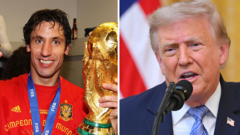
Former Spain international and 2010 World Cup winner Joan Capdevila has appealed to US President Donald Trump for help after his visa application was rejected, preventing him from attending Sunday's World Cup final. The 48-year-old retired full-back had planned to watch Spain face Argentina at the MetLife Stadium with his children but was informed his ESTA visa had been denied.
Capdevila believes the rejection stems from a 2016 friendly match he played in Iran as part of a La Liga all-star team, and has also requested assistance from Secretary of State Marco Rubio. His case is not unique; Somali referee Omar Artan was similarly denied entry last month, with US officials citing his "association with suspected members of terror organisations." Spain will contest their second-ever World Cup final, whilst Argentina appears in their second consecutive final following a 2-1 victory over England in the semi-finals.
In short
- 2010 World Cup winner Joan Capdevila denied US visa for 2026 final; appeals to Trump and Secretary of State Rubio for assistance
- Capdevila attributes denial to 2016 friendly match played in Iran as part of La Liga all-star squad
- Not first World Cup visa denial; Somali referee Omar Artan also rejected, citing alleged association with terror organisation members
Steelman: both sides, in good faith
The strongest fair case each way — we don't pick a winner.
The case for
Capdevila's case demonstrates how inflexible security policies can produce disproportionate outcomes where an individual's actual risk to security bears no relation to the restriction applied. A retired footballer's single participation in a sporting event in Iran nearly a decade ago presents no credible security concern, yet triggers absolute exclusion. A more measured approach that distinguishes between meaningful security risks and innocuous sporting participation would preserve policy effectiveness whilst respecting proportionality and fairness.
The case against
Visa security policies governing Iran-related activities must be applied consistently to remain credible and effective. Discretionary exceptions based on individual circumstances or perceived risk levels would inevitably create a two-tiered system in which prominence or public profile becomes a factor in policy application. Consistent application of clear rules, regardless of how sympathetic individual cases may appear, is essential to maintaining coherence and ensuring the policy framework retains genuine force.
Explained simply
Joan Capdevila is a retired Spanish footballer who won the World Cup with Spain in 2010, appearing as a full-back in that successful campaign. He planned to travel to the United States to watch Spain play Argentina in the World Cup final but was unable to do so after his ESTA visa application was denied.
The ESTA is an electronic travel authorisation that citizens of certain countries can use to enter the United States without a traditional visa. Capdevila's rejection appears to stem from a 2016 friendly football match he played in Iran as part of a La Liga all-star team. The United States maintains strict restrictions on Iran-related travel and activities, making such connections subject to heightened security scrutiny.
Similar cases have occurred recently, suggesting a broader pattern of denied entry for individuals with Iran connections or other security flagging. The World Cup final at MetLife Stadium is one of international football's most significant matches, with Spain appearing in their second-ever World Cup final.
Americas Europe Government Politics Sport World