World news and discussion on TalkFuse.
Would you trust a tiny dental robot?
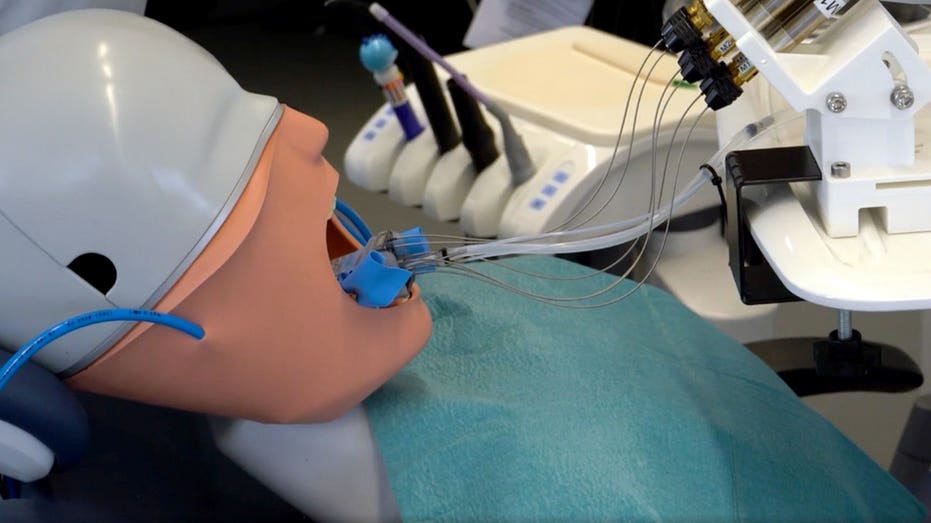
Researchers at the University of Basel in Switzerland are developing a miniature dental robot designed to help prepare teeth for crowns. Called MIR, the prototype could reduce the number of appointments needed by making crown preparation more efficient, though it remains an early-stage technology rather than a routine treatment.
The drill-equipped device would work inside a patient’s mouth while its larger motor and control components remain outside. It is connected through flexible drive shafts, cables and tubes, an arrangement intended to keep the in-mouth mechanism small while maintaining controlled operation.
In short
- Swiss researchers are testing a miniature robot for crown preparation.
- The system could reduce the number of dental visits.
- Its main motor and controls stay outside the mouth.
Steelman: both sides, in good faith
The strongest fair case each way — we don't pick a winner.
The case for
Advocates of robotic dental assistance point to the genuine precision advantages that mechanical systems can offer, reducing human error and variability in crown preparation whilst delivering the promised efficiency gains that benefit patients through fewer appointments. The designers have thoughtfully engineered the device to maintain external control with only a compact mechanism in-mouth, suggesting serious safety consideration, and incremental progress on promising medical technologies often yields innovations that eventually become standard practice when properly developed and tested.
The case against
Sceptics raise legitimate concerns about introducing mechanical devices into the delicate oral environment, where malfunction could cause harm and where existing proven techniques remain effective and well-established. Patient confidence in dental care already faces challenges, and adding remote robotic operation may increase anxiety rather than instil trust, whilst the clinical evidence base remains limited; the principle that marginal efficiency gains should not drive premature replacement of established methods with unproven alternatives warrants caution.
Explained simply
Dental crowns are caps placed over damaged or weak teeth to restore their shape and strength. Before a crown can be fitted, a dentist must carefully prepare the tooth by removing damaged material and shaping it to the right size. This preparation process currently requires precision and can be time-consuming for both patient and dentist.
Researchers at the University of Basel in Switzerland are developing a miniature robot called MIR to automate this tooth preparation process. The device is small enough to work inside a patient's mouth, with its larger motor and control components positioned outside and connected through flexible shafts and cables that allow precise remote operation.
If successful, the robot could make crown preparation faster and more efficient, potentially reducing the number of dental appointments a patient needs. However, MIR remains an experimental prototype rather than a treatment ready for widespread use, and further development and testing would be needed before it could be used in routine dental practice.