Science news and discussion on TalkFuse.
Young white-tailed eagles released on Exmoor
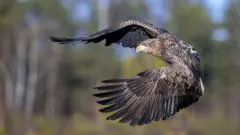
Six young white-tailed eagles have been released on Exmoor, marking the first reintroduction of the species to the national park since it disappeared from the area roughly 200 years ago. The release, carried out by Forestry England and the Roy Dennis Wildlife Foundation, forms part of a wider biodiversity restoration project, with the environment secretary describing the return of the "majestic" birds as evidence of the government's commitment to reversing nature's decline.
The scheme began in 2019 on the Isle of Wight, where 45 white-tailed eagles have since been released, including the first wild-born chick in southern England since 1780, recorded in 2023. Exmoor was chosen because tracking data showed released eagles frequently visiting the area, which was once a breeding site for the species and still offers rich foraging and habitat. The six chicks were collected under licence from Scottish nests and fitted with satellite trackers before release, with up to 20 more birds planned over the next three years; some local farmers, however, have voiced concerns about the project's impact on livestock and wildlife.
In short
- Six white-tailed eagles released on Exmoor after 200-year absence
- Part of wider project that began on Isle of Wight in 2019
- Up to 20 more eagles to be released over next three years
Steelman: both sides, in good faith
The strongest fair case each way — we don't pick a winner.
The case for
The reintroduction represents an opportunity to restore ecological balance to an area where these magnificent predators historically thrived. The Isle of Wight experience demonstrates successful reestablishment, and Exmoor's habitat remains well-suited to support them. Reversing extinctions caused by human persecution is a responsibility owed to nature, and apex predators strengthen ecosystem health through natural controls. The project aligns with international biodiversity commitments and shows humanity can meaningfully restore what was lost.
The case against
Whilst conservation merits are understood, farmers and rural communities shoulder disproportionate costs through potential livestock losses and disruption to established practices. White-tailed eagles are large predators capable of taking lambs, creating real economic pressures for those already operating on thin margins. The focus on charismatic species may divert resources from more practical conservation measures benefiting both farmers and nature, and local communities deserve meaningful say in landscape management rather than decisions made by centralised authorities without addressing harms to rural livelihoods.
Explained simply
White-tailed eagles are large birds of prey that were once found across much of Britain. They disappeared from England in the 18th century after persecution and habitat loss, although the species survived in Scotland and has since been reintroduced in parts of southern England.
Forestry England and the Roy Dennis Wildlife Foundation began a reintroduction scheme on the Isle of Wight in 2019. Exmoor was chosen because it was once a breeding area and tracking has shown that eagles released elsewhere often visit, where they can find suitable habitat and food.
The project aims to restore wildlife, but some local farmers have raised concerns about possible effects on livestock and other animals. The eagles’ return is part of wider efforts to bring back species that have been lost from parts of Britain.