Science news and discussion on TalkFuse.
Zoo staff rescue near-extinct snails from remote rock
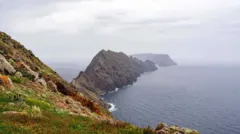
Chester Zoo conservationists have successfully reintroduced 300 captive-bred Madeiran land snails to a remote rock on Bugio Island, part of Portugal's Madeira archipelago, after the species was nearly wiped out in the wild. The rescue matters because just 21 of the tiny snails were originally found clinging to the rock, believed to be the last survivors of their kind, making the breeding programme critical to preventing the species' extinction. The Madeira government had specifically asked Chester Zoo's experts to lead the conservation effort.
Getting the snails back to their natural habitat proved extremely difficult, as there is no jetty on the island and conservationists had to jump into rough seas, climb a cliff face in the dark wearing helmets and harnesses, and locate rock crevices where the snails could be safely released. The snails measure no more than 8mm long but play an important ecological role by eating vegetation and enriching the soil; their progress will now be monitored as they resettle into the wild.
In short
- Chester Zoo bred 300 rare snails from 21 wild survivors
- Team scaled cliffs in rough seas to release them
- Snails returned to Bugio Island, Madeira, in "trickiest" reintroduction yet
Explained simply
The Madeiran land snail is found nowhere else in the world except on rocks in Portugal's Madeira archipelago. These tiny creatures measure just 8mm long and help maintain their ecosystem by feeding on vegetation and enriching the soil.
The species has been devastated by habitat loss and other environmental pressures, leaving only about 21 individuals surviving in the wild on a single remote rock. This makes them amongst the world's most endangered land snails and at severe risk of extinction.
The Madeira government asked Chester Zoo, a British wildlife conservation institution, to lead efforts to save the species. The zoo has established a breeding programme to increase the population in captivity, with the aim of eventually returning snails to their natural habitat. This conservation effort is critical to preventing the species from disappearing entirely.
Environment Middle East Science World