Ukrainian drones deliver robots directly into battle by sea and air
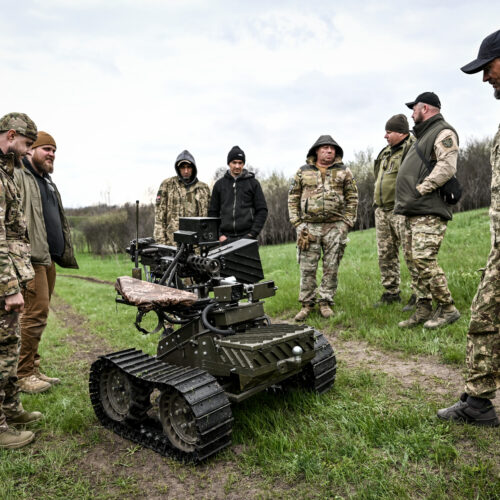
Ukraine has begun using flying drones and drone boats to deliver armed ground robots directly into combat, allowing slower wheeled units to bypass difficult terrain and Russian defences. The tactic reflects the Ukrainian military's continued efforts to combine drones and ground robots to offset Russia's manpower advantage while keeping soldiers out of dangerous assaults, and marks another step in the rapid evolution of robotic warfare on the front line.
On 19 July, a Russian Telegram channel shared footage of a Ukrainian hexacopter drone lowering a four-wheeled ARK-1 robot armed with anti-tank mines near Russian positions, though the outcome of that mission remains unclear. Separately, during an operation on 25 June targeting the contested Kinburn Spit peninsula, a Ukrainian drone boat landed a machine gun-armed robot that took part in fighting before Ukrainian forces planted a flag on the site, an act one defence analyst called impressive but not yet ready for large-scale combat use. Ukraine's military robotic missions have more than doubled since the start of the year, rising from roughly 7,500 in January to over 16,600 in June, covering tasks such as supply runs, casualty evacuation, mine clearance and direct combat.
In short
- Ukraine uses drones and drone boats to deploy armed ground robots in combat
- A drone dropped a mine-armed robot; a drone boat landed a gun robot on Kinburn Spit
- Robotic military missions roughly doubled from January to June 2026
Steelman: both sides, in good faith
The strongest fair case each way — we don't pick a winner.
The case for
Ukraine's deployment of robotic delivery systems represents a pragmatic military innovation that protects soldiers whilst offsetting Russia's manpower advantage through resourceful asymmetric tactics. The technology enables precise operations that might otherwise require exposing troops to greater danger, demonstrating responsible use of available tools in asymmetric conflict.
The case against
The escalation of remote weapons delivery raises legitimate concerns about autonomous weapons proliferation, potential humanitarian law implications, and the establishment of dangerous international precedents. Without adequate frameworks governing such systems, this normalisation of robotic warfare risks proving destabilising in future conflicts globally.
Explained simply
Ukraine has fought Russia since Russia launched its full-scale invasion in 2022. The front line includes exposed and difficult terrain, where moving troops and supplies can put soldiers at risk. Ukraine has increasingly used small drones and ground robots for tasks such as carrying equipment, clearing mines and evacuating casualties.
Flying drones and unmanned boats can travel over obstacles or across water, while wheeled robots can carry equipment on the ground. Ukraine’s forces are combining these systems to get robots closer to contested positions, including robots fitted with weapons. Russia is the opposing force, and its larger pool of personnel is one reason Ukraine has sought ways to reduce the number of soldiers needed for dangerous tasks.
These missions show how military technology is changing on the battlefield, but a robot reaching a position does not establish that the tactic is ready for widespread use. The systems may help keep soldiers away from some immediate dangers, while their performance and limits in combat remain important questions.