More Typos, Fewer Em Dashes: Writers Are Creating an Anti-AI ‘Literary Counterculture’
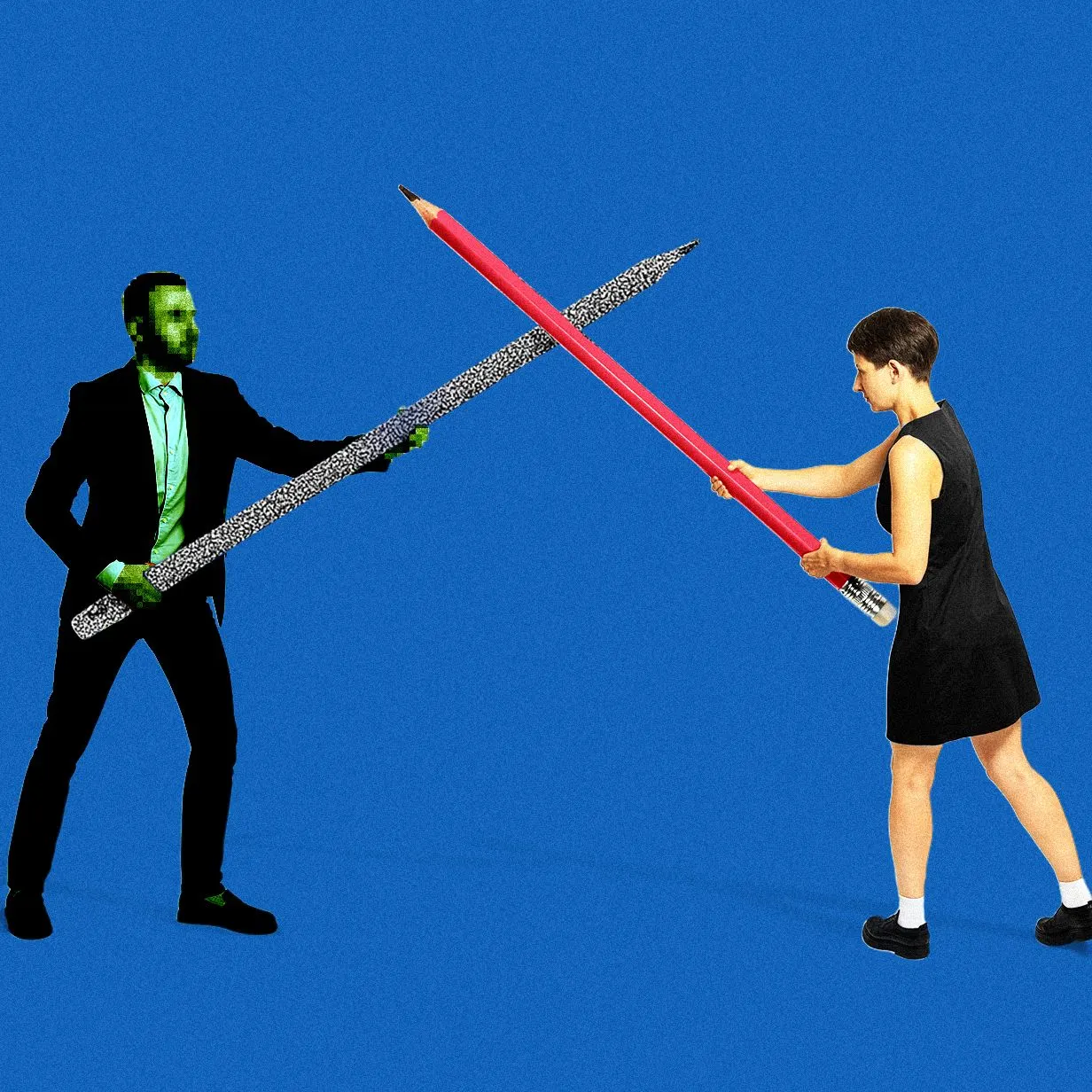
Writers are deliberately adopting an "anti-AI" prose style, favouring quirks, typos and idiosyncratic phrasing to distinguish their work from AI-generated text. The trend, spanning fiction, journalism and criticism, involves consciously avoiding hallmarks of LLM writing, such as em dashes, rule-of-three lists and passive constructions, as authors seek to reassure readers of their human authorship amid growing scrutiny of AI use in publishing.
Novelist Laura Brooke Robson says she now deliberately courts small imperfections and unusual punctuation as "winks to the reader" proving human authorship, and believes AI could push literary fiction further towards the "weird" and "esoteric". The shift follows high-profile controversies, including Hachette pulling Mia Ballard's novel Shy Girl in March over AI-use speculation, and author Steven Rosenbaum admitting his book The Future of Truth contained AI-fabricated quotes. Editors at outlets such as Aeon and Pitchfork say they are now actively encouraging writers to sound more conversational, spiky and idiosyncratic, resisting the smoothing effect of AI tools.
In short
- Writers are embracing typos and quirks to seem distinctly human, not AI.
- They're avoiding AI "tells" like em dashes and rule-of-three lists.
- AI authorship scandals, including a pulled Hachette novel, fuelled the shift.
Steelman: both sides, in good faith
The strongest fair case each way — we don't pick a winner.
The case for
Writers adopting deliberately idiosyncratic prose styles in response to AI proliferation represents an authentic and organic evolution of literary practice. The embrace of human quirks and imperfections serves readers' legitimate interest in knowing they're engaging with human authorship whilst allowing writers to sound more genuine and distinctive rather than conforming to algorithmic smoothness. This approach enhances literary authenticity and individuality, prioritising what makes human writing distinctive and trustworthy.
The case against
Encouraging writers to deliberately introduce imperfections and avoid certain constructions for AI-distinction is a symptom-treating approach that avoids systemic solutions. Rather than forcing human writers into stylistic evasions, focus should be on transparency requirements, ethical disclosure standards, and institutional accountability in publishing. This trend implicitly accepts AI as an inevitable and permanent presence requiring perpetual human adaptation, rather than establishing reliable mechanisms so readers can confidently distinguish human from machine work.
Explained simply
Writers are deliberately adopting distinctive, quirky writing styles to prove their work is human-made rather than generated by artificial intelligence. They do this by embracing imperfections such as typos and unconventional punctuation, whilst avoiding the smooth, polished prose that is typical of AI-written text.
The trend emerged following several high-profile incidents that raised concerns about AI use in publishing, including a novel being pulled by a major publisher due to AI-use suspicions, and an author admitting his book contained fabricated quotes created by AI. Editors at prominent publications are now encouraging writers to adopt more distinctive and unpolished styles, viewing this as a way to reassure readers of authentic human authorship.
This reflects a broader tension in publishing as AI tools become more sophisticated and widely available. Writers are seeking to maintain a recognisable human voice in their work amid growing uncertainty about how readers and publishers will treat AI-generated content.