Peru’s ex-president has 15-year jail sentence for corruption charges overturned
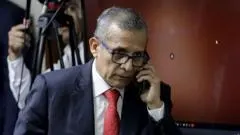
Peru’s constitutional court has annulled the 15-year corruption sentence imposed on former president Ollanta Humala, declaring the criminal proceedings against him invalid. The decision is significant because it is likely to secure his release and reverses a high-profile conviction linked to the wider Odebrecht bribery scandal that has implicated several Peruvian leaders.
Humala, president from 2011 to 2016, and his wife Nadine Heredia were convicted in 2025 of money laundering over alleged campaign funding, including $3m from Odebrecht for the 2011 election and $200,000 allegedly supplied by Venezuela’s Hugo Chávez in 2006. His lawyer said electoral campaign contributions did not constitute money laundering; Heredia, who also received a 15-year sentence, had already been allowed to travel to Brazil after seeking asylum. Humala was the first of four former Peruvian presidents investigated in connection with Odebrecht, which admitted paying bribes across Latin America to win contracts.
In short
- Peru’s top court annulled Ollanta Humala’s 15-year corruption sentence.
- The ruling is expected to lead to his release.
- The case formed part of the Odebrecht corruption scandal.
Steelman: both sides, in good faith
The strongest fair case each way — we don't pick a winner.
The case for
Supporters of the court’s decision can argue that even serious corruption allegations must be handled through valid proceedings, and that overturning a conviction protects due process and the legitimacy of the justice system. They may also contend that campaign contributions should not be treated as money laundering unless prosecutors prove they were illegal proceeds and establish the required criminal intent.
The case against
Critics can argue that annulling the sentence risks weakening accountability in a major corruption case, particularly given Odebrecht’s admitted bribery across Latin America and the scale of the alleged political funding. They may see the reversal as a setback for public confidence and for efforts to ensure that powerful former leaders face the same scrutiny as others.
Explained simply
Ollanta Humala was Peru’s president from 2011 to 2016. His wife, Nadine Heredia, was also convicted in a case over alleged money laundering linked to funding for election campaigns.
The case included allegations that the Brazilian construction company Odebrecht gave money to Humala’s 2011 campaign. Odebrecht admitted paying bribes in several Latin American countries to secure public contracts, and investigations have involved several former Peruvian presidents.