Building collapses in Sydney, multiple people injured
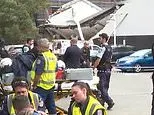
Multiple people were injured after part of a concrete retaining wall collapsed near a Shell service station in the inner-Sydney suburb of Ultimo on Monday. The collapse, which happened shortly before 11am on Wattle Street, trapped several workers under rubble and sent debris crashing onto parked vehicles, prompting a large emergency response and the evacuation of surrounding buildings. It is being investigated as a possible workplace incident.
A man in his 60s and a man in his 30s were taken to Royal Prince Alfred Hospital and St Vincent's Hospital respectively, both in serious condition, while five other people were assessed at the scene. More than 35 people were evacuated as fire crews, urban search and rescue teams and drone operators worked to secure the site amid concerns over electrical and gas risks. The wall stood next to a warehouse, formerly used as a rehearsal studio, that had been approved for demolition ahead of a planned mixed-use development; a nearby construction firm, Modus Projects, said none of its staff were hurt.
- Retaining wall collapse in Ultimo, Sydney injures several people, two seriously
- More than 35 people evacuated amid gas and electrical safety concerns
- Incident being probed as a possible workplace safety failure
New here? Start with this
Building collapses continue to occur in Sydney and other Australian cities from time to time, and when they do, questions typically focus on the age and condition of the structure, whether construction or renovation work was underway, and whether building regulations were followed. Emergency services, including fire crews, police and paramedics, are usually the first to respond, working to free anyone trapped and treat the injured.
Incidents like this often prompt scrutiny of building safety standards and inspection processes, since Australia has faced past controversies over defective construction, particularly in apartment blocks. Authorities generally investigate the cause once the immediate danger has passed, which can take time to establish with certainty.
The scale of harm and disruption from a building collapse depends heavily on factors such as the building's use, how many people were inside at the time, and how quickly rescuers could reach anyone trapped. These events tend to matter beyond the immediate location because they can raise broader questions about construction quality and safety oversight in the area.