2027 Chevrolet Corvette Grand Sport X proves code is as important as hardware
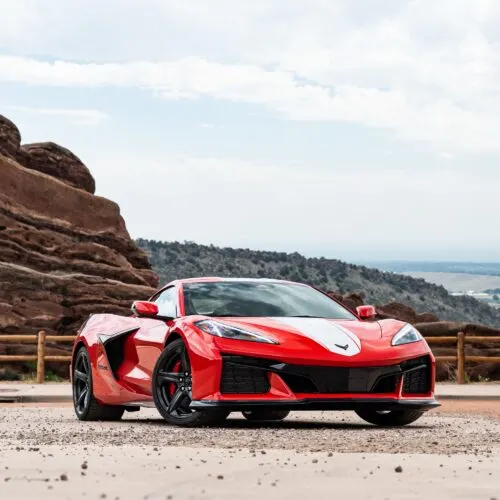
Chevrolet has replaced the hybrid Corvette E-Ray with a new Grand Sport X for the 2027 model year, using largely the same hardware but a substantially revised approach to how that hardware is calibrated. Rather than positioning the car as a comfort-focused grand tourer, as the E-Ray was, Chevrolet has retuned the hybrid system and software to make the Grand Sport X feel sharper and more track-capable, addressing owner feedback that the E-Ray understeered and felt too restrained for enthusiastic driving.
The Grand Sport X carries over the E-Ray's front electric motor upgrade from the high-performance ZR1X, but pairs it with a new 6.7-litre naturally aspirated V8, the LS6, which will also become the base engine for future Stingray models and offers 40 more horsepower and 50 lb-ft more torque than its predecessor. It also inherits performance features such as carbon-ceramic brakes, standard Magnetic Ride Control suspension, optional carbon fibre wheels and the wider body styling associated with the Grand Sport line. Notably, engineer Keith Badgley confirmed that suspension components, including dampers, springs and anti-roll bars, are unchanged from the E-Ray, meaning the transformed driving character comes almost entirely from software and powertrain tweaks rather than new chassis hardware.
In short
- Chevrolet's Grand Sport X replaces the E-Ray hybrid Corvette for 2027
- New LS6 V8 adds power; suspension hardware is unchanged
- Software recalibration, not new parts, makes it feel sportier
Steelman: both sides, in good faith
The strongest fair case each way — we don't pick a winner.
The case for
This demonstrates that automotive performance engineering requires more than new parts—intelligent calibration and software integration are equally critical to delivering the driving experience customers want. By addressing the E-Ray's shortcomings through sophisticated retuning rather than expensive mechanical redesigns, Chevrolet proved nimble engineering responsiveness and kept the car accessible to enthusiasts. It validates the headline's insight that clever code can transform the same hardware into something genuinely different.
The case against
If the E-Ray's suspension fundamentally understeered and felt inadequate for enthusiast driving, that suggests a hardware design problem that deserves a hardware solution, not software compensation. Retuning the existing dampers, springs and anti-roll bars might improve the feel, but you're still working within the original mechanical limitations rather than addressing them. Buyers seeking genuine performance improvements might reasonably expect a redesigned chassis alongside new power figures, not merely recalibrated software on carryover components.
Explained simply
The Corvette is Chevrolet’s two-seat sports car, offered in versions aimed at different kinds of driving. The E-Ray was its hybrid model, combining a petrol V8 with an electric motor that drives the front wheels; the Grand Sport name has traditionally marked a more performance-focused version.
The new Grand Sport X keeps much of the E-Ray’s hardware, including its front electric motor and suspension, but pairs them with a larger naturally aspirated V8. Changes to the hybrid system’s software and calibration are intended to alter how the car responds, showing how tuning can shape a vehicle’s character even when many physical parts stay the same.
That distinction matters to buyers comparing performance cars: engine, brakes and suspension are only part of the driving experience. The way software coordinates power and other systems can also affect how a car behaves on the road or track.