China is Tesla’s cash cow, but for how much longer?
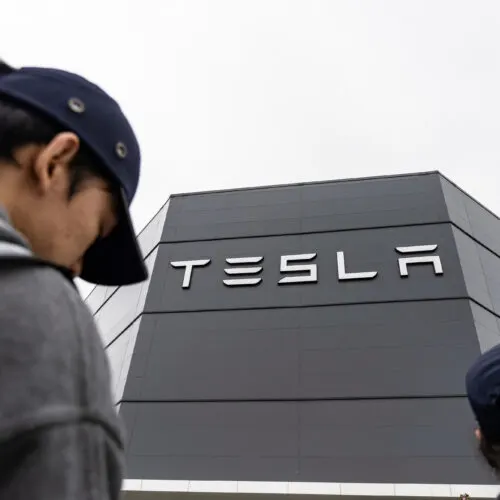
Tesla's Shanghai factory posted its best-ever June, producing 93,579 cars—up 38% year-on-year—but the surge is being driven by exports rather than demand from Chinese buyers, whose purchases have fallen for over a year as interest in the Model 3 wanes. This matters because the Shanghai plant, boosted by cheap local labour, components and Chinese export tax rebates, has become one of Tesla's most valuable assets just as the company's margins shrink elsewhere, yet reports suggest Tesla executives may be preparing to separate its Chinese and non-Chinese operations.
Almost 40% of June's output was for export, and across the second quarter as a whole, more than half of the cars built in Shanghai (128,394) went to Europe, Canada and other Asian markets rather than Chinese customers (126,157). The Wall Street Journal reported that some Tesla executives have been told to work on splitting the firm's Chinese and non-Chinese businesses, though Tesla denies this; separately, new US rules banning Chinese-linked connected-car software and hardware take effect in 2027 and 2030 respectively, and Tesla has already stopped importing Chinese-made cars into the US. The article suggests trade rules aren't the main motive for any China split—rather, it may be aimed at clearing the way for a merger with Elon Musk's SpaceX, which is seeking access to passive investors after the S&P 500 refused to bend its listing rules for the rocket firm.
In short
- Tesla's Shanghai plant hit record June output, but mostly for export.
- Chinese consumer sales have fallen for over a year.
- Tesla may split Chinese operations, possibly to enable a SpaceX merger.
Steelman: both sides, in good faith
The strongest fair case each way — we don't pick a winner.
The case for
Those concerned about China's future viability point to measurable risks: domestic demand has fallen for over a year, geopolitical tensions are rising, and US restrictions on Chinese-linked vehicle software and hardware take effect in 2027 and 2030. Advocates of separation argue that clarifying operations would reduce Tesla's exposure to regulatory divergence and political risk, whilst potentially unlocking strategic value for partnerships or acquisitions—including possible synergies with SpaceX. They emphasise that Shanghai's current profitability depends substantially on government support and tax rebates that could shift with political conditions.
The case against
Defenders of the integrated model stress that Shanghai's true value lies in its operational excellence and profitability—the factory is a crucial profit centre that has just posted record output. They note that nearly 40% of June's production was exported, demonstrating that Shanghai-made vehicles serve global demand, not solely the Chinese domestic market which is known for cyclical patterns. Separating such a strategically valuable and operationally efficient facility would be costly, complex and risky, potentially damaging supply chains and management coherence when margins are already under pressure—and separation offers no guarantee of addressing the underlying challenges.
Explained simply
Tesla is a US electric-car maker led by Elon Musk. Its Shanghai factory builds cars for Chinese buyers and for export, and benefits from local suppliers, lower labour costs and export rebates. The plant has become an important part of Tesla’s business as profits on its cars have come under pressure.
The factory’s output has recently been strong, but a growing share has gone to customers overseas while Chinese demand for Tesla cars has weakened. That makes the plant’s performance depend partly on sales in Europe, Canada and other Asian markets, as well as on buyers in China.
Tesla says it is not splitting its Chinese and other operations, though a report says some executives have been asked to explore the idea. US rules due to take effect from 2027 restrict connected-car technology linked to China, while the reported plan may also relate to Musk’s separate SpaceX business and its plans for investors.
Asia Celebrity Entertainment World