Pushing the limits: Infinite Machine’s Olto is barely a bicycle
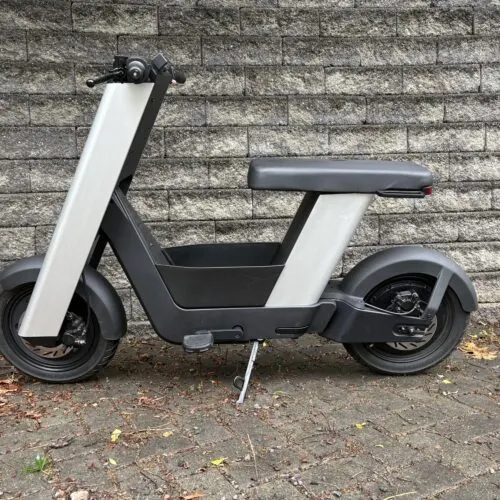
Infinite Machine, a New York-based startup, has released the Olto, an electric vehicle that is legally classified as a bicycle but is designed and ridden almost entirely as a scooter. The product reflects a wider trend of electrified personal transport devices being built to exploit bike lane access while offering scooter-like performance, raising questions about how such infrastructure, originally intended for pedal cycles, is now being shared and used.
The Olto features a Vespa-style layout, a large battery, rugged construction and security features, and costs less than half the price of Infinite Machine's fuller-featured P1 scooter. It retains pedals so it meets the legal definition of an e-bike, switchable via a phone app between Class 2 (throttle or pedal assist up to 20mph/32km/h) and Class 3 (pedal assist only, up to 28mph/45km/h) modes, but its low, wide seat makes genuine pedalling impractical. Riders are instead expected to disengage the cranks, fold them into footrest pegs, and operate the roughly 175lb (80kg) machine purely by twist throttle, with two acceleration settings available in Class 2 mode.
In short
- Infinite Machine's Olto is legally an e-bike but built to ride like a scooter
- Pedals can be locked away and replaced with footrests
- Costs under half its sibling P1 scooter, highlights bike-lane sharing debate
Steelman: both sides, in good faith
The strongest fair case each way — we don't pick a winner.
The case for
The Olto operates entirely within existing legal classifications for e-bikes, which permit both throttle-assist and pedal-assist modes with specified speed limits. Manufacturers have every right to innovate within established regulatory frameworks; if policymakers believe current definitions are inadequate, that is a matter for regulators to address through updated legislation. The product meets all technical legal requirements and represents practical, affordable urban transport that addresses genuine mobility needs.
The case against
The Olto's design deliberately exploits regulatory classifications intended for human-powered and conventionally assisted bicycles to gain access to infrastructure never intended for 175-pound, purely throttle-operated vehicles. The easily-disengaged pedals are a transparent legal fiction rather than a functional feature, revealing that this is fundamentally a scooter designed to wear an e-bike label. This creates a commons problem where bike lanes built for lighter, human-powered mobility now accommodate heavier vehicles with different operating characteristics, creating safety concerns and appropriating infrastructure meant for conventional cycling.
Explained simply
Electric bikes usually assist riders as they pedal, while electric scooters are powered by a throttle. In many US cities, bike lanes are designed for pedal cycles, and access rules can depend on how a vehicle is classified.
Infinite Machine is a New York startup that makes electric personal transport. Its Olto has pedals and can be set to different e-bike speed modes, but its low, wide seat makes pedalling difficult; the company expects riders to use the throttle and fold the cranks into footrests.
The distinction matters because the Olto’s design sits between an e-bike and a scooter, while its legal classification gives it access associated with bicycles. As electric vehicles become more varied, cities face questions about how bike-lane rules and infrastructure should accommodate them.