Samsung Odyssey G8 6K Review: Pixel Overdose
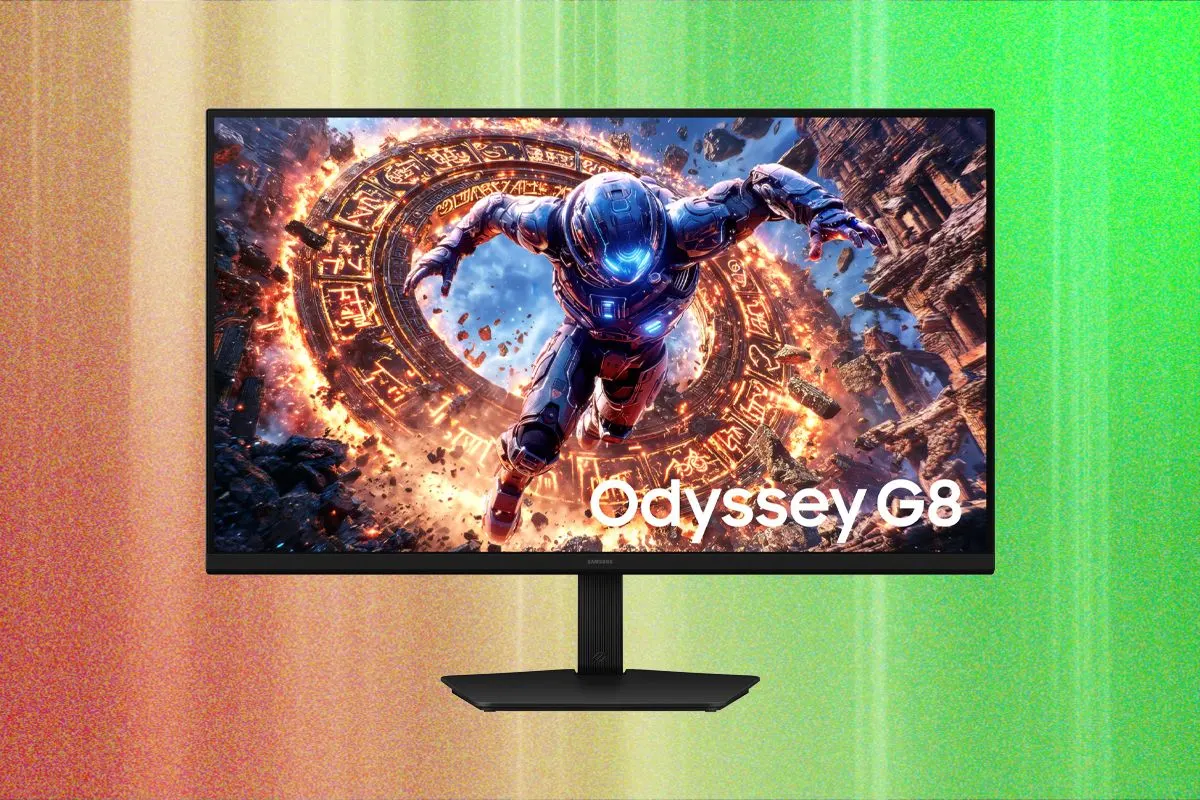
Wired has reviewed Samsung's Odyssey G8 G80HS, a 32-inch, 6K-resolution gaming monitor priced at around $1,600, awarding it a middling 6 out of 10. While the reviewer praises its extraordinary sharpness, they conclude it is not currently the best use of money, largely because most PCs and games are not yet equipped to make full use of such a high resolution.
The screen's 6144 x 3456 resolution offers roughly 21.2 million pixels, about 155 percent more than a typical 4K display, producing a noticeably crisper image and virtually eliminating jagged edges on fine details in games. However, reaching its 165Hz refresh rate at full resolution requires DisplayPort 2.1 or HDMI 2.1 outputs, and even powerful graphics cards such as the AMD Radeon RX 9070 XT or Nvidia RTX 5090 struggle to render demanding, path-traced titles smoothly at 6K. The review also flags a mediocre contrast ratio, the absence of USB-C, and build quality that falls short of the monitor's premium price.
In short
- Samsung's 6K Odyssey G8 gaming monitor scores 6/10 in Wired review.
- Delivers exceptional sharpness but most PCs can't fully drive 6K gaming.
- Also criticised for weak contrast, no USB-C, and build quality.
Steelman: both sides, in good faith
The strongest fair case each way — we don't pick a winner.
The case for
Early adopters and enthusiasts can reasonably argue that this monitor's superior image quality and future-proofing make it worthwhile, even if the ecosystem isn't fully ready. As 6K adoption grows, software support will follow, and those purchasing now will enjoy the technology's benefits whilst contributing to its development. The objectively superior visual fidelity offers immediate practical value for those who can afford the premium and want cutting-edge performance.
The case against
A value-conscious buyer can reasonably argue that at £1,600, this monitor simply isn't worth the money until the ecosystem matures and prices fall. With limited software support, build quality concerns, a mediocre contrast ratio, and powerful hardware still struggling with full-resolution gaming, waiting for next-generation monitors is the more prudent financial decision. Current buyers are effectively subsidising technology that won't serve them well until significant advances occur.
Explained simply
Gaming monitors display images from a computer, and their resolution describes how many pixels make up the picture. Higher resolution can make small details look sharper, but producing each frame takes more work from the computer’s graphics card; refresh rate measures how many times the screen can update each second.
Samsung makes the Odyssey G8, while graphics card makers such as AMD and Nvidia supply the hardware that renders games. The monitor’s 6K resolution puts it above the 4K standard, but using it at high refresh rates depends on both a suitable connection and a powerful computer.
The issue for buyers is whether the extra sharpness justifies the cost when many games and PCs cannot yet take full advantage of it. Other screen qualities, such as contrast and connectivity, also affect how useful a monitor is in everyday use.