Meteor Showers, Eclipses, and More Are on the August 2026 Astronomical Calendar
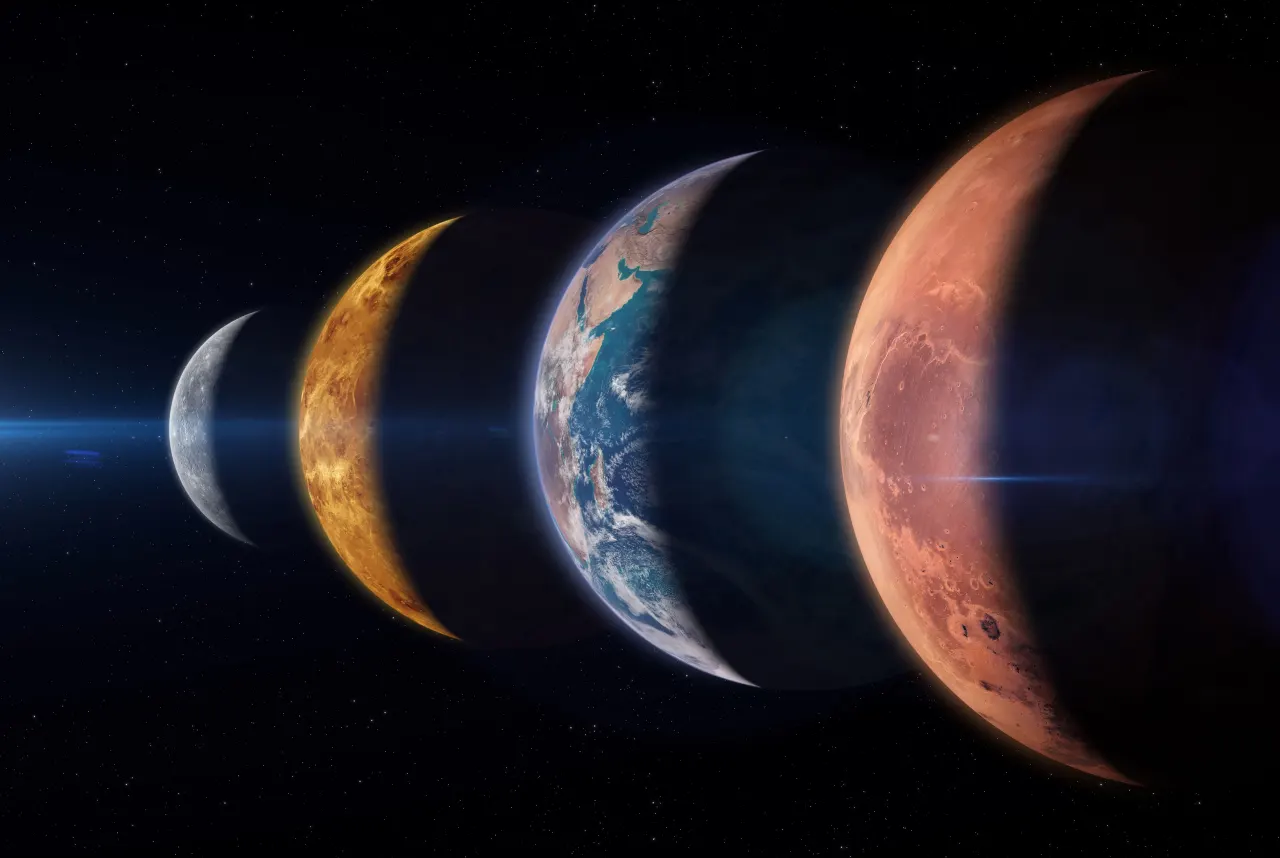
August 2026 will bring an unusually dense cluster of astronomical events, with several major phenomena converging around the same week. Highlights include the Perseid meteor shower, a total solar eclipse visible from parts of Europe, a rare six-planet alignment, and a partial lunar eclipse later in the month, offering keen skywatchers multiple opportunities to observe celestial events without specialist equipment.
The Perseids will peak on the night of 12 August, coinciding with a new moon for particularly dark skies. That same day, a total solar eclipse will occur at sunset, with totality crossing parts of Spain, Portugal, Iceland and Greenland—the Iberian Peninsula's first total solar eclipse in over a century, with Madrid included in the path of totality. Also in the early hours of 12 August, six planets—Mercury, Mars, Jupiter, Saturn, Uranus and Neptune—will form an apparent line in the sky, though Uranus and Neptune will require a telescope to see. The month closes on 27 August with a partial lunar eclipse covering up to 96% of the Moon's disc, visible across most of the Americas and requiring no eye protection to observe.
In short
- Perseid meteor shower peaks 12 August under a dark, moonless sky
- Total solar eclipse crosses Spain, Portugal, Iceland and Greenland on 12 August
- Six-planet alignment and a partial lunar eclipse (27 August) round out the month
Explained simply
Meteor showers happen when Earth passes through trails of dust and small particles left by comets, which burn up as they enter the atmosphere. The Perseids return each year and are named after the constellation Perseus, the area of sky from which the meteors appear to come. A new moon means the Moon is not bright in the night sky, making fainter meteors easier to see.
A solar eclipse occurs when the Moon passes between Earth and the Sun, briefly blocking the Sun for people in a narrow path; outside that path, observers may see a partial eclipse. A lunar eclipse happens when Earth’s shadow falls across the Moon. These events are visible from different parts of the world, depending on the alignment and the time of day.
A planetary alignment is an apparent grouping in the sky: the planets remain far apart, but can look as though they form a line when viewed from Earth. Some are bright enough to see without equipment, while distant, faint planets may need a telescope. Together, these events offer different ways to observe how the positions and motions of Earth, the Moon and other Solar System bodies shape what appears in the sky.