Putin could ‘send armed group to occupy NATO territory within weeks’, warns US intelligence
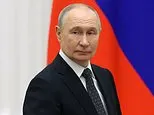
US intelligence has reportedly warned that Vladimir Putin could test NATO’s resolve within weeks through a limited action against alliance territory, rather than a full-scale invasion. Possible scenarios include an unmarked armed group occupying a small area, a cyberattack or a limited incursion on NATO’s eastern flank; any such action would be significant because it could test the alliance’s collective-defence commitment.
The warning comes amid concern that Moscow may seek to exploit perceived divisions within NATO while the war in Ukraine continues. The report says Russia is unlikely to have the capacity to open a major second front, but officials fear smaller, deniable provocations could pressure NATO members and divert attention from Ukraine.
In short
- Intelligence reportedly warns of a possible limited Russian test of NATO.
- Scenarios include unmarked forces, cyberattacks or a small eastern-flank incursion.
- Russia is not thought able to launch a major second front.
Steelman: both sides, in good faith
The strongest fair case each way — we don't pick a winner.
The case for
Advocates for taking the warning seriously argue that Russia has demonstrated both willingness and capacity to employ military force and strategic deception, that testing NATO's resolve through limited, deniable actions represents a plausible strategic calculation, and that preparing for such contingencies is a reasonable defensive precaution given Moscow's established pattern of behaviour in Georgia, Ukraine and elsewhere.
The case against
Those more sceptical of the threat assessment contend that intelligence services necessarily emphasise worst-case scenarios, that Russia's substantial military commitments in Ukraine may genuinely constrain its capacity for major new operations, and that such warnings, whilst useful for contingency planning, risk inflaming tensions with rhetoric about hypothetical threats when strategic focus should remain on the actual ongoing conflict.
Explained simply
NATO is a military alliance of countries in Europe and North America, formed to protect its members. Its collective-defence pledge means an armed attack on one member can prompt the others to respond, though members would decide together what action to take.
Russia’s war in Ukraine has heightened concern among NATO countries, particularly those near Russia and its ally Belarus. A small or hard-to-attribute action on alliance territory could create uncertainty about whether the defence pledge applies and how members should respond.
The issue matters because NATO’s unity is central to deterring attacks on its members. A limited provocation could put pressure on that unity and draw attention and resources away from Ukraine, even without a major military assault.
Americas Europe Geopolitics Politics World