Infantino’s opponents developing new framework for running world football
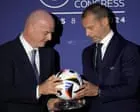
Opponents of Fifa president Gianni Infantino are jointly developing a new governance framework for world football, seeking to replace what they see as a patronage-based system he has built since taking office ten years ago. Uefa, Concacaf and the Asian Football Confederation have repeatedly called for an independent review of Fifa's governance after a plan to sell 21% of the World Cup was revealed a fortnight ago, and with Infantino ignoring those calls, the three confederations are said to have taken matters into their own hands.
A source told the Guardian the confederations are preparing a policy document addressing fundamental questions about Fifa's role, structure and governance model, including how to distribute the organisation's estimated $5bn (£3.7bn) reserves. Should Infantino refuse to engage, the framework could be adopted by a rival candidate at next year's presidential election or used as a blueprint for a breakaway body; Concacaf president Victor Montagliani is seen as the likeliest challenger. The confederations have also discussed organising new competitions, and Uefa is threatening to boycott next month's Under-20 Women's World Cup unless Fifa launches an independent review, with senior European football figures meeting in Salzburg this week to coordinate their stance.
- Uefa, Concacaf and AFC are drafting an alternative Fifa governance framework
- Move follows anger over Fifa's plan to sell 21% of the World Cup
- Uefa threatens boycott of Under-20 Women's World Cup without independent review
Both sides, in good faith
The strongest fair case each way — we don't pick a winner.
The case for
Critics argue FIFA's governance has become increasingly centralised and patronage-driven under Infantino, with major decisions like attempting to sell World Cup rights made unilaterally without proper confederation consultation. They contend the organisation's $5bn reserves and commercial operations lack sufficient independent oversight, allowing leadership to concentrate power rather than serving football's democratic needs. Fundamental structural reform is necessary to restore accountability and ensure FIFA operates transparently for world football's benefit, not the interests of a small group.
The case against
Supporters would argue that Infantino has successfully modernised FIFA and its commercial operations, restoring the organisation's financial health and credibility after previous crises. The confederations already have meaningful representation through the FIFA Council, and recent innovations including World Cup expansion and new partnerships represent legitimate business decisions that ultimately benefit all members. Rather than threatening breakaways or demanding wholesale governance overhauls, they believe constructive dialogue and incremental improvements represent the more responsible path for international football administration.