Video games news, releases, esports and culture — all the biggest gaming stories in one place.
Ogor Mawtribes 2026 range review: I’ve been hands on with all the new Warhammer models, here’s what I think
Developed over time first seen 3 months ago
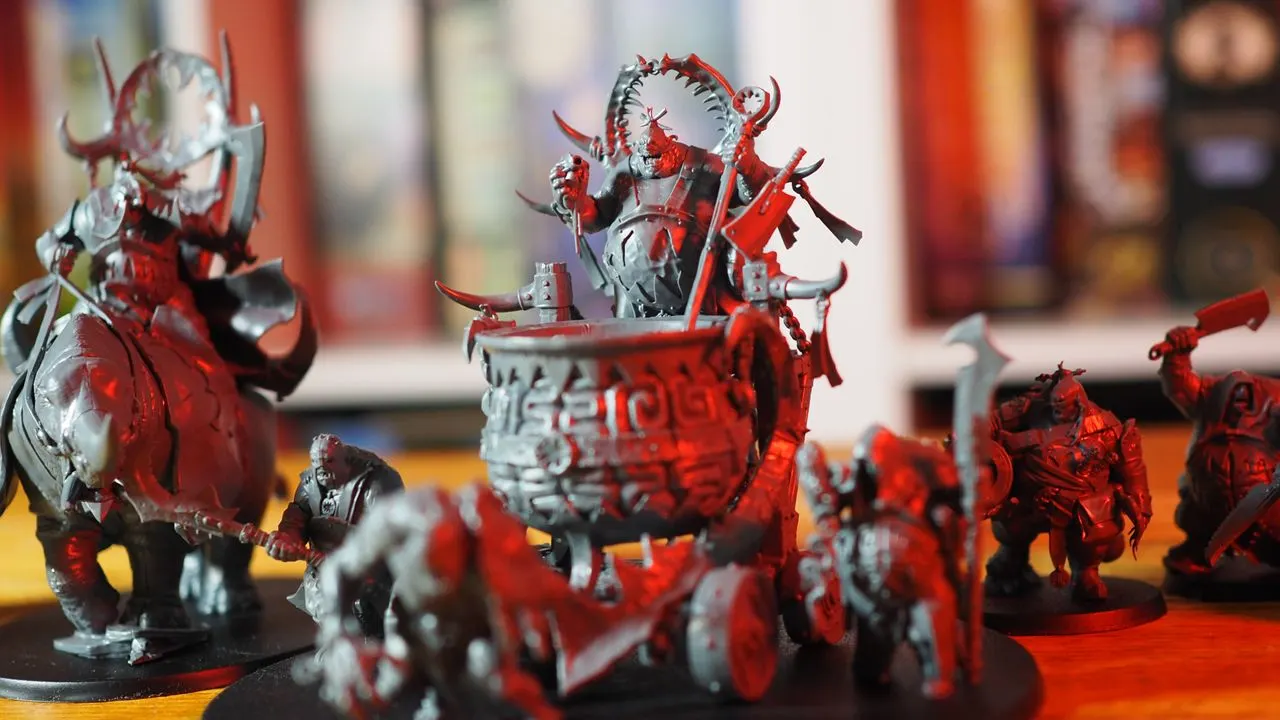
GamesRadar+ reported after handling the new 2026 Ogor Mawtribes miniatures that the refreshed Warhammer Age of Sigmar range substantially modernises the faction’s visual identity while retaining its food-obsessed, brutal character. Its assessment highlights Morga the Mighty/Tyrant on Glutthorn and Redd the Maw as centrepiece kits, with the former presented as a powerful frontline leader and the latter as a support-focused spellcaster. The review also singles out Grell Firefist’s cannon and command-interference role, and describes the Butcher, Cleavers and Gutseers as useful specialist options. It judges most kits straightforward to moderately complex to assemble, while finding Hunters with Sabrefangs notably fiddly despite their battlefield utility.
Games Workshop’s release material confirms that the range includes these characters alongside new Tyrant, Butcher, Ironguts, Gluttons, Cleavers/Gutseers, Maulbeast units, Hunters with Sabrefangs and Mantrapper kits, plus a Battletome. Official rules previews frame the army around the Eat ’Em Alive battle trait, with named heroes and specialist units offering ways to accelerate or improve its effects, support charges, counter commands, cast spells, and provide ranged or anti-target capabilities. The GamesRadar+ account is an early hands-on opinion rather than an independent rules-performance test; its favourable conclusion is therefore best understood as an informed reviewer’s impression of the models’ design, assembly and intended play style.
- Sources
- 3
- Outlets
- 2
- Left · Centre · Right
- 0 · 0 · 0
In short
- GamesRadar+ found the 2026 Ogor Mawtribes refresh visually and mechanically cohesive.
- Morga and Redd are presented as the range’s principal centrepiece heroes.
- Most kits were judged manageable to build; Hunters with Sabrefangs were the exception.
How this story developed
- 3 months ago GamesRadar+ reported after handling the new 2026 Ogor Mawtribes miniatures that the refreshed Warhammer Age of Sigmar range substantially modernises the faction’s visual identity while retaining its food-obsessed, brutal character.
Full account
Games Workshop’s 2026 Ogor Mawtribes refresh is being presented as a substantial expansion of the Age of Sigmar faction rather than a single-character release. The range centres on the ogors’ familiar combination of brute force, appetite and rough-hewn martial culture, with new heroes, refreshed core units and larger mounted centrepieces intended to give the army a more cohesive visual identity. Having handled the announced miniatures, the strongest impression is one of increased variety without abandoning the deliberately oversized, direct character that defines the Mawtribes.
The standout kit is Morga the Mighty, a mounted warlord riding the glutthorn Grutta. The model has the presence expected of a faction leader: Morga’s huge weapon and the mount’s bulk create a dramatic silhouette, while the option to build the same kit as a Tyrant on Glutthorn adds practical value. The unarmoured or armoured mount choices and alternative build make it more flexible than a strictly named-character release, although Morga herself is clearly positioned as the collection’s most distinctive new personality.
The remaining releases broaden the army’s command and infantry options. Redd the Maw, a High Slaughtermaster with a large cauldron, provides a particularly theatrical gut-magic focal point, while Grell Firefist brings a cannon-wielding mercenary character with a more unusual battlefield role. A new plastic Tyrant and Butcher offer customisation through alternative heads, weapons and decorative pieces. Ironguts and Gluttons, meanwhile, retain their roles as heavily armoured elite fighters and the army’s basic brawlers respectively; the extra component choices should help units look less repetitive on the table.
Rules coverage so far suggests the new personalities are being designed to reinforce the faction’s aggressive, momentum-led playstyle. Morga can benefit from several effects of the Eat ’Em Alive battle trait at once, allowing her to accumulate situational advantages, while the mounted Tyrant can improve nearby charge attempts by permitting a re-roll of one die. Grell’s previewed ability is framed as an answer to enemy commands at close range. These details make the range feel as if it has been developed with battlefield identity in mind, though a full judgement on balance will have to wait for the battletome and complete warscrolls.
Where outlets differ
From the full account, which is AI-written from the sources:
The Sunday Preview concentrates on the physical range, assembly options, background and the intended roles of every kit, including Redd, the plastic Tyrant, Butcher, Ironguts and Gluttons.
The rules article focuses instead on selected warscroll mechanics. It gives Morga’s weapon profile and her interaction with Eat ’Em Alive, previews the Tyrant on Glutthorn’s charge support, and begins to outline Grell Firefist’s command-disruption role, while withholding parts of the full rules.
Both reports portray Morga and the Tyrant on Glutthorn as alternative builds from one multipart kit, but only the Sunday Preview explicitly notes the armoured and unarmoured glutthorn options.
Explained simply
Ogor Mawtribes are a faction in Warhammer Age of Sigmar, a fantasy setting where armies of miniature warriors fight tabletop battles. The Ogors are huge, hard-hitting fighters known for their appetite and direct approach to combat. Players collect and assemble the models, then use game rules to decide how their army works.
The refreshed range includes leaders such as Morga the Mighty and Redd the Maw, alongside units of Ogors and specialist fighters. Their roles vary: some support charges or magic, while others bring ranged attacks or ways to disrupt an opponent’s commands. The army’s rules centre on closing with enemies and fighting at close range.
The review considers the models’ appearance, assembly and the play styles their roles suggest. Its comments are an early hands-on assessment of the miniatures, rather than a test of how well the army performs in competitive games.