It used to be our imperfect bodies that made us insecure. With AI, it’s our minds as well
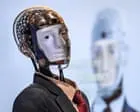
In a Guardian opinion piece, historian and author Joseph de Weck argues that just as photoshopped bodies once made people feel physically inadequate, AI is now making people feel intellectually inadequate too. He traces the idea back to philosopher Günther Anders, who predicted in 1956 that as machines grew ever more perfect, humans would feel ashamed of their "imperfect" bodies and increasingly strive to resemble products rather than accept their natural, "archaic" origins.
De Weck links this to today's boom in cheaper cosmetic surgery, where the goal is often not a natural look but a standardised, symmetrical "product-like" appearance, as seen in looksmaxxing trends and celebrity transformations that trigger an "uncanny valley" unease, a concept coined by robotics professor Masahiro Mori in 1970. He extends Anders' theory to argue that this sense of inferiority towards machines, once confined to appearance, is now extending to the mind itself as AI outperforms human cognition, citing unexplained changes in the faces of figures such as John Travolta and Carla Bruni as prompts for his reflection.
- AI creates a new form of insecurity, about our minds, not just bodies
- Piece revisits philosopher Günther Anders' 1956 theory of human "obsolescence"
- Cosmetic surgery boom reflects desire to resemble standardised products
New here? Start with this
Günther Anders was a 20th-century philosopher who wrote about how people might respond to increasingly capable machines. He suggested that people could come to see their own bodies as flawed beside machines and manufactured products, and try to make themselves look more like them.
The idea connects to modern cosmetic surgery and online trends that promote highly symmetrical, standardised features. The “uncanny valley” describes the unease some people feel when something looks almost, but not quite, human.
Historian Joseph de Weck extends Anders’ argument from appearance to intelligence, as artificial intelligence systems take on tasks associated with human thought. His comparison raises questions about how people judge their own abilities and identities alongside technology.
Both sides, in good faith
The strongest fair case each way — we don't pick a winner.
The case for
Advocates for this concern would argue that AI creates a genuine new source of intellectual insecurity, mirroring how filtered media damaged body image. When AI outperforms human cognition in writing, art, and problem-solving, it triggers a valid psychological mechanism—people feel inadequate about their minds the way they felt about their bodies when comparing themselves to impossible standards. The theory rooted in Günther Anders offers a meaningful historical parallel illuminating why we should take this seriously as a legitimate social phenomenon deserving preventative attention.
The case against
Sceptics would argue this analysis overstates the case by conflating technological capability with the specific social mechanisms that created body insecurity. Whereas filtered media actively encouraged visual comparison amongst peers, AI tools are primarily encountered as functional instruments rather than as personal benchmarks for inadequacy. Without concrete evidence that people actually experience intellectual insecurity from AI in the way proposed, this framework risks pathologising normal technological adjustment and inappropriately importing a 1956 philosophical theory to modern anxieties without sufficient empirical grounding.
Americas Entertainment Government Music Politics Technology World