UK Warned of Russian Retaliation Over Advanced Military Support for Ukraine
Developed over time first seen 2 months ago
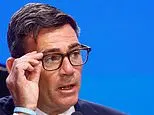
Andy Burnham has been warned by security sources that Russia is preparing a retaliatory action against UK interests after he agreed to give Ukraine the technical specifications for Britain's Storm Shadow missiles during a visit to Kyiv. Officials view Russia's withdrawal of its ambassador to London, without naming a replacement, as a sign Moscow wants to avoid the diplomatic fallout of expulsion once it acts, with the anticipated move framed by sources as a deliberate test of Burnham's resolve on foreign policy given his inexperience in the area.
Burnham has been briefed on several likely scenarios, led by a cyber-attack on UK infrastructure such as the NHS or transport networks, and possible sabotage of Britain's military supply chain after a Kremlin adviser warned British factories could face action from "unknown sources". Other concerns include a military clash following recent incidents such as Russian jets intercepting a British surveillance aircraft, a Russian frigate's live-fire exercise off Plymouth, and the jamming of an RAF jet's navigation system, as well as fears of a direct provocation against Burnham personally, drawing comparisons with earlier arson attacks linked to Russian-connected criminals on properties owned by Keir Starmer.
- Russia reportedly plotting retaliation after UK gave Ukraine Storm Shadow missile blueprints
- Russia withdrew its London ambassador without naming a successor
- Feared threats include cyber-attacks, sabotage, military incidents and a personal attack on Burnham
New here? Start with this
Andy Burnham became Prime Minister after previously serving as Mayor of Greater Manchester, and his government has continued Britain's support for Ukraine in its war against Russia's invasion, which began in 2022. Storm Shadow is a long-range cruise missile jointly developed by the UK and France, already supplied to Ukraine in limited form; sharing its technical specifications would mark a deeper level of British involvement than before. Burnham has visited Kyiv, Ukraine's capital, as part of this engagement.
Russia's leadership had reportedly hoped Burnham would take a softer line on Ukraine than the previous prime minister, so his actions have been seen in Moscow as a disappointment or provocation. Tensions between the UK and Russia have been rising for years over sanctions, military aid and diplomatic disputes, with the Kremlin periodically issuing warnings to Western governments it accuses of prolonging the conflict.
This story matters because it touches on how far the UK is willing to go in backing Ukraine militarily, and what risks that could carry closer to home. Any suggestion of Russian retaliation against British interests would raise questions about national security, deterrence and the broader course of UK-Russia relations.
Both sides, in good faith
The strongest fair case each way — we don't pick a winner.
The case for
Supporters of the government's approach argue that deterrence, not caution, is what keeps Britain safe in the long run: giving Ukraine the technical means to use Storm Shadow effectively degrades Russia's capacity to wage war and signals that the UK will not be intimidated out of supporting a sovereign nation resisting invasion. They contend that backing down in the face of threats would only invite further coercion, both against Ukraine and against Britain itself, and that historical experience counsels against rewarding aggression with concessions. On this view, absorbing some risk now is the price of credibility within NATO and of shortening a war that, left unchecked, threatens wider European security.
The case against
Sceptics of the escalation argue that a government's first duty is the safety of its own citizens, and that intensifying military support in ways likely to provoke a direct Russian response is a serious gamble with British lives and infrastructure that ordinary voters never explicitly signed up for. They point out that each incremental step, however justifiable in isolation, narrows the space for de-escalation and increases the chance of miscalculation between nuclear-armed adversaries. On this view, prudence and proportionality should temper solidarity with Ukraine, favouring support that does not needlessly widen the circle of direct confrontation with Moscow.
Full account
Prime Minister Andy Burnham has been told to prepare for possible Russian retaliation after Britain deepened its military support for Ukraine, including sharing technical details of long-range Storm Shadow missiles and battlefield artificial intelligence systems. Security sources briefed on the matter say intelligence agencies have picked up weeks of 'chatter' suggesting Moscow is preparing some form of action against UK interests, with officials reportedly viewing the scale of assistance as bringing Britain closer to direct involvement in the conflict than at any previous point.
The warnings coincide with a series of developments cited as evidence of rising tension. Russia has withdrawn its ambassador from London without naming a replacement, a move some in the security establishment interpret as clearing the way for retaliatory action without the usual diplomatic consequences. Separately, the head of the US Central Intelligence Agency is reported to have made an unscheduled visit to Moscow to caution the Kremlin against escalating the war, whether through nuclear use or by striking Ukraine's Western backers, amid intelligence suggesting Russia is ready to act decisively after further battlefield setbacks. A Kremlin-linked adviser has also publicly suggested that British factories could become targets.
Officials have reportedly briefed Mr Burnham on a range of possible scenarios rather than a single confirmed threat. These include a cyber-attack on critical national infrastructure such as the health service or transport network, sabotage or disruption aimed at the defence supply chain, and low-level physical attacks such as drone incursions or arson, with some sources pointing to the possible involvement of Russian sleeper cells already in the country. Concerns have also been raised about an unintended military clash, with officials pointing to recent incidents including the dangerous interception of a British surveillance aircraft, the jamming of a minister's RAF flight, and a Russian warship conducting a live-fire exercise close to UK waters. One source suggested any response would likely be calibrated to fall short of triggering a Nato military reaction.
The episode has also fed into a wider domestic debate about the state of UK defence spending. Critics have highlighted that neither Mr Burnham nor the Defence Secretary has firmly committed to reaching a defence spending target of 3 per cent of GDP by 2030, instead pointing to a later Nato benchmark set for 2035. Attention has turned to the Chancellor's autumn Budget as a potential moment for clearer commitments on military funding, amid arguments that the government's domestic policy focus has left defence preparedness under-examined even as warnings of a more assertive Russian posture grow.
Where outlets differ
The Daily Mail opinion piece is the most overtly critical, framing the Russian threat primarily as evidence of the government's failure to raise defence spending, and pivots into unrelated domestic political criticism (a proposed wealth tax and immigration policy) not covered by the other reports.
The second account places greater emphasis on the CIA director's emergency visit to Moscow and the US warning against nuclear escalation, and includes a direct quote likening the situation to 'poking the bear'.
The third account (attributed to a named columnist) provides the most operational detail, including Russia's withdrawal of its ambassador, a named Kremlin adviser's warning about British factories, and a specific list of recent air, sea and electronic-warfare incidents used to illustrate the risk of an unintended clash.
Coverage
- Daily Mail — DAILY MAIL COMMENT: Menacing messages from the Kremlin and security warnings about the Russians ‘planning some sort of action against UK interests’…it’s time to start taking defence seriously, Mr Burnham
- Daily Mail — Andy Burnham warned that Britain faces impending Russian ‘attack’ over its support for Ukraine
- Daily Mail — DAN HODGES: What my senior security sources are telling me about Russia’s alarming plans for Britain. Putin is determined to test Burnham… and this is how he’s going to do it
Art Celebrity Culture Entertainment Europe Government Politics UK World