Court rules Kalshi sports bets aren’t “swaps,” just gambling with a different name
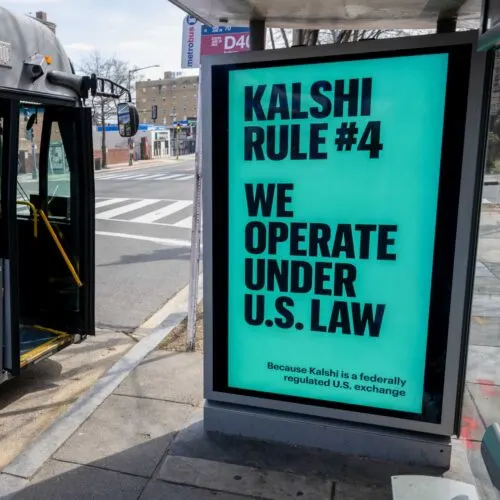
A US federal appeals court has ruled that Nevada may enforce its gambling laws against Kalshi’s sports-event contracts, rejecting the company’s argument that the contracts are federally regulated “swaps”. The decision matters because it challenges prediction-market operators’ efforts to offer sports betting nationwide without obtaining state gambling licences, despite support for federal oversight from the Trump administration and the Commodity Futures Trading Commission.
The Ninth Circuit upheld a lower-court order allowing Nevada to act after its Gaming Control Board sent Kalshi a cease-and-desist letter. Three Trump-appointed judges concluded unanimously that sports bets remain gambling regardless of their label, and said Kalshi’s broad interpretation of “swap” lacked a limiting principle; the ruling conflicts with a Third Circuit decision favouring New Jersey, increasing the chance of Supreme Court review.
- Nevada can enforce gambling laws against Kalshi’s sports contracts.
- Judges ruled sports bets are gambling, not federally protected swaps.
- Conflicting appeals rulings could bring the dispute to the Supreme Court.
New here? Start with this
Kalshi is a US company that lets customers trade contracts tied to the outcome of future events, including sports matches. It describes these as prediction-market contracts, a type of financial product, while state authorities have treated sports contracts as bets.
In the US, states generally set and enforce rules for gambling, including who can offer it and where. Separately, federal law regulates derivatives such as “swaps”, and Kalshi has argued that this federal framework covers its contracts.
The dispute concerns which rules apply when a company offers sports-related contracts across state borders. Its outcome could affect how prediction markets operate in the US and how authority is divided between federal regulators and states.
Both sides, in good faith
The strongest fair case each way — we don't pick a winner.
The case for
Nevada’s case is that contracts whose value turns on the outcome of a sports event function as bets, whatever terminology or federal framework is used. Requiring state gambling licences would preserve established consumer safeguards and give states authority to regulate an activity already covered by their laws; the Ninth Circuit also found Kalshi’s reading of “swap” too broad to have a clear limit.
The case against
Kalshi’s case is that its event contracts are financial products subject to federal commodities law, so a patchwork of state gambling rules should not prevent nationwide trading. A consistent federal framework could provide clearer oversight for markets that aggregate expectations about events, and the Third Circuit’s contrary ruling shows that the boundary between federal commodities regulation and state gambling authority remains legally contested.