Swish Bay Area enclave now resembles ‘third world’ shantytown after liberal judge let squalid homeless encampments take over its streets
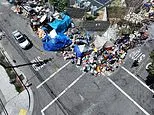
Berkeley, California, is facing continuing complaints about homeless encampments in West Berkeley, where residents and nearby businesses say tents, rubbish and safety concerns have affected public spaces and trade. The issue has drawn attention after a reporter shared video from near her son’s university housing, while legal action has limited the city’s attempts to remove the encampments.
The Berkeley Homeless Union sued the city last February, arguing that a clearance notice did not properly accommodate disabled people under the Americans with Disabilities Act; US District Judge Edward Chen sided with the group. The union said 31 of 47 people at the site had disabilities and sought lawful alternative camping locations, while the city says it offered housing or replacement tents and remains involved in active litigation.
- Legal action has hindered Berkeley’s encampment clearances.
- Businesses report disruption, rubbish and safety concerns.
- Disability accommodation is central to the dispute.
Both sides, in good faith
The strongest fair case each way — we don't pick a winner.
The case for
Supporters of stronger enforcement argue that residents, workers and small businesses are entitled to safe, sanitary and accessible public spaces. They contend that prolonged encampments can bring rubbish, fire risks, blocked pavements and intimidation, while also leaving vulnerable homeless people in dangerous conditions; in their view, the city should act promptly while offering realistic routes into shelter, housing and services.
The case against
Opponents of clearance-led policies argue that removing encampments without genuinely suitable alternatives merely displaces people and can worsen their health, safety and access to support. They maintain that disability law and basic dignity require the city to make individualised, accessible provision, especially for people unable to use conventional shelters, and that durable housing and services are a more humane and effective response than repeated removals.