Death toll from mudslides, flooding at Nepal-China border climbs past 670, nearly 3,000 missing
Developed over time first seen 2 months ago
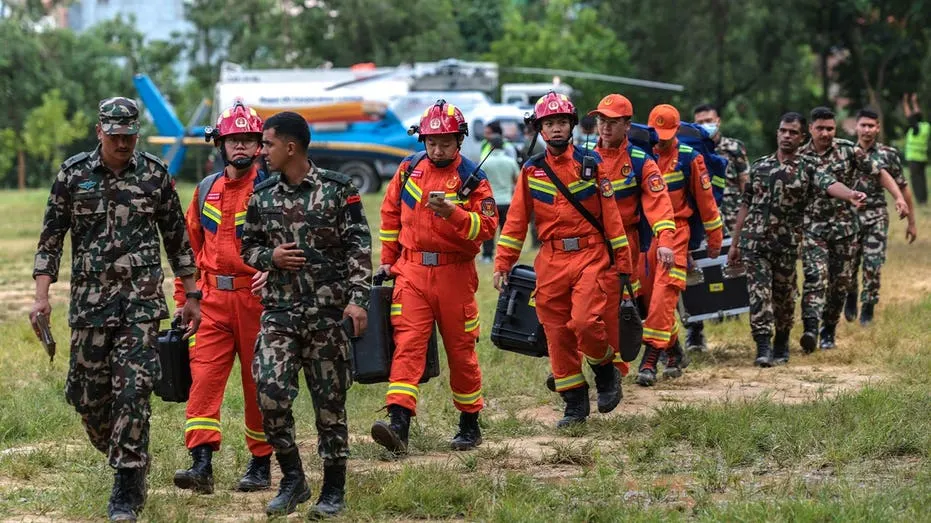
The death toll from catastrophic flooding and mudslides along the Nepal–China border has reached at least 676, with nearly 3,000 people still listed as missing, following a disaster triggered when a large piece of glacial ice broke off and fell into the Lhende Khola River. The scale of the destruction, combined with damaged roads, disrupted communications and persistent bad weather, has severely hampered rescue efforts, leaving officials in both countries struggling to reach the worst-affected areas and account for those unaccounted for.
Nepal recorded 669 deaths and 2,426 missing, while Chinese authorities in Tibet reported seven deaths and more than 550 missing. Search and rescue work was repeatedly halted by rain and fog, and China sent tunnel specialists to help free up to 100 people believed trapped in a mud-filled hydropower plant tunnel. A separate risk from an overflowing glacial lake on the border was reported to have substantially subsided by the end of the rescue period, and Nepal's finance minister estimated reconstruction costs at more than $4 billion, describing the figure as a preliminary assessment.
- Sources
- 2
- Outlets
- 2
- Left · Centre · Right
- 1 · 0 · 1
In short
- Nepal–China border floods and mudslides kill at least 676 people
- Nearly 3,000 remain missing amid stalled rescue operations
- Glacier ice collapse blamed; Nepal estimates $4bn+ rebuilding cost
How this story developed
- 2 months ago The confirmed death toll from flooding and mudslides on the Nepal–China border has risen to at least 676, while nearly 3,000 people remain missing.
- 2 months ago Floods and mudslides along the Nepal–China border have killed at least 676 people, with nearly 3,000 still missing, as poor weather hinders rescue efforts.
- 2 months ago The death toll from catastrophic flooding and mudslides along the Nepal–China border has reached at least 676, with nearly 3,000 people still listed as missing, following a disaster triggered when a large piece of glacial ice broke off and fell into the Lhende Khola River.
Full account
The death toll from catastrophic flooding and mudslides along the Nepal-China border has climbed past 670, with close to 3,000 people still unaccounted for, as rescuers battle mud, damaged infrastructure and worsening weather to reach survivors nearly a week after disaster struck. The flash floods and mudslides tore through the region on Wednesday after a large section of glacial ice is believed to have broken away and plunged into the Lhende Khola river, unleashing torrents of water and debris across Nepal's northern districts and China's neighbouring Tibet region.
On the ground, rescue teams have pulled survivors from thick, dark mud, while helicopters have airlifted stranded residents from cut-off villages. On the Chinese side, a team reportedly rappelled down wooded slopes into a border checkpoint area that had been reduced to rubble and mud, with one official describing the scene as little more than debris once a busy crossing point. In Nepal, the army has focused on a hydropower plant in the worst-affected district, where more than 100 workers are feared trapped inside a mud-choked tunnel; Kathmandu has asked Beijing to send specialist tunnelling experts, and China has flown in a small team to assist. Rescue efforts have been repeatedly interrupted by rain and fog, which authorities say have forced temporary halts to search operations.
Casualty and missing-person figures have shifted significantly and inconsistently as the crisis has unfolded, reflecting the difficulty of assessing damage across a remote, heavily disrupted region. Nepal's disaster-management authority has put its national death toll at close to 670, with over 2,400 people missing, though Nepali police have at times cited lower figures, and earlier tallies this week were considerably smaller before being revised upward. China has reported a comparatively low death toll of seven but several hundred people missing on its side of the border. Officials note that many of the missing are foreign nationals who were in the area for work, trekking or religious pilgrimage, complicating identification and accounting efforts.
Compounding concerns, a new lake formed high in the Himalayas after the initial glacier collapse, and experts warned it had begun overflowing into the same river system, raising fears of further flooding; Chinese officials indicated by the weekend that this threat had eased somewhat, though intermittent rain forecast through the weekend continues to hamper operations. Nepal separately issued an alert over reports that a dam on the Tibetan side had burst, though it remained unclear whether this was linked to the glacial lake. Under pressure from countries with missing citizens, Nepal reversed an earlier stance and agreed to allow foreign rescue teams and experts to assist. Nepal's finance minister has estimated that more than $4 billion will be needed to rebuild, describing the figure as preliminary while damage assessments continue.
Where outlets differ
From the full account, which is AI-written from the sources:
Death toll and missing-person figures diverge notably between reports and even between agencies within the same country: the combined Nepal-Tibet toll is cited as roughly 670-676 in the more recent account, whereas the earlier AP report put deaths at closer to 600, with Nepali police and the disaster-management authority themselves citing different numbers (579 vs 553 deaths; 2,426 vs 1,924 missing) at different points.
The two accounts emphasise different aspects of the rescue effort — one focuses heavily on the dramatic on-the-ground rescue narrative (mud, helicopters, the rappelling team into China's flattened border crossing, a burst-dam alert), while the other centres more on evolving statistics, the glacial lake risk subsiding, and the financial cost of rebuilding.
There is some ambiguity/inconsistency over China's missing figure (500+ vs 554) and over whether Nepal needed foreign general rescue assistance at all — one source stresses Nepal only wanted specialised tunnelling help, while the other reports Nepal reversing an earlier refusal and opening the door to broader foreign teams under diplomatic pressure.
Left-leaning outlets 1
- Rescuers Retrieve Flood Survivors Caked In Mud As Death Toll In Nepal-China Border Disaster ClimbsHuffPost
Only here: rescuers, retrieve, flood, survivors, caked
Right-leaning outlets 1
- Death toll from mudslides, flooding at Nepal-China border climbs past 670, nearly 3,000 missingFox News
Only here: mudslides, flooding, past, nearly, missing
Every side used: death, toll, nepal, china, border, climbs
Headline columns compared word for word; nothing in them is AI-written.
Explained simply
The Nepal–China border runs through the Himalayas, where steep valleys, fast-flowing rivers and unstable mountain slopes can make communities vulnerable to floods and landslides. Heavy rain can block roads, cut phone links and isolate villages, making it difficult to assess damage or reach people who need help.
The affected area includes parts of Nepal and Tibet, the Chinese-administered region on the northern side of the border. Rivers in this region often cross national boundaries, so a disaster in one valley can affect settlements, roads and power projects in both countries.
Glaciers are large bodies of ice in high mountains, and a collapse of ice or the release of water held behind it can rapidly send water, rocks and mud downstream. Hydropower plants, which generate electricity from flowing water, are important to both local services and national energy supplies, so damage can have effects beyond the immediate disaster zone.
Coverage · 2 sources
Bias meters
From 2 rated sources.