Video games news, releases, esports and culture — all the biggest gaming stories in one place.
10 Greatest ‘Far Side’ Comics From the ‘80’s, Ranked
Polygon has ranked ten of the greatest single-panel strips from Gary Larson's The Far Side, which ran in newspapers from January 1980 and was eventually syndicated to around 1,900 titles, making it one of the most widely read comics of the decade. The countdown celebrates Larson's distinctive dark humour and visual timing, which stood apart from the cutesier styles common in 1980s newspaper comics.
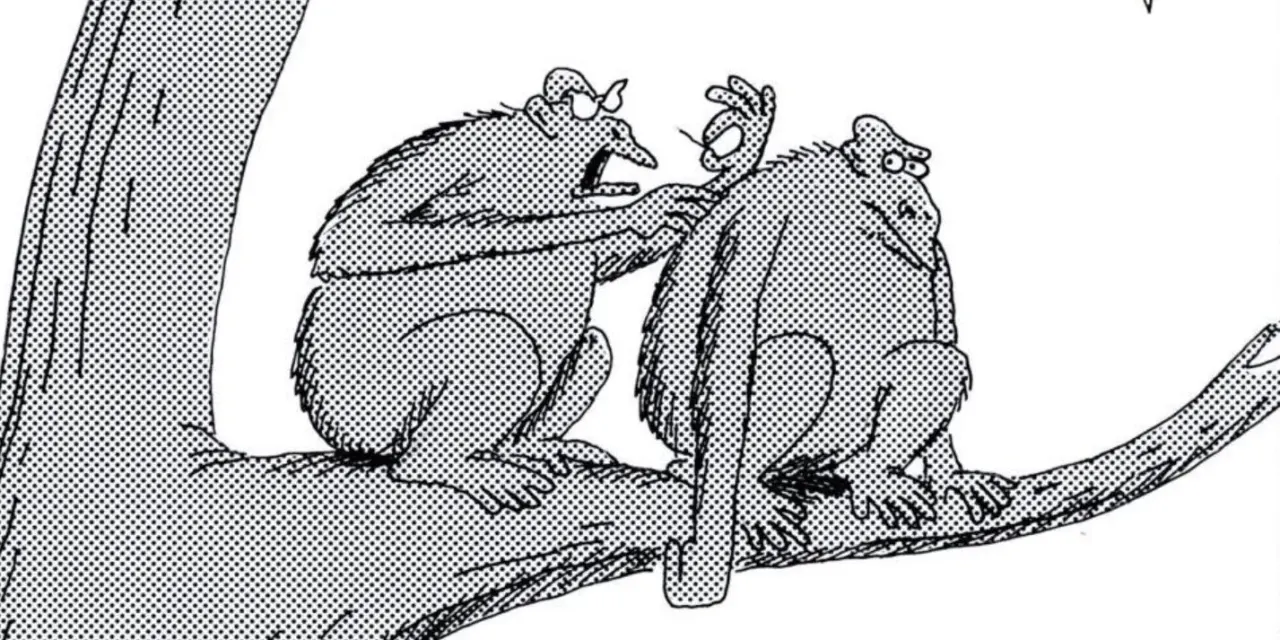
– A sick chick being fed chicken soup by its mother (18 May 1984) – A botched execution scene (11 May 1981) – A wordless gag of a woman bounced by a trampoline into a burning building (31 March 1981) – A surreal "Mack the Knife" joke featuring anthropomorphic cutlery – An oblivious musician remarking on "little black dots" before a huge concert (29 October 1984) – The "Boneless Chicken Ranch" strip (12 January 1983) – Cows standing upright on their hind legs (6 January 1984) – Two lab scientists, one rigging a missile, the other about to pop a paper bag (4 June 1983) – A chimpanzee grooming gag referencing Jane Goodall (26 August 1987), which drew criticism from the Jane Goodall Institute at the time
In short
- Polygon ranks ten classic Far Side strips from the 1980s
- Gary Larson's comic ran in about 1,900 newspapers
- List highlights dark humour, sharp timing and a Jane Goodall controversy
Explained simply
The Far Side was a single-panel newspaper comic by American cartoonist Gary Larson. It began appearing in newspapers in 1980 and was eventually syndicated to about 1,900 titles. Each strip told a joke in one image, often using animals, scientists and everyday situations in unexpected ways.
Larson’s humour often mixed the absurd with the dark, and his drawings relied on visual details and timing. That gave the comic a different feel from the gentler, more familiar newspaper strips of the 1980s. Some jokes drew on real people or events, including a 1987 chimpanzee strip that prompted criticism from the Jane Goodall Institute.
The comic’s wide circulation made its unusual style familiar to many readers. Its single-panel format also meant each joke had to make sense quickly, without a longer story to set it up.