Orbitals brings anime-styled co-op to Nintendo Switch 2
Developed over time first seen 2 months ago
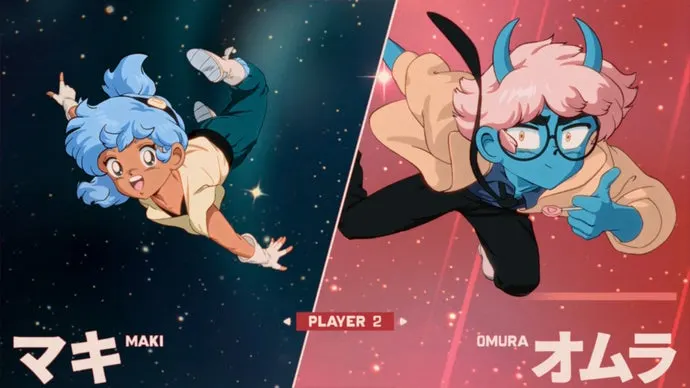
A hands-on review has praised Orbitals, the upcoming Nintendo Switch 2 co-operative title from Tokyo studio Shapefarm, calling it one of the best co-op games of the year. The review confirms that game director Jakob Lundgren and creative director Marcos Ramos previously worked as level designers on It Takes Two, Split Fiction and A Way Out, lending Orbitals a strong pedigree in the asymmetrical co-op genre, while its nostalgic anime art style, likened to Cowboy Bebop, Gundam and Dragon Ball, sets it apart from those predecessors.
The game follows protagonists Maki and Omura as they work to save their colony from a devastating storm, supported by characters Togen and Kinakoko, across a 5-7 hour campaign playable in local co-op or online via GameChat and GameShare. The reviewer highlighted its fast pace and variety of asymmetrical puzzles, involving tools such as lasers, hookshots and water guns, comparing its energy favourably to fellow indie co-op release Big Walk, though noted that some platforming sections push the limited moveset and occasionally leave one player waiting on the other.
- Reviewer calls Orbitals one of the year's best co-op games
- Devs previously worked on It Takes Two, Split Fiction, A Way Out
- Anime-styled asymmetrical co-op runs 5-7 hours, launching on Switch 2
New here? Start with this
Orbitals is an upcoming co-operative video game for the Nintendo Switch 2, made by the Tokyo-based studio Shapefarm. It puts two players in control of characters called Maki and Omura as they try to save their home colony from a huge storm, working through puzzles, platforming and combat together, either sitting side by side or online. The game is notable for pairing a distinctive anime-style look, drawing on shows like Cowboy Bebop and Dragon Ball, with a design pedigree from developers who previously worked on well-known co-op titles such as It Takes Two and A Way Out.
The game matters partly because of its creative team: director Jakob Lundgren and creative director Marcos Ramos both have backgrounds designing levels for some of the most acclaimed co-operative games of recent years. That experience is being seen as a strong indicator of how well Orbitals handles the tricky business of keeping two players engaged at once, a genre where games can succeed or fail depending on pacing and how well tasks are shared between players.
It also sits within a wider wave of interest in local and online co-op games on Nintendo's newest console, where it is being compared to other recent indie releases in the same space, such as Big Walk. Early reviews and previews like this one help shape expectations ahead of the game's full release, though full pricing and release date details are not covered here.
Full account
Orbitals, a new two-player co-operative adventure from Tokyo-based studio Shapefarm, has launched exclusively on Nintendo Switch 2. The game follows Maki and Omura, young members of a space-station community, as they venture into unstable ruins scattered across a technicolour galaxy, solving puzzles and scavenging old technology in an effort to protect their home from an encroaching cosmic storm. As children, the pair narrowly survived an earlier catastrophe when their minds were transferred into artificial bodies capable of instant regeneration – a plot device reviewers note conveniently explains why the characters simply pop back to life whenever a puzzle or platforming challenge kills them.
The game sits firmly in the co-operative puzzle-platformer tradition popularised by Hazelight Studios' It Takes Two, Split Fiction and A Way Out, and the lineage is no accident: Shapefarm was co-founded by Marcos Ramos and Jakob Lundgren, with Lundgren having previously worked as a level designer on all three Hazelight titles. Rather than reinventing the format, reviewers describe Orbitals as a tightly focused refinement of it, built entirely around asymmetrical two-player teamwork with no single-player mode. Each player wields their own tool – ranging from a ground-pound backpack to a repurposed microwave – and the pair must combine these abilities to progress through puzzles, restore machinery, and explore a series of visually distinct environments, either side-by-side in split-screen or online using the console's GameChat and GameShare features.
What distinguishes Orbitals most, according to critics, is its presentation: a loving pastiche of 1980s anime rendered in soft, faded pastel tones designed to evoke hand-animated cels viewed on an old cathode-ray television. Comparisons offered include Neon Genesis Evangelion, Cowboy Bebop, Gundam and Akira Toriyama's Dragon Ball and Sandland, with one reviewer additionally drawing a line to European-Japanese co-productions such as Ulysses 31 and The Mysterious Cities of Gold. The game can be played with either its English dub, featuring Rebecca Wang and Stephen Fu as Maki and Omura, or its original Japanese voice track with subtitles, and players are free to mix languages between the two participants. Supporting characters encountered along the way include the bad-tempered Togen and the kindly elder Kinakoko.
Reviewers are broadly enthusiastic, praising the game's pacing, charm and density of ideas across a campaign generally reported at five to seven hours long. The narrative itself draws more mixed comment: one outlet describes the overarching plot as little more than a string of convenient fetch-quests, arguing the game's appeal lies instead in its central duo's good-natured chemistry and constant, cheerful bickering rather than any weighty theme. Points of comparison vary by outlet – one likens Orbitals' momentum to Super Mario Galaxy and contrasts it with the more meandering, exploration-driven co-op of House House's Big Walk, while another situates it against the commercial scale of Hazelight's back catalogue, noting It Takes Two alone has sold around 30 million copies, to argue that genuine competition in this niche genre is overdue and welcome.
Where outlets differ
One review (a more personal, character-focused piece) dwells on small touches like the protagonists saying goodbye to discarded tools and strongly favours the Japanese dub over the English one, while acknowledging its co-op partner preferred the English dub — a debate the other two sources don't raise at all.
A second review foregrounds the business and genre context, emphasising Hazelight's near-monopoly on 'pure' co-op games and It Takes Two's ~30 million sales figure, and is more critical of the plot, calling it a series of expedient MacGuffin hunts.
The third review is the most unreservedly enthusiastic, giving specific campaign length (5-7 hours), naming supporting characters Togen and Kinakoko, and drawing comparisons to Super Mario Galaxy and to House House's Big Walk, none of which appear in the other two accounts.
Aesthetic reference points differ: one critic cites Neon Genesis Evangelion and Cowboy Bebop plus a personal nostalgic link to Ulysses 31 and The Mysterious Cities of Gold, while another cites Cowboy Bebop, Gundam, and Akira Toriyama's Dragon Ball and Sandland — overlapping but not identical touchstones.
Only the third source specifies online play via GameChat and GameShare; the first source focuses on local split-screen with language settings, and the second doesn't address multiplayer mechanics in the excerpt provided.
Coverage
- Eurogamer — Orbitals review
- Polygon — Orbitals is the Best Co-op Game Since It Takes Two and the Best Platformer Since Astro Bot
- Nintendo Life — Review: Orbitals (Switch 2) – One Of The Best Co-Op Games Of The Year
Asia Culture Cybersecurity Entertainment Fashion Gaming Music Paranormal Space Technology Weird & Viral