Japan Is Launching a Probe to Collect the First-Ever Samples From a Martian Moon
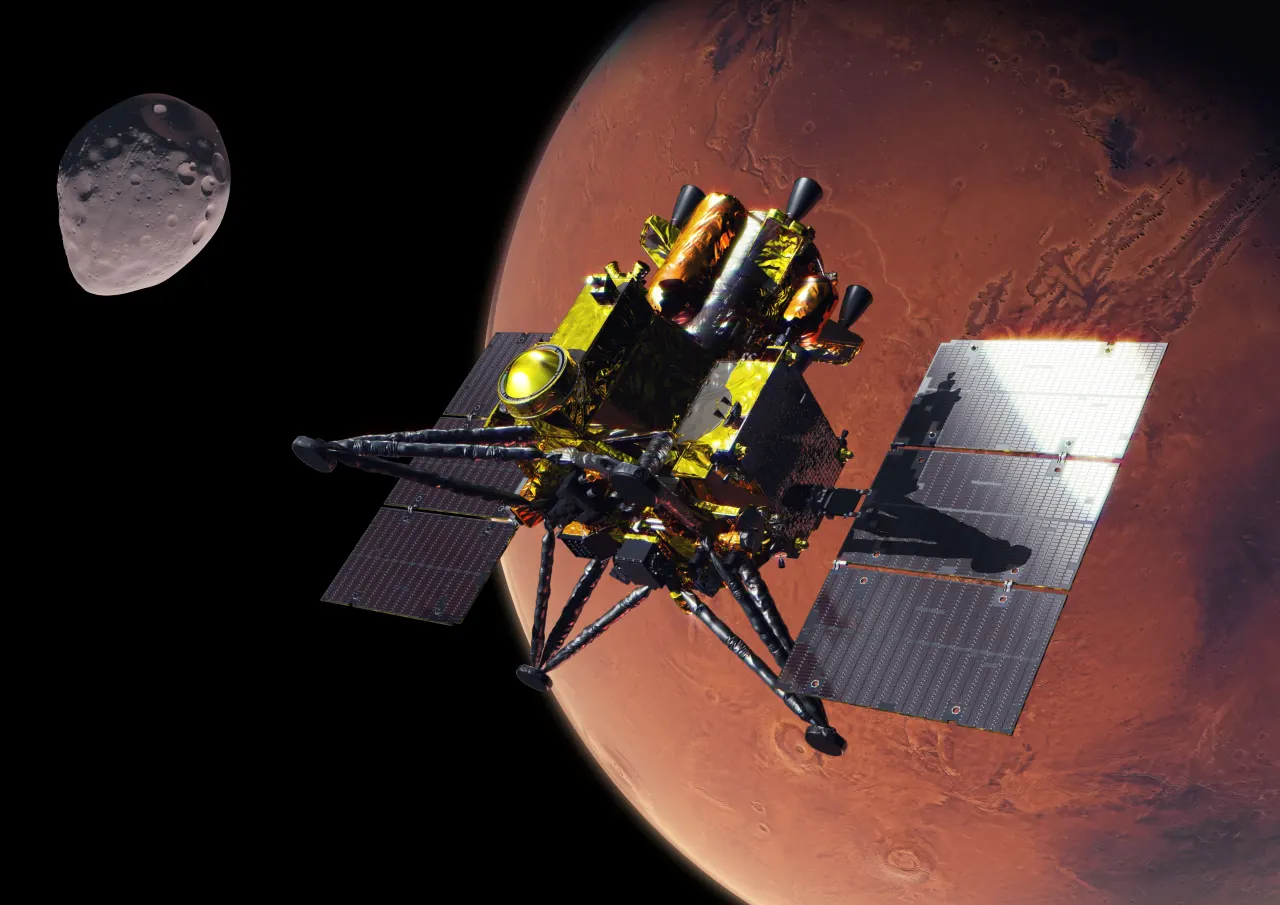
Japan's space agency, JAXA, is preparing to launch its Martian Moons eXploration (MMX) probe on a mission to collect the first-ever samples from Phobos, one of Mars' two moons, and return them to Earth. The mission could help settle a long-standing debate about how Phobos and Deimos formed, either from debris after a massive collision with Mars or as captured asteroids from the outer solar system, by comparing the samples with material already gathered from the Martian surface itself.
The 4,480-kilogram spacecraft will take roughly a year to reach Mars, spend three years operating in the Martian system, and then take another year to return, with samples expected on Earth in 2031. Landing on the tiny, 11-kilometre-radius Phobos poses major challenges given its weak gravity, so the probe relies on high-precision autonomous navigation rather than remote control from Earth, where signal delays can reach 20 minutes. A French-German rover called IDEFIX will scout the surface ahead of landing, after which a robotic arm and a NASA-designed nitrogen-gas device will gather rock and dust samples, some of which scientists believe may include material blasted off Mars itself by past meteorite impacts.
In short
- JAXA's MMX probe aims to bring back the first Martian moon samples.
- Samples could reveal whether Phobos formed from impact debris or a captured asteroid.
- Mission expected to return material to Earth by 2031.
Explained simply
Mars has two small moons, Phobos and Deimos, whose origins are uncertain. Scientists think they may have formed from debris left by a large impact on Mars, or may be asteroids captured by the planet.
Samples from Phobos could help distinguish between these explanations. Comparing them with rocks collected on Mars may also show whether impacts scattered Martian material onto the moon.
Japan’s space agency, JAXA, leads the mission, with partners including France, Germany and the United States. Studying material from Phobos could add to what scientists know about how Mars and its moons formed.
Art Asia Culture Space Technology World