Missouri AG files petition asking Supreme Court to revive Trump-backed redistricting map
Developing story first seen 5 hours ago
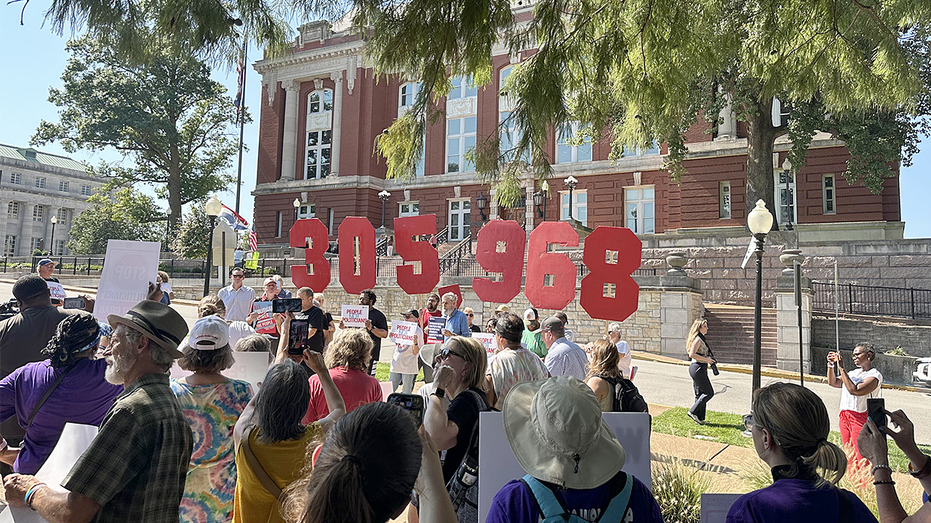
Missouri's Republican Attorney General, Catherine Hanaway, has filed an emergency appeal with the US Supreme Court seeking to reinstate a Trump-backed congressional redistricting map, after the state's Supreme Court blocked it on Thursday and ordered a public vote on the matter in November. Hanaway asked the justices for an immediate halt to the state ruling, warning that Missouri's ability to hold a lawful, timely congressional election "hangs in the balance," given a Tuesday deadline to finalise changes to the November ballot. The case has become a key flashpoint in a wider nationwide battle over mid-decade redistricting pushed by President Trump, who wants the new map to help Republicans gain a House seat and protect their slim majority.
Justice Brett Kavanaugh, who handles emergency appeals from the region, has asked opponents of the map to respond by Monday. The state Supreme Court found that a referendum petition backed by over 300,000 signatures meant the new districts, signed into law last September, could not take effect without voter approval, overturning the Republican secretary of state's rejection of that petition and a lower court ruling. As a result, the pre-2026 map based on the 2020 census will apply for November's election unless the Supreme Court intervenes; Hanaway's office argues no US court has ever ordered a map change between a primary and general election, calling the ruling "unprecedented chaos," while Trump has branded it "ridiculous" and unconstitutional.
- Missouri AG appeals to US Supreme Court to revive GOP redistricting map
- State's top court blocked map, ordered a November referendum instead
- Justice Kavanaugh wants opponents' response by Monday; deadline looms Tuesday
New here? Start with this
Missouri passed a new congressional map last year, backed by President Trump and the state's Republican leadership, which redraws district boundaries in a way that could help Republicans win an extra US House seat. Opponents gathered enough signatures to trigger a referendum, arguing voters should have the final say, and Missouri's Supreme Court agreed, blocking the map and putting it to a public vote in November.
The state's Attorney General, Catherine Hanaway, is now asking the US Supreme Court to step in and let the map be used anyway, saying time is running out before ballots must be finalised. The case sits within a bigger nationwide fight, encouraged by Trump, over states redrawing district lines mid-decade rather than waiting for the next census, as both parties look for any edge in a closely divided House of Representatives.
The outcome matters because it will decide which map is used for this year's congressional elections in Missouri, and could influence the battle for control of the House. It may also set a precedent for how far courts can go in changing electoral maps close to an election, and for how referendums can be used to challenge redistricting decisions elsewhere.
Both sides, in good faith
The strongest fair case each way — we don't pick a winner.
The case for
Supporters of reviving the map argue that Missouri's legislature acted lawfully in passing new congressional boundaries, and that courts should be extremely reluctant to disturb an election map so close to a live contest, particularly when a statutory deadline for finalising the ballot is imminent. They contend that sudden judicial intervention between a primary and general election creates genuine administrative chaos for election officials, candidates and voters alike, and that such disruption should require an exceptionally clear legal basis rather than a last-minute referendum dispute. For this side, respecting the ordinary legislative process and providing electoral certainty are the paramount values at stake, regardless of which party the new map might favour.
The case against
Opponents of reviving the map argue that Missouri's referendum process exists precisely to let citizens check legislative action they believe was improperly rushed through, and that a petition backed by more than 300,000 signatures reflects a substantial, organic public demand for a vote rather than a procedural technicality to be brushed aside. They see the state Supreme Court's ruling as a legitimate correction of an erroneous rejection by the secretary of state, restoring the voters' constitutional right to have their say on how they are represented. For this side, the core value is democratic self-government and guarding against mid-decade map-drawing designed mainly to lock in partisan advantage, even if that means falling back on the existing map while the matter is resolved.
More coverage