Huawei proudly shows off an entirely un-American chip
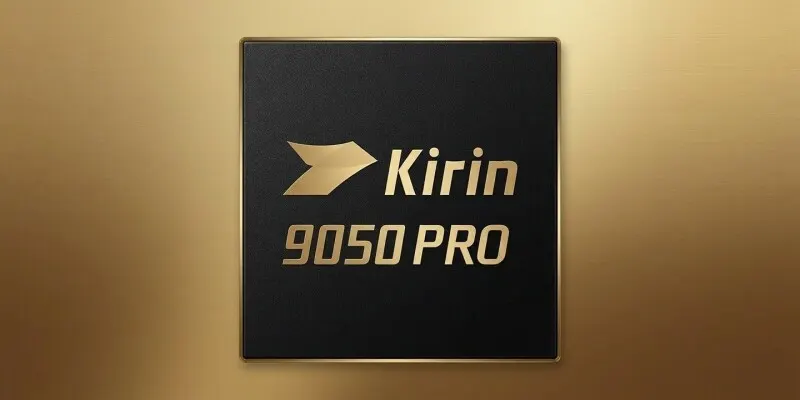
Huawei has unveiled the Kirin 950 Pro, a new processor it says is entirely free of US technology, powering its latest three-screen folding phone. The chip uses Huawei's own LinxiCore processor cores, GPU and neural processing unit, alongside a "Tau Scaling" architecture that packs components more tightly to boost performance without relying on advanced manufacturing processes from the likes of TSMC or Intel. The launch matters as part of China's broader push towards technological self-sufficiency, though analysts remain sceptical that Huawei has achieved any genuine breakthrough rather than an incremental engineering gain.
Huawei claims the new chip delivers 42 percent more performance than last year's model, and it features in the $2,979 Mate XT2 handset. Counterpoint Research expects Huawei to hold 24 percent of the folding phone market by the end of 2026, a niche that made up just 1.6 percent of smartphone sales last year; the launch also comes days before Apple is expected to unveil its own folding iPhone, tipped to capture 25 percent of that market. Huawei also highlighted that its HarmonyOS now runs on 85 million devices, though this remains a small slice of the global market, and the company has not indicated whether the new chip technology will be applied beyond phones to challenge firms such as AMD, Intel or Nvidia more broadly.
In short
- Huawei launches Kirin 950 Pro chip, claims no US technology used
- Powers new $2,979 Mate XT2 three-screen folding phone
- Comes days before Apple's rumoured folding iPhone debut
Steelman: both sides, in good faith
The strongest fair case each way — we don't pick a winner.
The case for
Huawei’s chip can be seen as a meaningful step towards technological self-sufficiency, reducing exposure to US restrictions and showing that domestic engineering can improve performance despite limits on access to advanced manufacturing. Even an incremental gain could strengthen China’s technology ecosystem and give consumers another competitor in the folding-phone market.
The case against
The launch may overstate what has been achieved: analysts question whether the chip represents a breakthrough, and Huawei’s performance figures are company claims. Its high-priced phone targets a small market, while HarmonyOS has limited global reach and there is no sign yet that the technology can compete broadly with established chipmakers.
Explained simply
Huawei has launched a new smartphone processor, the Kirin 950 Pro, which it says was designed and made entirely without American technology or manufacturing know-how. This matters because most advanced chips, even those made in China, still rely somewhere in the process on American software, equipment or designs, and US export restrictions have been aimed at cutting Chinese firms like Huawei off from exactly that. Huawei is presenting this chip as proof that it can now build cutting-edge processors independently.
The chip powers Huawei's newest folding phone, part of a small but growing market for handsets with bendable screens. Huawei is a major player in that market and is competing for attention just as Apple, the world's biggest phone maker, is expected to reveal its own first folding iPhone. Analysts are watching closely to see whether Huawei's claims of a genuine technical leap hold up, or whether this is a more modest improvement dressed up for maximum publicity.
The story sits within a wider contest between the United States and China over control of semiconductor technology, seen by both governments as central to economic and military power. Washington has spent years trying to restrict China's access to advanced chipmaking, while Beijing has poured resources into building homegrown alternatives. Huawei's announcement is being read as a signal of how far that effort has come, even though independent experts have not yet verified the company's performance claims.