Trump lashes out at Albanese government over new social media laws
Developed over time first seen 2 months ago
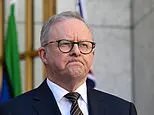
Donald Trump's administration has criticised the Australian government over proposed social media laws that could see US tech giants fined up to $100million (A$150million), with a White House spokesman accusing Canberra of imposing "extortion" on America's leading technology sector. The dispute also exposed a domestic split in Australia, with the Opposition and One Nation branding the draft laws government overreach, while Prime Minister Anthony Albanese maintained the measures were simply designed to give users more control over what they see online.
The proposed "My Feed, My Way" digital duty of care would require platforms such as Facebook, Instagram and TikTok to let users choose, via a pop-up prompt, between an algorithm-driven feed and one showing only accounts they follow, while also obliging firms to protect users from harmful material including content promoting eating disorders, misogyny, pornography, terrorism and crime. Companies would need to conduct regular risk assessments and report to the eSafety Commissioner, who would also gain powers to order the removal of "nudify" apps, with non-compliant firms facing fines of up to $100million. Nationals leader Matt Canavan and Opposition leader Angus Taylor accused the government of handing excessive censorship powers to the communications minister, a claim Albanese rejected.
- Sources
- 2
- Outlets
- 2
- Left · Centre · Right
- 1 · 0 · 1
In short
- Trump administration blasts Australia's planned social media safety laws
- White House calls proposed $100m fines "extortion" of US tech firms
- Australian Opposition and PM Albanese clash over "censorship" claims
How this story developed
- 2 months ago The White House has escalated its criticism of Australia's proposed social media laws, with a spokesman on Wednesday accusing Canberra of imposing "extortion" on American technology firms and warning that the Trump administration would keep raising the issue with trading partners.
- 2 months ago Donald Trump has criticised the Australian government led by Anthony Albanese over proposed social media legislation that could impose fines of up to $100 million on major US technology companies.
- 2 months ago Donald Trump's administration has criticised the Australian government over proposed social media laws that could see US tech giants fined up to $100million (A$150million), with a White House spokesman accusing Canberra of imposing "extortion" on America's leading technology sector.
Full account
Donald Trump's administration has publicly criticised the Australian government over draft legislation that would impose a 'digital duty of care' on social media platforms, warning that the measures amount to an attack on major US technology firms. A White House spokesman said President Trump had repeatedly cautioned trading partners against imposing digital services taxes, fines and other measures he characterised as 'extortion' against America's leading technology sector, and confirmed the administration intended to raise the issue directly with Canberra.
The proposed Australian laws would require social media companies such as Facebook, Instagram and TikTok to meet minimum safety standards or face penalties reportedly exceeding $100 million. Central to the plan, sometimes referred to as the 'My Feed, My Way' initiative, is a requirement that platforms notify users with a pop-up giving them the choice between a personalised, algorithm-driven feed and one showing only content from accounts they follow. Companies would also have to take steps to shield users from material judged seriously harmful, including content promoting eating disorders, misogyny, pornography, the glorification of crime, and illegal material such as child exploitation content. The reforms are intended to sit alongside Australia's existing world-first ban on social media use by under-16s.
The announcement has exposed divisions within Australian politics. Opposition figures, including Nationals leader Matt Canavan and Coalition leader Angus Taylor, argued the plan hands excessive power to the communications minister to decide what counts as harmful content, with Canavan warning that governments should not be able to dictate what people say online and Taylor describing it as an attempt to censor the internet. Prime Minister Anthony Albanese rejected that framing, insisting the changes were about giving individuals more control over what they see rather than restricting speech. At the other end of the debate, the Greens have argued the reforms do not go far enough, with the party calling for the algorithm-free feed to be the default setting and for fines to be linked to companies' global revenue rather than a fixed cap, a position pressed by Senator Sarah Hanson-Young.
Communications minister Anika Wells played down the significance of Washington's intervention, describing the White House statement as broad and noting she had received no direct warning from any US representative, while stressing that Australia retained the sovereign right to protect children and families. Major platforms including Meta, Google and TikTok have yet to comment publicly, though the industry body representing them has said the definitions used for harmful content, and the practical effect on user experience, will be critical. OpenAI said it intended to engage with the government to ensure the rules protected Australians while still allowing them to benefit from AI, and some Australian businesses have separately warned that reduced algorithmic targeting could hurt their advertising reach and online sales.
Where outlets differ
From the full account, which is AI-written from the sources:
Coverage of domestic political opposition: the Daily Mail account gives more prominence to Coalition and One Nation criticism (Canavan, Taylor) framing the laws as censorship, while the Guardian gives more space to the Greens' push for tougher rules and higher, revenue-linked fines.
Only the Guardian records Communications Minister Anika Wells' direct response to the White House statement, in which she downplayed its significance and asserted Australian sovereignty — this is absent from the Daily Mail's account.
The Guardian includes reaction from industry and business, including comments attributed to OpenAI and concerns from Australian businesses about lost advertising revenue, which the Daily Mail source does not mention.
The Daily Mail attributes the White House statement to an unnamed spokesman, while the Guardian names the spokesperson as Kush Desai.
Left-leaning outlets 1
Only here: administration, confront, australia, labor, algorithm
Right-leaning outlets 1
Only here: lashes, albanese, government, laws
Every side used: trump, social, media
Headline columns compared word for word; nothing in them is AI-written.
Steelman: both sides, in good faith
The strongest fair case each way — we don't pick a winner.
The case for
Supporters argue that platforms' algorithmic feeds have been shown to amplify harmful content, from material promoting eating disorders and misogyny to material exploiting children through 'nudify' apps, and that democratic governments have both the right and the duty to require basic safeguards and genuine user choice over how content is curated. They contend that a duty of care with meaningful penalties is necessary because voluntary industry self-regulation has repeatedly failed to protect users, particularly younger ones, and that letting users opt for a chronological, followed-only feed is a modest, pro-consumer intervention rather than an assault on speech.
The case against
Critics, including the US administration and parts of the Australian opposition, argue that handing a government minister the power to define what counts as harmful content risks politicising censorship decisions and chilling legitimate expression, since such definitions can shift with political winds and be applied inconsistently. They also warn that steep fines and compliance burdens imposed unilaterally on predominantly American firms amount to a discriminatory trade measure dressed up as safety regulation, and that genuine online safety is better pursued through clear, narrowly drawn, judicially reviewable rules rather than broad discretionary ministerial powers.
Explained simply
Tech giants like Facebook, Instagram and TikTok are facing new Australian rules that would let users switch off algorithm-driven feeds in favour of seeing only accounts they choose to follow, and would require platforms to protect users from content such as material promoting eating disorders, misogyny, pornography or crime. Companies that fail to comply could be fined up to $100 million, and a regulator called the eSafety Commissioner would gain new powers, including the ability to order the removal of "nudify" apps.
The plan, put forward by Prime Minister Anthony Albanese's government, has drawn strong objections from the United States, where the Trump administration argues it unfairly targets American tech firms. It has also split opinion within Australia, with the Opposition and the One Nation party arguing the laws hand too much power to government, particularly over who gets to decide what counts as harmful content.
The dispute matters because it touches on how far governments can go in regulating powerful global technology platforms, and because it has become a point of friction between Australia and one of its closest allies, the United States, over trade and internet policy.
Coverage · 2 sources
Bias meters
From 2 rated sources.