Trump secures Venezuelan oil concessions through military intervention
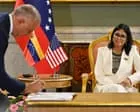
The Guardian's editorial condemns Donald Trump's seizure of Venezuela's oil wealth as a modern form of gunboat diplomacy conducted to serve his ego rather than help American consumers. It argues that after Trump's forces captured Nicolás Maduro and installed his deputy Delcy Rodríguez as president, the resulting deal handing a fifth of Venezuela's proven oil reserves to the US amounts to regime change in exchange for a commercial concession, with the additional oil unlikely to lower US petrol prices before November's midterms.
The piece notes that Rodríguez, a lifelong socialist reshaping Chavismo, granted North American Blue Energy Partners concessions to 17 oilfields, with the firm in turn giving the Pentagon a 35% equity stake at no cost to US taxpayers; Rodríguez claims the arrangement could generate $200bn in oil revenues for Venezuela. The editorial concludes that Trump bypassed the democratic opposition leader María Corina Machado in favour of a compliant authoritarian regime, and warns that such unequal bargains raise questions about what kind of economy and social order the oil revenue will ultimately produce.
In short
- Guardian editorial likens Trump's Venezuela oil deal to gunboat diplomacy
- Rodríguez's government ceded 17 oilfields, Pentagon gets 35% stake
- Deal unlikely to cut US petrol prices before the midterms
Steelman: both sides, in good faith
The strongest fair case each way — we don't pick a winner.
The case for
Supporters could argue that securing access to Venezuelan oil serves US energy and security interests, while a large investment deal could revive production and bring substantial revenue to Venezuela. If the arrangement is enforceable and benefits local people, working with the authorities able to govern may seem more likely to deliver practical gains than waiting for a political transition.
The case against
Critics could argue that using military force to obtain oil concessions violates Venezuelan self-determination and turns regime change into a commercial bargain. They may also doubt that an unequal deal with an authoritarian government will deliver broad public benefits, and warn that bypassing democratic opposition risks entrenching repression while offering US consumers little immediate relief.
Explained simply
Venezuela has some of the world’s largest proven oil reserves, but years of political and economic crisis have weakened its oil industry. Nicolás Maduro led the country after succeeding Hugo Chávez, whose political movement, Chavismo, promoted state control and social programmes. Delcy Rodríguez, a senior figure in that movement, became president after Maduro was removed from power.
The United States has long sought influence in Venezuela, while opposing governments led by Chávez and Maduro and backing political opponents including María Corina Machado. Oil concessions give companies rights to develop fields and earn money from production; the terms can affect how much revenue goes to the Venezuelan state and how it is used. The dispute matters because control of that revenue could shape Venezuela’s economy, its political future and relations with the United States.
Americas Business Cricket Geopolitics Government Politics Sport World
Read the full article at the source →
Originally published by The Guardian as “The Guardian view on Donald Trump’s oil deal: Venezuela pays for his vanity | Editorial”.