Kimmel’s ABC show won’t air interview with Democrat because of Trump FCC threats
Developed over time first seen 2 months ago
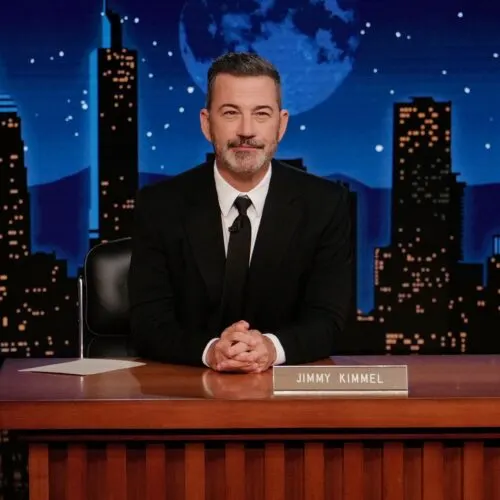
Jimmy Kimmel's ABC talk show ultimately aired its interview with Democratic Senate candidate James Talarico only on YouTube, rather than on broadcast television, after Kimmel said mounting pressure from the Federal Communications Commission under Chairman Brendan Carr made airing it on ABC's network too risky for local affiliate stations. Kimmel noted that across more than 20 years of hosting he had interviewed candidates from Hillary Clinton to Donald Trump without incident, but said "something has changed" under the current FCC that left him unwilling to expose station licences to jeopardy.
The decision capped a lengthy run of FCC actions against Disney-owned ABC, including Kimmel's brief suspension in 2025 over "news distortion" claims, an early licence review opened in April covering all eight ABC-owned stations, and a separate May proceeding examining whether The View should retain its exemption from the equal-time rule after it too interviewed Talarico, with the show halting political interviews altogether once that inquiry began. The FCC had also ordered broadcasters in January to apply the equal-time rule to talk shows deemed "motivated by partisan purposes," a move critics noted was not applied to conservative talk radio. Democratic FCC Commissioner Anna Gomez condemned the pressure as unlawful and a threat to press freedom, while the episode echoed a similar case in February when Stephen Colbert's CBS show also moved a Talarico interview to YouTube after citing FCC-related legal concerns.
- Sources
- 2
- Outlets
- 2
- Left · Centre · Right
- 0 · 0 · 0
In short
- Kimmel aired his Talarico interview only on YouTube, not ABC broadcast.
- Move followed sustained FCC pressure and licence reviews under Chairman Carr.
- Mirrors Colbert/CBS's earlier decision to shift a Talarico interview online.
How this story developed
- 2 months ago Jimmy Kimmel has confirmed his interview with Democratic Senate candidate James Talarico will air only on YouTube rather than on ABC's broadcast network, citing pressure from the Federal Communications Commission under Chairman Brendan Carr.
- 2 months ago Jimmy Kimmel will interview Democratic Senate candidate James Talarico only on YouTube, not on ABC's broadcast show, after threats from the Trump-era Federal Communications Commission left affiliate stations wary of legal risk.
- 2 months ago Jimmy Kimmel's ABC talk show ultimately aired its interview with Democratic Senate candidate James Talarico only on YouTube, rather than on broadcast television, after Kimmel said mounting pressure from the Federal Communications Commission under Chairman Brendan Carr made airing it on ABC's network too risky for local affiliate stations.
Full account
ABC's Jimmy Kimmel has said his chat-show interview with Democratic Senate hopeful James Talarico will not be broadcast on television, and will instead be posted solely to the show's YouTube channel, as a direct consequence of pressure the host says has been applied by the Federal Communications Commission. Talarico, a Texas state representative challenging state attorney-general Ken Paxton for a US Senate seat, had been due to appear on Jimmy Kimmel Live!. Kimmel told his studio audience that in more than two decades of hosting the programme he had interviewed candidates of every stripe, including Hillary Clinton, Ted Cruz and Donald Trump, without incident, but said the climate had now shifted so markedly that airing the segment risked landing ABC's local affiliates in regulatory difficulty.
Kimmel has been a repeated focus of scrutiny from the FCC under chairman Brendan Carr, whose commission briefly forced Disney to pull the host off air last year after threatening the licences of ABC-affiliated stations over alleged 'news distortion'. Since then, the pressure has widened: in the spring the FCC ordered an accelerated licence review of all eight ABC-owned stations, timed just a day after Donald and Melania Trump publicly demanded Kimmel's dismissal over a joke that had displeased them, though the commission has framed the review as centring on the network's diversity and inclusion practices rather than the joke itself. The regulator has separately opened an inquiry into whether ABC's The View should retain its long-standing exemption from the 'equal-time' rule after the programme interviewed Talarico, a move that has reportedly led The View to avoid booking political candidates altogether while the inquiry continues. Commentators have noted that equivalent equal-time obligations imposed on partisan-leaning talk shows in January have not been extended to conservative talk-radio hosts.
The White House has firmly rejected any suggestion that it or the FCC lent on Kimmel or ABC. A deputy press secretary dismissed the host's account as an 'egocentric' fabrication, insisting that Carr had issued no threat over the Talarico booking or any other candidate interview, and challenged news organisations to demand evidence before repeating Kimmel's claims. Disney, ABC's parent company, declined to respond publicly to the administration's rebuttal, a silence some observers linked to the broader, ongoing legal and regulatory dispute between the entertainment giant and the FCC over station licensing. The episode has also drawn comparisons with the cancellation of Stephen Colbert's CBS programme the previous year, amid concerns about political influence over broadcasters' editorial choices.
Talarico, who was in Los Angeles for fundraising events around the time of the announcement and had not been formally confirmed as a guest before Kimmel's on-air remarks, gave his own account in a separate broadcast interview, describing the affair as an especially troubling instance of political pressure on free expression and saying he remained hopeful the sit-down might yet appear on conventional television. The dispute has unfolded against the backdrop of a Republican midterm gathering addressed by President Trump, adding a further political charge to a row that touches on press freedom, broadcast regulation and the licensing power the FCC holds over local stations.
Where outlets differ
From the full account, which is AI-written from the sources:
The first source frames the story primarily through the regulatory timeline, detailing the FCC's licence reviews, the DEI-related justification offered by the commission, the separate inquiry into The View, and the uneven application of equal-time rules to conservative talk radio.
The second source (Deadline) leads with the White House's explicit denial that any threat was made, quoting the administration's dismissal of Kimmel's account as fabricated, and gives more attention to Disney's refusal to comment.
Deadline draws an explicit parallel to Stephen Colbert's cancellation at CBS and includes colour about Talarico's Los Angeles fundraising trip and the timing against Trump's midterm convention, details absent from the first source.
Only the second source includes Talarico's own comments, made in a separate interview, calling the situation a dangerous form of cancel culture while still expressing hope the interview could air on television.
The first source gives more historical depth on Kimmel's prior suspension and the sequence of FCC actions against ABC since then, which the second source touches on more briefly.
Steelman: both sides, in good faith
The strongest fair case each way — we don't pick a winner.
The case for
The FCC has a statutory responsibility to enforce equal-time rules that exist to prevent broadcasters from becoming propaganda vehicles for one party. If talk shows are conducting political interviews, the equal-time rule's application is a matter of consistent legal compliance rather than selective persecution. That these rules may not have been rigorously enforced historically does not make current enforcement illegitimate; indeed, uniform application of law across all broadcasters is essential to regulatory integrity. Networks cannot claim editorial freedom as immunity from the communications laws that govern their broadcast privileges.
The case against
The pattern of enforcement—concentrated against ABC's Democratic-friendly programming whilst absent from conservative networks and talk radio—demonstrates weaponised regulation rather than neutral administration. The result is an unmistakable chilling effect: networks now avoid interviewing Democratic candidates to escape regulatory harassment, which directly undermines press freedom and democratic discourse. This represents political retaliation using government authority to punish disfavoured editorial choices, transforming regulatory power into a tool for suppressing opposition rather than a neutral arbiter of broadcast standards.
Explained simply
Jimmy Kimmel hosts a long-running late-night talk show on ABC, the US broadcast network owned by Disney. Talk shows like his often book political guests, including candidates running for office, and Kimmel has interviewed figures from both major parties over the years without controversy. James Talarico is a Democratic candidate running for the US Senate.
The Federal Communications Commission, or FCC, is the US government body that regulates broadcasters and issues the licences local TV stations need to operate. Under its chairman, Brendan Carr, appointed during Donald Trump's presidency, the FCC has taken a series of actions concerning ABC and its affiliated stations, including a licence review and scrutiny of how talk shows handle political guests under so-called equal-time rules, which are meant to ensure balanced treatment of election candidates.
This matters because it touches on questions of press freedom and the independence of broadcasters from government pressure. Similar concerns have arisen at other networks, and the FCC's sole Democratic commissioner, Anna Gomez, has publicly criticised the agency's approach. The dispute sits at the intersection of media regulation, election coverage and the relationship between the Trump administration and major broadcasters.