Parliament Revisits Assisted Dying Bill as MPs Vote on Controversial Legislation
Developed over time first seen 2 months ago
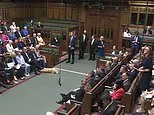
MPs in the House of Commons rejected a fresh attempt to legalise assisted dying in England and Wales, voting 286 to 270 against the Terminally Ill Adults (End of Life) Bill at its Second Reading after a four-hour debate. The defeat, met with cheers in the chamber, came after several MPs who had previously backed similar legislation switched to oppose it, and it settles one of the most contentious moral and political questions facing Parliament in recent years, at least for the current session.
The Bill, reintroduced by Labour MP Lauren Edwards after she took over from Kim Leadbeater, would have allowed terminally ill adults with fewer than six months to live to apply for an assisted death; near-identical legislation had previously passed two Commons votes before falling in the House of Lords. Former minister Janet Daby was among those who reversed her earlier support, citing an uneasy conscience, while Kemi Badenoch and Sir Ed Davey voted against and Andy Burnham and Nigel Farage abstained. Opponents, including Archbishop Richard Moth, the Archbishop of Canterbury Dame Sarah Mullally, and the Royal College of Psychiatrists, had raised safeguarding and safety concerns, and campaigners against the Bill said the issue was now settled "for a generation," while supporters vowed to keep pressing the case.
- Sources
- 8
- Outlets
- 3
- Left · Centre · Right
- 3 · 0 · 4
In short
- Commons rejected assisted dying Bill 286-270 at Second Reading.
- Several MPs, including Janet Daby, switched from support to opposition.
- Opponents say issue is settled "for a generation"; supporters vow to continue.
How this story developed
- 2 months ago MPs in the House of Commons rejected a fresh attempt to legalise assisted dying in England and Wales, voting 286 to 270 against the Terminally Ill Adults (End of Life) Bill at its Second Reading after a four-hour debate.
- 2 months ago Following MPs' rejection of the Terminally Ill Adults (End of Life) Bill by 286 votes to 270, prominent campaigner Dame Esther Rantzen has called it a "tragic day", warning that people in England and Wales will be denied choices available to terminally ill people elsewhere.
- 2 months ago MPs in the House of Commons rejected a fresh attempt to legalise assisted dying in England and Wales, voting 286 to 270 against the Terminally Ill Adults (End of Life) Bill at its Second Reading after a four-hour debate.
- 2 months ago MPs have confirmed their rejection of the Terminally Ill Adults (End of Life) Bill, voting 286 to 270 against the assisted dying legislation at its second reading on Friday, a majority of 16.
- 2 months ago MPs have voted down the Terminally Ill Adults (End of Life) Bill at its second reading, defeating the assisted dying legislation by 286 votes to 270 in a dramatic reversal after it returned to the Commons on Friday.
- 2 months ago The Terminally Ill Adults (End of Life) Bill has returned to Parliament for a Second Reading vote on Friday, marking the third Commons consideration of the legislation.
- Daily Mail Will MPs kill off assisted dying law today? Controversial law returns to the Commons with vote on a knife-edge as supporters vow to force ‘flawed’ plan through Parliament
- Daily Mail The cancer sufferer wrongly given six months to live…and a daughter whose dying mother begged ‘put me out of my misery’: The two sides of assisted dying debate as MPs vote on bill
- Daily Mail The end of the rush towards assisted dying? MPs vote down controversial law change at the second attempt after emotional Commons debate
- The Independent Assisted dying will not become law after MPs vote down bill in dramatic U-turn
- The Star (Sheffield) How Sheffield MPs voted on 'Assisted Dying Bill'
- The Independent Assisted dying bill: What happens now?
- The Independent Dame Esther Rantzen says it is a ‘tragic day’ after assisted dying bill is rejected
- Daily Mail How did YOUR MP vote on the assisted dying bill?
Full account
MPs have voted to reject the Terminally Ill Adults (End of Life) Bill at its Second Reading, defeating by 286 votes to 270 – a majority of 16 – a fresh attempt to legalise assisted dying in England and Wales. The result marks a reversal from the previous Commons vote on the legislation in June 2025, when MPs backed it by 314 to 291. The Bill, which would have allowed terminally ill adults with fewer than six months to live to apply for an assisted death subject to sign-off from two doctors and an expert panel, had been brought back to the Commons by Labour MP Lauren Edwards, who took over as its sponsor from Kim Leadbeater after it stalled in the House of Lords in April, when peers ran out of time to finish scrutinising it amid claims that opponents had deliberately dragged out debate.
Friday's sitting featured some four and a half hours of debate in which MPs frequently drew on personal and family experience of death and dying. Opening proceedings, Edwards argued that MPs, rather than an unelected upper chamber, should determine the outcome and appealed to colleagues to send the Bill back to the Lords so peers could complete their scrutiny. Several MPs who had previously supported the Bill switched sides, among them Labour's Janet Daby, who told the chamber she had been troubled by nightmares about death since her earlier vote and could no longer back the legislation in good conscience. Labour MP Ashley Dalton, who revealed she is living with incurable stage four breast cancer, urged colleagues to reject the Bill, arguing dying patients had been frightened by exaggerated claims about the manner of their deaths and that the legislation lacked safeguards for those with unassessed mental health needs. Conversely, Labour's Claire Hazelgrove spoke of her mother's death from a rare blood cancer and argued that not all suffering could be relieved by palliative care. Conservative leader Kemi Badenoch, who voted against, said she was not opposed to assisted dying in principle but considered the Bill rushed and poorly drafted, questioning whether the NHS was ready and objecting to a private member's bill being pushed through with government support. Liberal Democrat leader Ed Davey also voted against, while Prime Minister Andy Burnham and Reform UK leader Nigel Farage both abstained, with Burnham saying he did not wish to sway the outcome.
News of the defeat was met with audible cheers, a shout of 'good' and MPs hugging and celebrating in the chamber, according to reporting from the scene. Campaigners against the Bill said the vote had effectively settled the question of assisted dying for a generation, while supporters expressed dismay at the collapse of legislation that had twice previously cleared the Commons. Coverage highlighted contrasting personal testimony from members of the public on both sides of the issue: former NHS nurse Karen O'Malley described contemplating suicide after being told, incorrectly as it turned out, that she had six to nine months to live with cancer, and said she feared what she might have done had assisted dying been available to her at her lowest point; she has since been declared cancer-free. By contrast, Caroline Hearsey recalled her mother's plea to be 'put out of her misery' as she died within six weeks of an oesophageal cancer diagnosis, and backed the Bill as a result. Prominent figures were similarly split, with broadcaster and Childline founder Dame Esther Rantzen among those calling for the law to change, while actress Liz Carr campaigned against the Bill on safeguarding grounds.
The vote draws a line, for now, under a lengthy and emotionally charged process that began when the legislation first passed the Commons under Sir Keir Starmer's leadership before being reintroduced this year. Had it cleared the Commons again, supporters were said to be considering invoking the Parliament Acts to force the Bill through the Lords regardless of peers' objections, a route that becomes moot following Friday's defeat. The size of the swing since last year's vote, driven in part by MPs who had previously supported the Bill changing their minds, underscores how contested the issue remains within Parliament even as public debate over assisted dying is likely to continue.
Where outlets differ
From the full account, which is AI-written from the sources:
Source 1 was filed before the vote took place and previews the debate, the Bill's terms and the possibility of MPs using the Parliament Acts, without reporting a result – the other three sources report the Bill's defeat.
The Independent (Source 4) places most emphasis on the scale of the reversal from the June 2025 vote (314-291 in favour to 286-270 against) and gives the fullest account of Ashley Dalton's and Claire Hazelgrove's speeches, including direct quotations.
Source 3 focuses more on the parliamentary theatre – cheers, hugging and fist-pumping when the result was announced – and on named MPs and party leaders' voting choices, including Janet Daby's reversal.
Source 2 centres on human-interest testimony from members of the public (Karen O'Malley and Caroline Hearsey) rather than on parliamentary proceedings, and gives the exact vote tally (270 for, 286 against) framed slightly differently from Source 3/4's 'majority of 16' framing.
Only Source 1 and Source 2 mention the possibility of the Parliament Acts being used and the accusations of Lords 'filibustering'; Sources 3 and 4 do not dwell on this given the Bill's defeat rendered it moot.
Left-leaning outlets 3
- Assisted dying will not become law after MPs vote down bill in dramatic U-turnThe Independent
- Assisted dying bill: What happens now?The Independent
- Dame Esther Rantzen says it is a ‘tragic day’ after assisted dying bill is rejectedThe Independent
Only here: become, dramatic, turn, happens, dame
Right-leaning outlets 4
- Will MPs kill off assisted dying law today? Controversial law returns to the Commons with vote on a knife-edge as supporters vow to force ‘flawed’ plan through ParliamentDaily Mail
- The cancer sufferer wrongly given six months to live…and a daughter whose dying mother begged ‘put me out of my misery’: The two sides of assisted dying debate as MPs vote on billDaily Mail
- The end of the rush towards assisted dying? MPs vote down controversial law change at the second attempt after emotional Commons debateDaily Mail
- How did YOUR MP vote on the assisted dying bill?Daily Mail
Only here: controversial, commons, debate, kill, returns
Every side used: assisted, dying, vote, bill
Headline columns compared word for word; nothing in them is AI-written.
Steelman: both sides, in good faith
The strongest fair case each way — we don't pick a winner.
The case for
Supporters of the bill argue that it offers dying people a compassionate and dignified choice at the end of life, sparing them prolonged suffering that even good palliative care cannot always relieve. They point to the safeguards built into the legislation, including sign-off from two doctors and an expert panel, as sufficient protection against abuse, and see the current law as forcing some terminally ill people to endure painful deaths, take matters into their own hands, or travel abroad at great expense. For advocates like Claire Hazelgrove, personal experience of watching a loved one die "on her terms" underscores a belief that autonomy over one's own death is a fundamental extension of individual freedom and should not be denied by the state.
The case against
Opponents contend that legalising assisted dying risks placing subtle or overt pressure on vulnerable, elderly, disabled or terminally ill people to end their lives prematurely, whether from a sense of being a burden or from inadequate access to good palliative care. They argue that no system of medical and panel oversight can fully eliminate the risk of coercion or misdiagnosis, and that such a profound, irreversible step warrants extreme caution, especially given concerns that eligibility criteria could later widen. Figures such as Ashley Dalton, speaking from her own experience of terminal illness, argue that patients have been frightened into believing a painful death is inevitable, and that the priority should instead be strengthening palliative and end-of-life care so that no one feels assisted dying is their only humane option.
Explained simply
Assisted dying has been debated in Parliament for years, with campaigners arguing terminally ill people should have the right to choose when they die, and opponents warning of risks to vulnerable patients. The Terminally Ill Adults (End of Life) Bill, put forward by backbench MP Kim Leadbeater and now steered through this stage by Lauren Edwards, would have let terminally ill adults in England and Wales with fewer than six months to live seek help to end their life, with approval needed from two doctors and an expert panel.
Because the issue touches on deeply held personal and moral beliefs, MPs were given a free vote, meaning they could decide according to their own conscience rather than following party instructions. The government stayed neutral throughout, and the bill had already cleared an earlier Commons vote in June 2025 before returning for further scrutiny.
The debate has drawn in MPs with direct personal experience of terminal illness, on both sides of the argument, reflecting how the issue cuts across party lines and touches on questions of medical ethics, patient choice and end-of-life care that affect families across the country.
Coverage · 8 sources
Bias meters
From 7 rated sources, 1 unrated.
- Daily MailRightWill MPs kill off assisted dying law today? Controversial law returns to the Commons with vote on a knife-edge as supporters vow to force ‘flawed’ plan through Parliament
- Daily MailRightThe cancer sufferer wrongly given six months to live…and a daughter whose dying mother begged ‘put me out of my misery’: The two sides of assisted dying debate as MPs vote on bill
- Daily MailRightThe end of the rush towards assisted dying? MPs vote down controversial law change at the second attempt after emotional Commons debate
- The IndependentLeftAssisted dying will not become law after MPs vote down bill in dramatic U-turn
- The Star (Sheffield)How Sheffield MPs voted on 'Assisted Dying Bill'
- The IndependentLeftAssisted dying bill: What happens now?
- The IndependentLeftDame Esther Rantzen says it is a ‘tragic day’ after assisted dying bill is rejected
- Daily MailRightHow did YOUR MP vote on the assisted dying bill?
Elections Government Health Medicine Politics World