Business news and discussion on TalkFuse.
Putin boosts his stock of nuclear warheads to nine-year high as he threatens West that putting troops into Ukraine ‘means war with Russia’
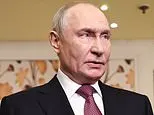
Vladimir Putin has expanded Russia's nuclear arsenal for the fourth consecutive year while warning Nato that deploying troops to Ukraine would mean war with Russia. The increase, revealed by the Stockholm International Peace Research Institute, comes as tensions escalate over Western support for Kyiv, with Putin denying Russia poses any threat to Nato states even as his deputy security council chief raised the prospect of nuclear strikes on a Baltic member.
Russia's stockpile of deployed nuclear warheads on missiles and bombers rose by 78 over the past year to 1,796, the highest level in nine years, while the US made no increase and Britain and France held steady at 170 and 280 warheads respectively. Speaking at the BRICS summit in New Delhi, Putin cast any Western troop deployment to Ukraine as an act of war, while former president Dmitry Medvedev separately warned that Lithuania could be reduced to "scorched earth" if it hosted Nato nuclear weapons. The report coincided with fresh Russian strikes killing and wounding civilians in Odesa, Kryvyi Rih and Zaporizhzhia, Ukrainian drone attacks on Russian military and chemical facilities, and UK figures putting Russian war dead at roughly half a million with a million more wounded.
In short
- Russia's nuclear warhead stockpile hits nine-year high of 1,796
- Putin warns Nato troops in Ukraine would mean "war with Russia"
- Medvedev threatens Lithuania with nuclear "scorched earth" strike
Steelman: both sides, in good faith
The strongest fair case each way — we don't pick a winner.
The case for
Those wary of a Western troop deployment argue that placing Nato forces directly inside Ukraine risks direct confrontation between nuclear powers, and that Russia's warnings, however unwelcome, reflect a genuine and long-stated red line about its own security perimeter. On this view, prudence and continued reliance on arms supplies and diplomacy, rather than boots on the ground, are the safer route to protecting Ukraine without triggering a wider war that could escalate to nuclear use.
The case against
Those who reject that caution argue that Russia's nuclear expansion and rhetoric about Lithuania and Ukraine are a deliberate strategy of coercion, designed to intimidate the West into abandoning a sovereign nation under attack, and that yielding to such threats would only invite further aggression. On this view, firm resolve, including the option of Western troop deployment, is necessary to uphold international law, deter further Russian expansion, and demonstrate that nuclear blackmail cannot be allowed to dictate the security choices of free nations.
Explained simply
Russia and Ukraine have been at war since Russia’s full-scale invasion in 2022. Ukraine receives weapons and other support from the United States, Britain and other Nato countries, but Nato troops are not fighting in Ukraine. Nato is a military alliance whose members, including Britain and the Baltic states, promise to defend one another.
Russia and the United States hold most of the world’s nuclear weapons; Britain and France also have smaller arsenals. Deployed warheads are those assigned to missiles or aircraft, though that does not mean they are being used or that a nuclear strike is imminent. Russia’s warnings about Nato involvement matter because a conflict between Russia and the alliance could widen the war and raise the risk of nuclear escalation.
Business Europe Markets Russia-Ukraine War World