Entertainment news and discussion on TalkFuse.
Undead Labs becomes worker-owned amid redundancies after Xbox split
Developed over time first seen 2 months ago
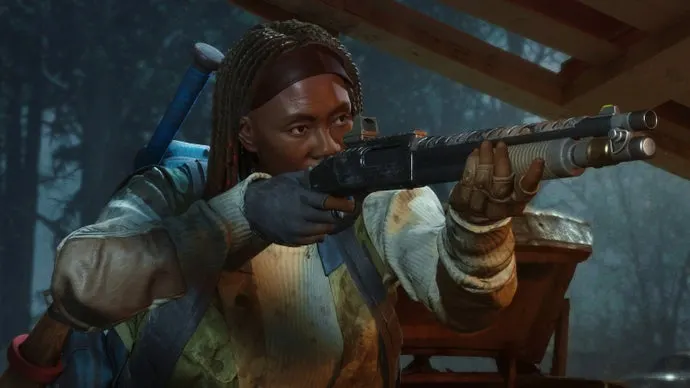
Undead Labs, developer of State of Decay, has become an independent, worker-owned studio following its separation from Microsoft's Xbox division during the company's latest restructuring. The separation comes with significant downsides, however, as the studio announced redundancies affecting "a significant number" of employees whilst asserting that independence would allow it to focus more closely on its community and games.
State of Decay 3 remains in active development across Xbox, PC and PlayStation, with a closed beta targeted before the end of 2026 and a 2027 release date planned. The game will continue to be available on Game Pass under a new, yet unnamed publisher, ending a 15-year partnership with Xbox that began when Microsoft first published the original State of Decay in 2013 and acquired the studio in 2018.
- Sources
- 2
- Outlets
- 2
- Left · Centre · Right
- 0 · 0 · 0
In short
- Undead Labs separated from Xbox and became independent, worker-owned studio
- Studio announced significant job losses alongside the independence transition
- State of Decay 3 development continues, staying on Game Pass across multiple platforms
How this story developed
- 2 months ago Undead Labs has mourned the staff departures whilst pledging to use its independence to strengthen its engagement with the gaming community.
- 2 months ago Microsoft disclosed it had previously secured a buyer for Undead Labs, ensuring State of Decay 3's ongoing availability on Game Pass through the unnamed new publisher.
- 2 months ago Undead Labs has separated from Microsoft to become an independent, worker-owned studio, with State of Decay 3 scheduled for 2027 release on multiple platforms despite significant staff redundancies.
Full account
Undead Labs, the independent developer behind the State of Decay franchise, has transitioned away from Microsoft ownership to become an employee-owned studio. The separation, facilitated through Microsoft's broader restructuring of its gaming division, simultaneously brought news of substantial redundancies affecting the workforce. The dual announcement reflects the complex circumstances surrounding Microsoft's divestment programme, which has seen multiple studios severed from the publisher's control throughout 2024.
The studio, acquired by Microsoft in 2018, characterised independence as an opportunity to strengthen its connection with players and prioritise game development. Studio leadership acknowledged the contradictions inherent in the transition, expressing genuine appreciation for departing staff members whilst recognising the necessity of downsizing. Undead Labs emphasised the expertise and commitment of those leaving the organisation and committed to facilitating connections between departing developers and studios actively recruiting talent, noting widespread frustration across the industry at the frequency of redundancy announcements.
State of Decay 3 will continue development across Xbox, PC, and PlayStation platforms as a Game Pass title, with the studio targeting closed beta availability before year's end and full release in 2027. The separation concludes a partnership spanning fifteen years between the studio and Xbox, commencing with the original State of Decay's publication in 2013 and formalised through acquisition shortly after the sequel's launch. A new publisher has been assigned to the project, though details remain undisclosed.
The layoffs position Undead Labs within a pattern affecting multiple studios following their departure from Xbox's stable. Double Fine Productions conducted redundancies affecting roughly a quarter of its personnel, whilst Compulsion Games has pursued alternative paths through co-development arrangements. Other studios including Ninja Theory and Arkane have encountered divergent fates, ranging from potential closure to ongoing consultation regarding their futures. The wave of reductions reflects sector-wide contraction accelerating across the gaming industry in recent months.
Where outlets differ
From the full account, which is AI-written from the sources:
Source 1 includes historical context and editorial commentary on State of Decay's critical reception; Source 2 does not critique the franchise's quality
Source 1 features a direct quote from studio head Philip Holt regarding independence; Source 2 does not name or quote individual leadership
Source 1 emphasises technical details about State of Decay 3 (platforms, Game Pass confirmation, unnamed publisher); Source 2 prioritises broader industry patterns and context
Source 2 provides specific redundancy figures for Double Fine (23 people, 25 percent of staff); Source 1 references the layoffs without quantification
Source 2 highlights the rapid timeline of announcements (within 24 hours); Source 1 does not stress this urgency
Source 2 offers more extensive coverage of other affected studios' specific circumstances; Source 1 is more selective in comparative detail
Source 1 references Microsoft's initial announcement of finding an unnamed buyer; Source 2 specifies Undead Labs as one of five studios in the divestment announcement
Source 2 concludes with solidarity language toward affected developers; Source 1 maintains more neutral reporting tone
Steelman: both sides, in good faith
The strongest fair case each way — we don't pick a winner.
The case for
Worker ownership and independence can genuinely benefit creative studios by aligning employee interests with company success and enabling faster decision-making free from corporate bureaucracy. The studio's assertion that it can now focus more closely on community and games reflects a legitimate value—that leaner operations with shared stakes often produce better creative work. The redundancies, whilst difficult, may represent a necessary right-sizing after separation, potentially positioning the studio for sustainable, community-focused development.
The case against
The announcement of significant job cuts immediately following claims of empowering worker ownership creates a credible contradiction that undermines the positive narrative. Independent studios face substantially higher financial risk and failure rates than those backed by major publishers; losing Microsoft's resources, QA infrastructure, and marketing apparatus whilst laying off staff suggests real precariousness rather than strategic optimism. Workers holding paper ownership during immediate mass redundancies raises legitimate questions about whether independence represents genuine empowerment or merely financial desperation.
Explained simply
Undead Labs is a video game studio known for creating State of Decay, a survival game series set in worlds overrun by zombies. The studio has been owned by Microsoft's Xbox gaming division since 2018.
Microsoft has undergone restructuring within its gaming operations, and Undead Labs has separated from Xbox to become independent and worker-owned, meaning its staff now hold a stake in the company. The move is intended to give the studio greater freedom to focus on its players and its games.
State of Decay 3, the next entry in the series, remains in development and is expected to release in 2027 across Xbox, PlayStation and PC. The game will continue to be part of Game Pass, a subscription service offering access to hundreds of games, despite Undead Labs no longer being directly owned by Microsoft.
Coverage · 2 sources
Read the full article at the source →
Originally published by Eurogamer as “State of Decay studio Undead Labs goes independent after Xbox restructuring, but lays off “a significant number” of the team in doing so”.